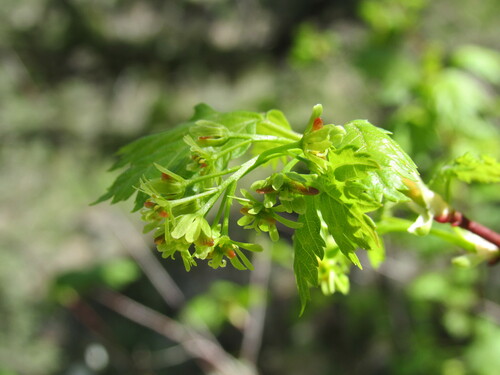
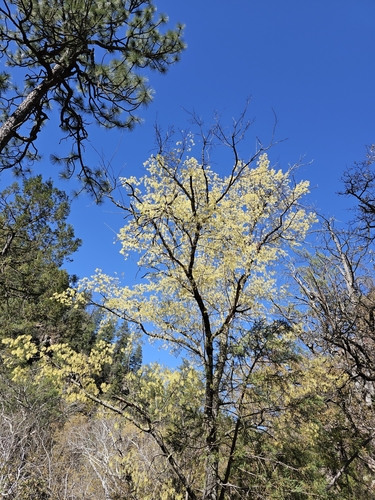
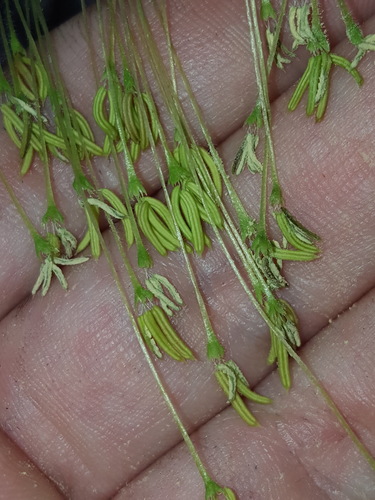
Douglas Maple (var. douglasii) Acer glabrum var. douglasii variety
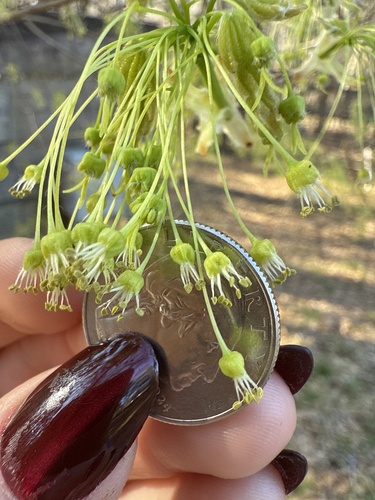
Douglas Maple (var. douglasii) is a perennial tree native to Canada and the lower 48 states. It grows to 30 ft and blooms May in full sun, with brown fruit. A keystone plant for native insects and the food web.
More about this plant
Acer glabrum is a species of maple native to western North America, from southeastern Alaska, British Columbia and western Alberta, east to western Nebraska, and south through Washington, Oregon, Idaho, Montana and Colorado to California, Arizona, Utah, and New Mexico. Wikipedia →
Growing & care
USDA PLANTS · TRY- Sun
- Full sun
- Soil & moisture
- Medium moisture
- Soil pH
- 5.5–7.5
- Fertility need
- Medium
- Adapts to
- Coarse (sandy), Medium (loam)
- Hardiness
- USDA zone 6+
- Height
- 30 ft
- Mature width
- ~ 18 ft wide DERIVED derived estimate — open-grown crown allometry (height × growth-form ratio); not a measurement
- Spacing
- 4–8 ft apart from USDA planting density
- Spread
- None — clumping
- Growth rate
- Moderate
- Growth form
- Single stem
- Lifespan
- Perennial · moderate
- Foliage
- coarse texture
- Active growth
- Spring & summer
- Fruit
- Brown
- Propagate by
- Seed, Bare root, Container
- Seed starting
- Needs cold stratification a cold-moist spell before it germinates
- Seeds ripen
- Summer – Autumn seed-collection / harvest window
- In the trade
- Contract growing only
- Deer browsing
- Medium moderately palatable
- Resprouts if cut
- Yes regrows after top-kill
Sow timing keys off your local last- and first-frost dates.
Wildlife & pollinators
How pollinator value is scored →❧ Caterpillar hosts ~297 caterpillar species · keystone genus
Acer supports ~297 caterpillar species.
Native butterfly & moth caterpillars are the base of the terrestrial food web — most songbirds rear their young almost entirely on them. As a host for native Lepidoptera this is a powerhouse genus.
Recorded feeding on Acer in North America, including:


+ 8 more species → ↑ show fewer


Related plants
More Acer →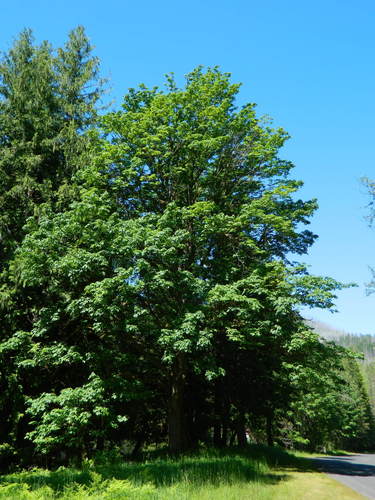
How we know this (1) Methods & honest limits
For woody plants that have a height but no measured crown, we estimate width = height × a crown-to-height ratio fit for that plant’s form (conifers narrower than broadleaf trees, shrubs widest), calibrated on our measured open-grown crowns and capped at the largest one ever measured. A measured crown always wins; herbaceous plants get nothing (no anchor).
Honest limits: A coarse class-median estimate for garden-scale spacing, not a measurement; woody single/multi-stem forms only.
Sources for this entry (25) Open & cited
Cite this page Open data, please attribute
PlantKey’s data is open under CC BY-SA 4.0 — free to reuse and adapt, with attribution and the same licence. Photos keep their own per-image licence + credit (see Sources above).
Loading…
BibTeX
Loading…