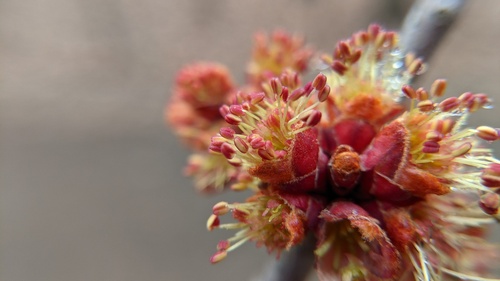
Drummond's Maple (var. drummondii) Acer rubrum var. drummondii variety
Drummond's Maple (var. drummondii) is a perennial tree native to the lower 48 states. A keystone plant for native insects and the food web.
More about this plant
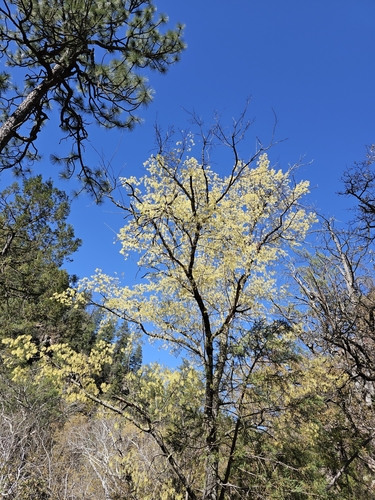
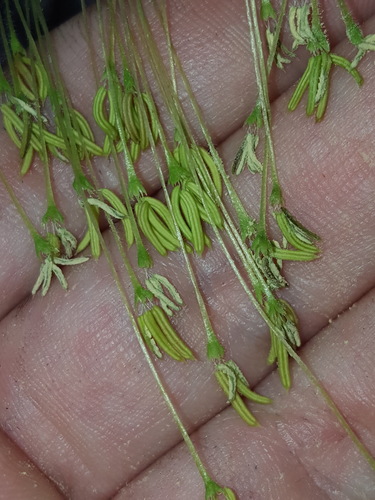
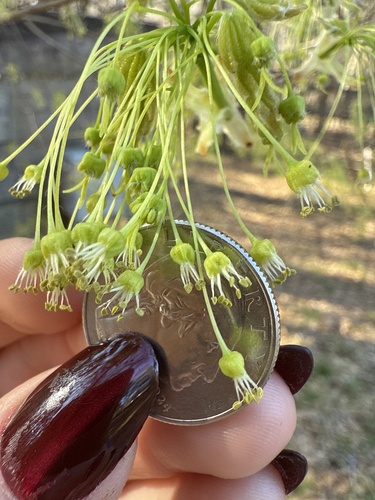
Acer rubrum, the red maple, also known as swamp maple, water maple, or soft maple, is one of the most common and widespread deciduous trees of eastern and central North America. The U.S. Forest Service recognizes it as the most abundant native tree in eastern North America. The red maple ranges from southeastern Manitoba around the Lake of the Woods on the border with Ontario and Minnesota, east to Newfoundland, south to Florida, and southwest to East Texas. Many of its features, especially its leaves, are quite variable in form. At maturity, it often attains a height around 30 m (100 ft). Its flowers, petioles, twigs, and seeds are all red to varying degrees. Among these features, however, it is best known for its brilliant deep scarlet foliage in autumn. Wikipedia →
Growing & care
USDA PLANTS · TRY- Hardiness
- ≥ zone 7 derived from its U.S. range
- Lifespan
- Perennial
Wildlife & pollinators
How pollinator value is scored →❧ Caterpillar hosts ~297 caterpillar species · keystone genus
Acer supports ~297 caterpillar species.
Native butterfly & moth caterpillars are the base of the terrestrial food web — most songbirds rear their young almost entirely on them. As a host for native Lepidoptera this is a powerhouse genus.
Recorded feeding on Acer in North America, including:


+ 8 more species → ↑ show fewer


Related plants
More Acer →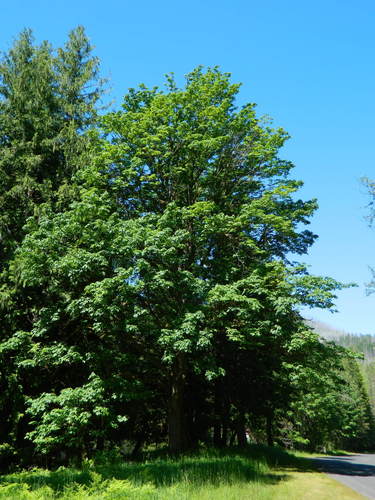
Sources for this entry (13) Open & cited
Cite this page Open data, please attribute
PlantKey’s data is open under CC BY-SA 4.0 — free to reuse and adapt, with attribution and the same licence. Photos keep their own per-image licence + credit (see Sources above).
Loading…
BibTeX
Loading…