
Sweetflag Acorus americanus
Sweetflag is a perennial wildflower native to Alaska, Canada, and the lower 48 states. It grows to 3.9 ft and blooms May in part shade – shade, with green fruit.
More about this plant
Acorus americanus, the American sweet flag, is an emergent wetland plant native to the northern United States and Canada. This perennial plant has bright green blade-shaped leaves that arise directly from the rhizomes and sheath into each other at the base. Additionally the blades have 2–6 raised veins, and a swollen center when viewed in cross section. The foliage has a citrus-like spicy aromatic quality, and can be used to flavor beer. It is a flowering plant with inconspicuous flowers that are arranged on a lateral spadix and the fertilized flowers produce berries with a jelly inside. This plant is protected as a state endangered species in Pennsylvania. Wikipedia →
Growing & care
USDA PLANTS · TRY- Sun
- Part shade – shade
- Soil & moisture
- High moisture
- Soil pH
- 5.6–7.2
- Fertility need
- Medium
- Adapts to
- Medium (loam), Fine (clay)
- Hardiness
- USDA zone 4+
- Height
- 3.9 ft
- Spacing
- 3–4 ft apart from USDA planting density
- Spread
- Moderate
- Growth rate
- Moderate
- Growth form
- Rhizomatous
- Lifespan
- Perennial · moderate
- Foliage
- Broadleaf · medium texture
- Active growth
- Spring & summer
- Fruit
- Green
- Propagate by
- Sprigs
- Seed starting
- No stratification needed
- Seeds ripen
- Summer – Autumn seed-collection / harvest window
- In the trade
- Routinely available
- Resprouts if cut
- No
Sow timing keys off your local last- and first-frost dates.
Related plants
More Acorus →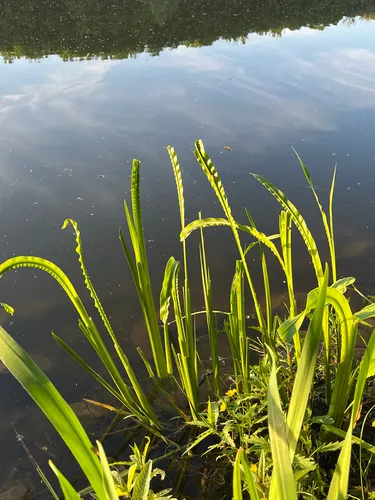
How we know this (1) Methods & honest limits
A recorded categorical fact: each species is tagged C3 (standard), C4 (heat/water-efficient) or CAM (succulent, night-time CO₂ uptake) — or a facultative combination. We only show a trait card for the noteworthy C4/CAM cases; C3 is the unremarkable majority, kept in the data but not surfaced as a card.
Sources for this entry (25) Open & cited
Cite this page Open data, please attribute
PlantKey’s data is open under CC BY-SA 4.0 — free to reuse and adapt, with attribution and the same licence. Photos keep their own per-image licence + credit (see Sources above).
Loading…
BibTeX
Loading…