
Baobab Adansonia digitata
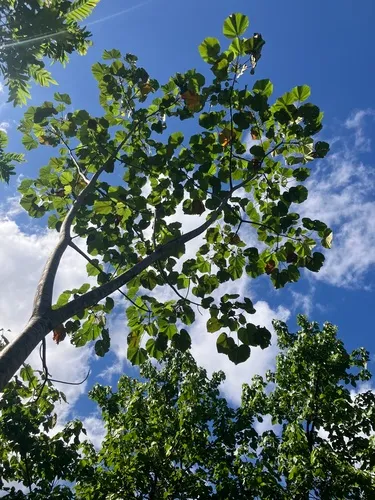
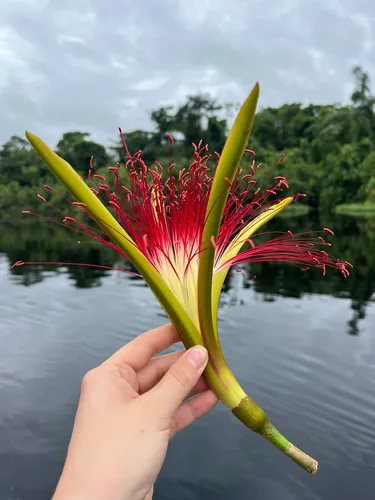
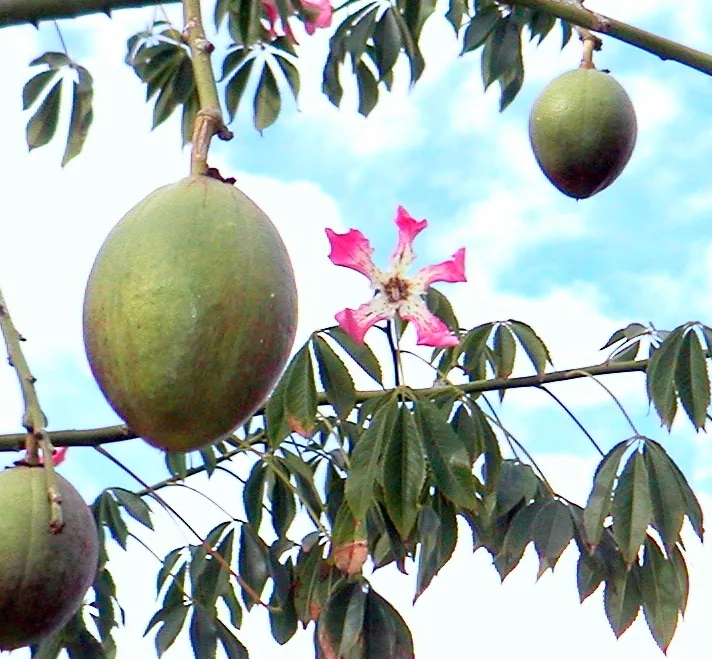
Baobab is an introduced perennial tree, found in Puerto Rico. It grows to 66 ft.
More about this plant
Adansonia digitata, the African baobab, is the most widespread tree species of the genus Adansonia, the baobabs, and is native to the African continent and the southern Arabian Peninsula. These are long-lived pachycauls; radiocarbon dating has shown at least one individual to be 1,275 years old. They are typically found in dry, hot savannas of sub-Saharan Africa, where they dominate the landscape and reveal the presence of a watercourse from afar. They have traditionally been valued as sources of food, water, health remedies or places of shelter and are a key food source for many animals. They are steeped in legend and superstition. In recent years, many of the largest, oldest trees have died, for unknown reasons. Other common names for the baobab include monkey-bread tree, upside-down tree, and cream of tartar tree. Wikipedia →
Growing & care
USDA PLANTS · TRY- Height
- 66 ft
- Lifespan
- Perennial
- Foliage
- Deciduous broadleaf
Wildlife & pollinators
How pollinator value is scored →✦ Bees 1 bee visitor
1 native & managed bee species is documented visiting Baobab :

Related plants
More Adansonia →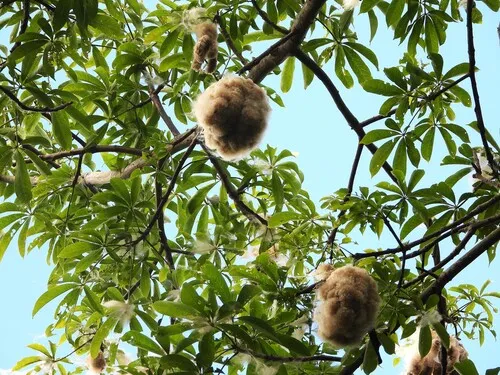
How we know this (2) Methods & honest limits
We read each species’ measured specific leaf area (leaf area per unit dry weight) from the Global Spectrum dataset and band it: thin & fast (high SLA), medium, or thick & tough (low SLA). The global median is about 10 mm²/mg.
Honest limits: A species-mean from pooled measurements — individual plants vary with light and site. A broad strategy signal, not a precise per-plant figure.
A recorded categorical fact: each species is tagged C3 (standard), C4 (heat/water-efficient) or CAM (succulent, night-time CO₂ uptake) — or a facultative combination. We only show a trait card for the noteworthy C4/CAM cases; C3 is the unremarkable majority, kept in the data but not surfaced as a card.
Sources for this entry (19) Open & cited
Cite this page Open data, please attribute
PlantKey’s data is open under CC BY-SA 4.0 — free to reuse and adapt, with attribution and the same licence. Photos keep their own per-image licence + credit (see Sources above).
Loading…
BibTeX
Loading…