PlantKey Open ecological atlas
Planner
Home / Browse / Aeschynomene / Shrubby Jointvetch
iNaturalist — CC, credited & licensed per image
Fabaceae family

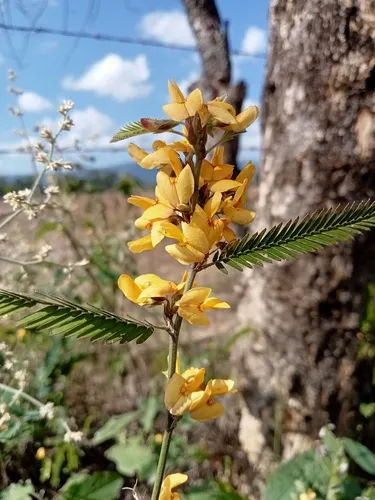
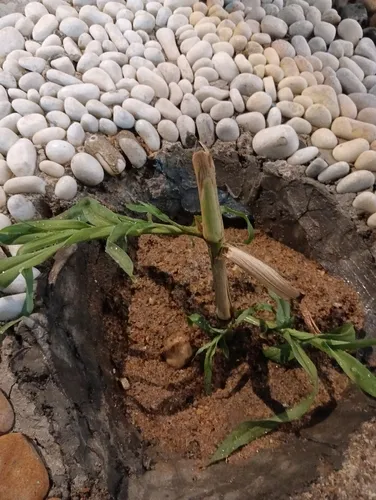
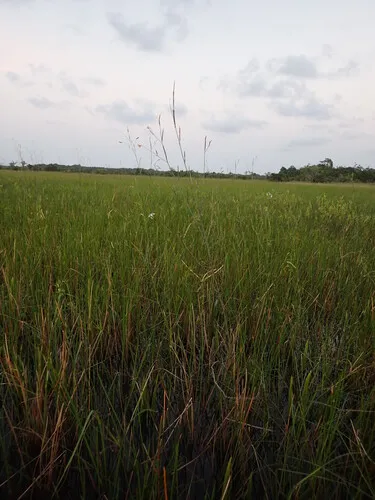
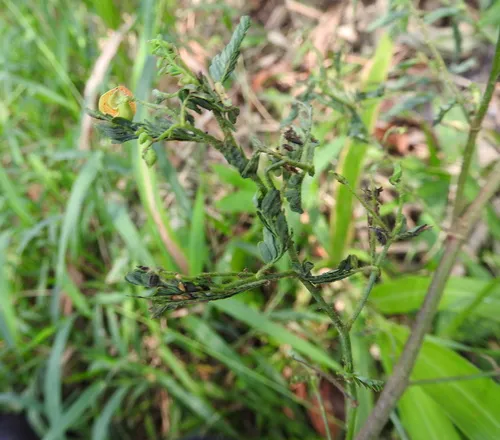
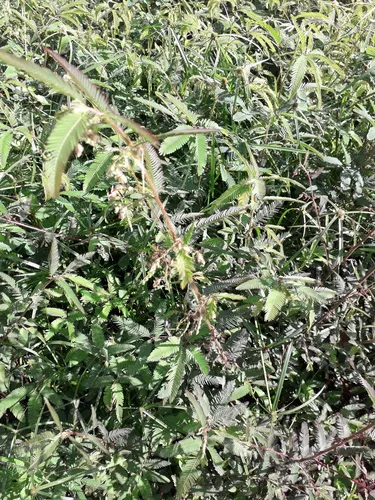
Shrubby Jointvetch Aeschynomene evenia

Shrubby Jointvetch is an introduced perennial herb, found in the lower 48 states and Puerto Rico.

More about this plant

Aeschynomene evenia is a species of flowering plant in the family Fabaceae. It is a shrub native to the Americas. This species has emerged as a model organism to study rhizobia symbiosis, since it can interact with photosynthetic Bradyrhizobium species that do not produce Nod factors, and the mode of entry of the bacteria into the plant tissues occurs in an intracellular fashion, in contrast to the infection thread formed by other legumes. Its genome has been sequenced and published in 2021. Wikipedia →

Growing & care

USDA PLANTS · TRY
Conditions
Sources · Conditions
Cold hardiness (derived) — Hardiness
Hardiness
≥ zone 10 derived from its U.S. range
Size & form
Sources · Size & form
USDA PLANTS — Lifespan
Lifespan
Perennial
In the garden
Herb layer — Sits in the herb of a layered food forest or polyculture.Open guide →
Nitrogen fixer — Fixes atmospheric nitrogen through root-nodule bacteria — builds soil fertility for itself and its neighbours, cutting fertiliser need.Open guide →
derived roles
Species characteristics from USDA PLANTS (public domain) + TRY (CC BY) — general guidance, not a guarantee for your exact site. Deer "browsing" is documented palatability, not a deer-proof claim.

Wildlife & pollinators

How pollinator value is scored →
❧ Caterpillar hosts ~1 caterpillar species

Aeschynomene supports ~1 caterpillar species.

Native butterfly & moth caterpillars are the base of the terrestrial food web — most songbirds rear their young almost entirely on them. As a host for native Lepidoptera this is a modest genus.

Recorded feeding on Aeschynomene in North America, including:

Keystone count (genus-level) from Warren II 2026 (CC0) · Tallamy host-use records. Named species (a documented Nearctic sample, not exhaustive) from NHM HOSTS (CC0).
Species thumbnails re-hosted from iNaturalist — Creative Commons, credited per image (hover for credit). Click any species to see it on iNaturalist. Not exhaustive; many taxa have no openly-licensed photo yet.
Sources for this entry (14) Open & cited
[01] Scientific name & family — USDA PLANTS (DwCA, Zenodo 17903503)
[02] Growth habit & duration — USDA PLANTS (DwCA, Zenodo 17903503)
[03] Native status & distribution — USDA PLANTS (DwCA, Zenodo 17903503)
[04] Common name — USDA PLANTS (via GBIF)
[05] Invasive / introduced status — US-RIIS v2.0 (USGS)
[06] Wetland indicator — USACE National Wetland Plant List (2022)
[08] Description — Wikipedia (CC BY-SA)
[09] Ecological value — Warren II 2026 (CC0) · Tallamy host-use counts
[10] Conservation rank — NatureServe Explorer (CC BY)
[11] Cold hardiness (derived) — Derived from U.S. range × USDA PHZM zones
[12] Nitrogen fixation — Werner et al. 2014 (Dryad, CC0)
[13] Caterpillar host count — Warren II 2026 (Dryad, CC0) · Tallamy host-use counts
[14] Caterpillar species — NHM HOSTS (CC0)
Spot an error or have a better photo? Every field links to its source, and the whole dataset is open.
Cite this page Open data, please attribute

PlantKey’s data is open under CC BY-SA 4.0 — free to reuse and adapt, with attribution and the same licence. Photos keep their own per-image licence + credit (see Sources above).

Citation

Loading…

BibTeX
Loading…