
Zigzag Jointvetch Aeschynomene rudis
Zigzag Jointvetch is a perennial wildflower native to the lower 48 states and Puerto Rico.
More about this plant
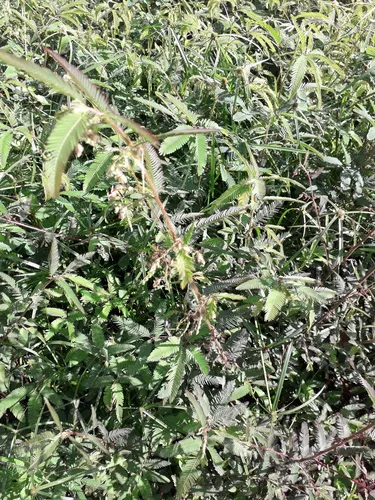
Aeschynomene rudis is a species of flowering plant in the legume family known by the common name zigzag jointvetch. It is native to South America but it is known from other continents, including North America, as a noxious weed, especially of wet areas such as rice fields. It is aquatic or semi-aquatic, growing bristly, glandular stems near or in water. It grows up to two metres tall. The leaves are composed of oval-shaped leaflets each about a centimetre long. At the base of each leaf are large, flat, pointed stipules. The flower is purple-tinted white and 1 to 1.5 centimetres wide. The fruit is a lobed, gland-dotted legume pod narrowed between the seeds. It is up to 5 centimetres long and less than one wide. As the pod dries it breaks into segments, each segment containing a seed. The hard, shiny seed is kidney-shaped and 2 or 3 millimetres long. Wikipedia →
Growing & care
USDA PLANTS · TRY- Hardiness
- ≥ zone 8 derived from its U.S. range
- Lifespan
- Perennial
- Foliage
- Broadleaf
Wildlife & pollinators
How pollinator value is scored →❧ Caterpillar hosts ~1 caterpillar species
Aeschynomene supports ~1 caterpillar species.
Native butterfly & moth caterpillars are the base of the terrestrial food web — most songbirds rear their young almost entirely on them. As a host for native Lepidoptera this is a modest genus.
Recorded feeding on Aeschynomene in North America, including:

Related plants
More Aeschynomene →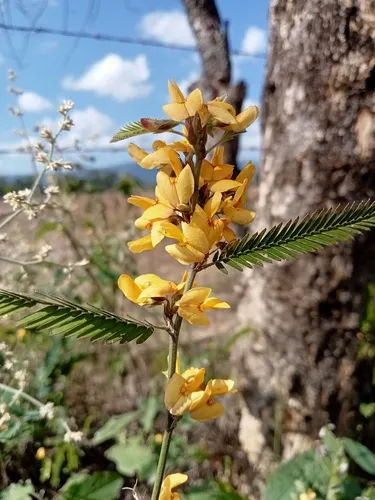
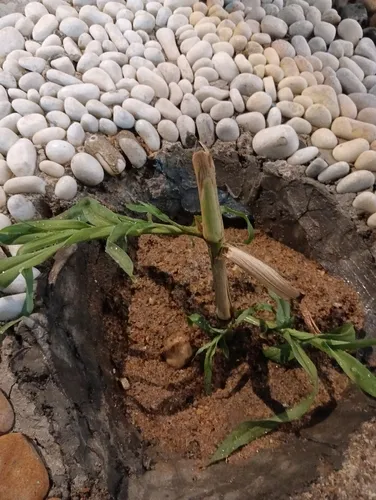
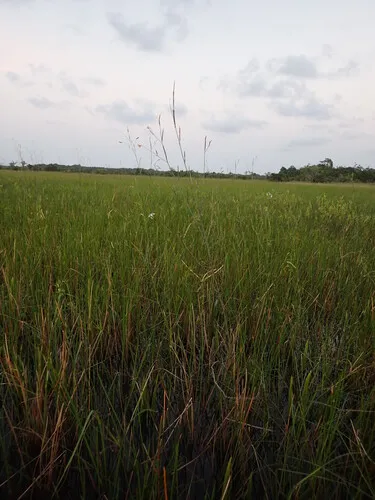
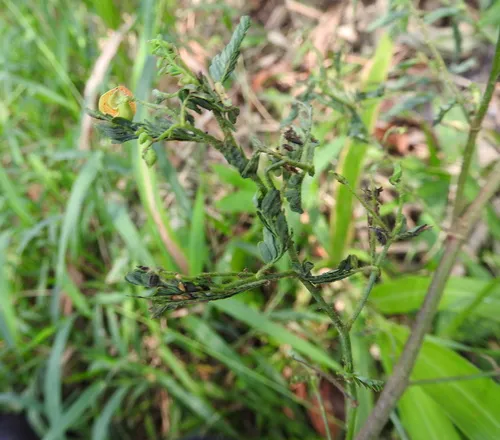
How we know this (1) Methods & honest limits
A recorded categorical fact: each species is tagged C3 (standard), C4 (heat/water-efficient) or CAM (succulent, night-time CO₂ uptake) — or a facultative combination. We only show a trait card for the noteworthy C4/CAM cases; C3 is the unremarkable majority, kept in the data but not surfaced as a card.
Sources for this entry (16) Open & cited
Cite this page Open data, please attribute
PlantKey’s data is open under CC BY-SA 4.0 — free to reuse and adapt, with attribution and the same licence. Photos keep their own per-image licence + credit (see Sources above).
Loading…
BibTeX
Loading…