
Desert Madwort (var. desertorum) Alyssum desertorum var. desertorum variety
Desert Madwort (var. desertorum) is an introduced annual herb, found in Canada and the lower 48 states.
More about this plant
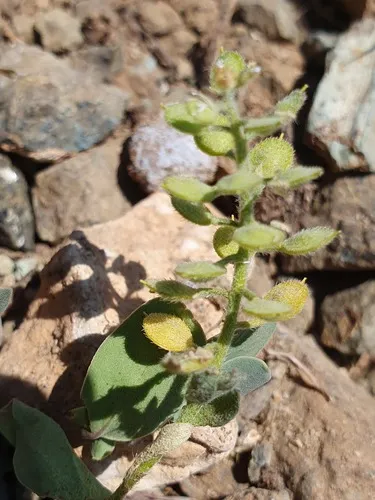
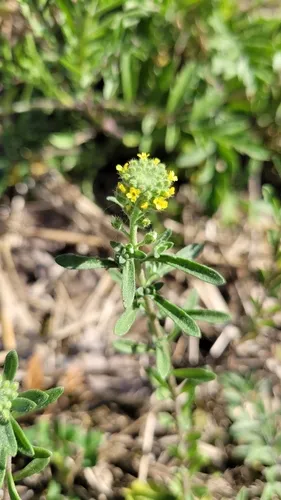
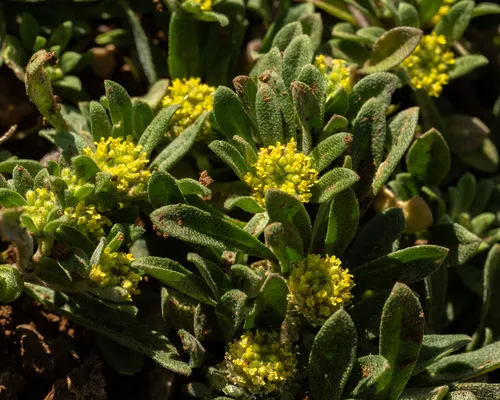
Alyssum desertorum is a species of flowering plant in the family Brassicaceae known by the common name desert madwort. It is native to Europe, North Africa and Asia, and it is found in parts of western North America as an introduced species and sometimes a weed. This is a hairy annual herb producing upright stems up to about 20 centimeters tall. The leaves are linear to oblanceolate-linear in shape, 0.5-4 millimeters long and 0.3-3 millimeters wide. The entire plant is covered by 8-20 rayed stellate trichomes, giving the plant a grayish appearance. It produces small yellowish flowers with petals that are 2-2.5 millimeters long and round, notched fruits 2.5-4.5 millimeters long. The brown seeds are winged, arranged two to a locule, and are about 1.5 millimeters long. Wikipedia →
Growing & care
USDA PLANTS · TRY- Hardiness
- ≥ zone 4 derived from its U.S. range
- Lifespan
- Annual
Wildlife & pollinators
How pollinator value is scored →❧ Caterpillar hosts ~2 caterpillar species
Alyssum supports ~2 caterpillar species.
Native butterfly & moth caterpillars are the base of the terrestrial food web — most songbirds rear their young almost entirely on them. As a host for native Lepidoptera this is a modest genus for introduced plants — native genera typically support far more.
Recorded feeding on Alyssum in North America, including:


Related plants
More Alyssum →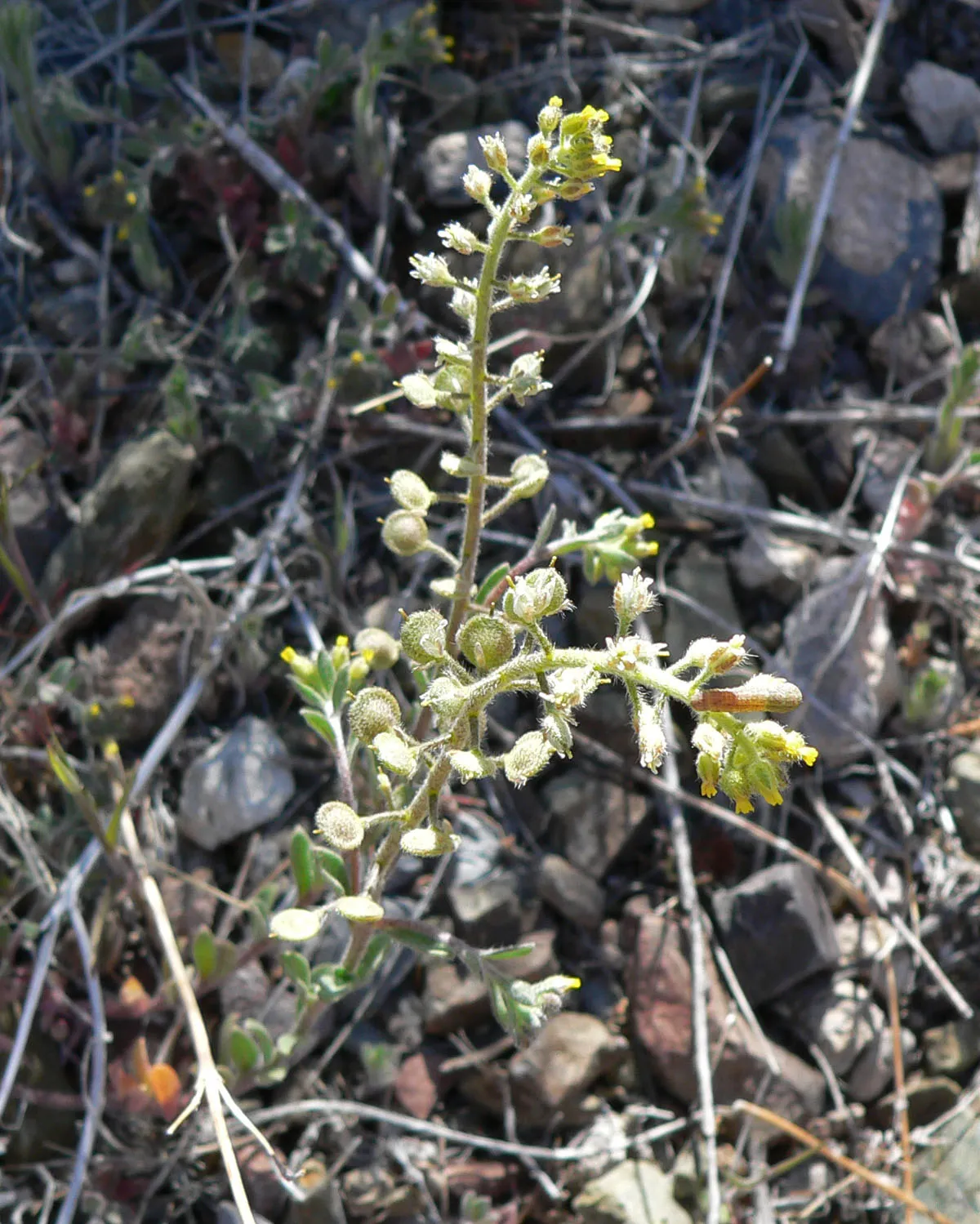
Sources for this entry (12) Open & cited
Cite this page Open data, please attribute
PlantKey’s data is open under CC BY-SA 4.0 — free to reuse and adapt, with attribution and the same licence. Photos keep their own per-image licence + credit (see Sources above).
Loading…
BibTeX
Loading…