
Monarch Redstem Ammannia baccifera
Monarch Redstem is an annual wildflower native to Puerto Rico. It grows to 2.6 ft.
More about this plant
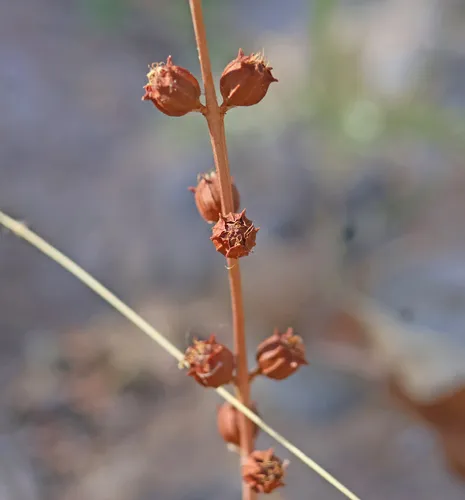
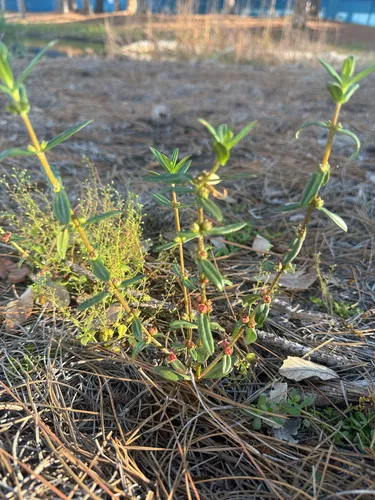
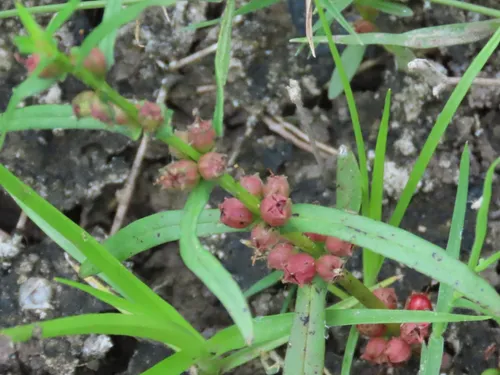
Ammannia baccifera, also known as the monarch redstem or blistering ammannia is a species in the family Lythraceae. It is widespread in the tropical regions of Asia, America and Africa. It has been naturalized in Spain. It is annual and herbaceous, and can be found in marshes, swamps, rice fields and water courses at low elevations. It is considered endangered in Israel, but because it is widespread and common elsewhere, the IUCN considers it to be 'Least Concern'. The plant Ammannia baccifera Linn. is erect, branched, smooth, slender, annual, more or less purplish herb 10 to 50 centimeters in height. The stems are somewhat 4-angled. The leaves are oblong, oblanceolate, or narrowly elliptic, about 3.5 centimeters long – those on the branches very numerous, small, and 1 to 1.5 centimeters long – with narrowed base and pointed or somewhat rounded tip. The flowers are small, about 1.2 millimeters long, greenish or purplish, and borne in dense axillary clusters. The capsules are nearly spherical, depressed, about 1.2 millimeters in diameter, purple, and irregularly circumscribes above the middle. The seeds are black. Wikipedia →
Growing & care
USDA PLANTS · TRY- Height
- 2.6 ft
- Lifespan
- Annual
- Foliage
- Broadleaf
Related plants
More Ammannia →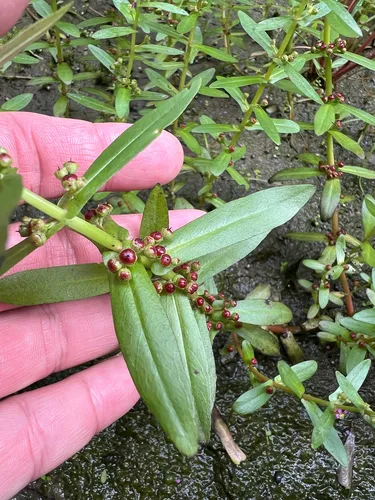
How we know this (1) Methods & honest limits
A recorded categorical fact: each species is tagged C3 (standard), C4 (heat/water-efficient) or CAM (succulent, night-time CO₂ uptake) — or a facultative combination. We only show a trait card for the noteworthy C4/CAM cases; C3 is the unremarkable majority, kept in the data but not surfaced as a card.
Sources for this entry (16) Open & cited
Cite this page Open data, please attribute
PlantKey’s data is open under CC BY-SA 4.0 — free to reuse and adapt, with attribution and the same licence. Photos keep their own per-image licence + credit (see Sources above).
Loading…
BibTeX
Loading…