
American Beachgrass Ammophila breviligulata
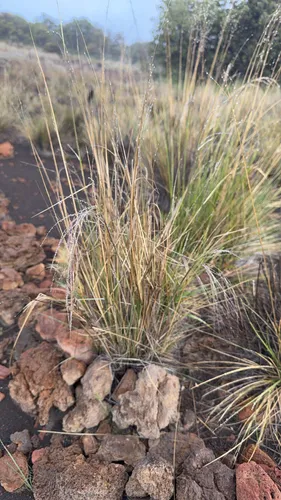
American Beachgrass is a perennial grass native to Canada, the lower 48 states, and Saint-Pierre & Miquelon. It grows to 2.5 ft and blooms Apr in part shade – shade, with brown fruit.
More about this plant
Ammophila breviligulata is a species of grass native to eastern North America, where it grows on sand dunes along the Atlantic Ocean and Great Lakes coasts. Beachgrass thrives under conditions of shifting sand, sand burial, and high winds; it is a dune-building grass that builds the first line of sand dunes along the coast. Beachgrass is less vigorous in stabilized sand, and is only infrequently found further inland than the coastal foredunes. On the Atlantic coastline of North America, Ammophila breviligulata has been observed as far south as North Carolina, and is often planted in dune restoration projects. Ammophila breviligulata was introduced to the Pacific coast of North America in the 1930s. It is proving to be invasive, and is increasingly important to coastal ecology and development in Oregon, Washington, and British Columbia. Wikipedia →
Growing & care
USDA PLANTS · TRY- Sun
- Part shade – shade
- Soil & moisture
- Medium moisture
- Soil pH
- 5.8–7.8
- Fertility need
- High
- Adapts to
- Coarse (sandy), Medium (loam)
- Hardiness
- USDA zone 5+
- Height
- 2.5 ft
- Spacing
- 1–2 ft apart from USDA planting density
- Spread
- Moderate
- Growth rate
- Rapid
- Growth form
- Rhizomatous
- Lifespan
- Perennial · moderate
- Foliage
- Broadleaf · coarse texture
- Active growth
- Spring through autumn
- Fruit
- Brown
- Propagate by
- Bare root, Sprigs
- Seed starting
- No stratification needed
- Seeds ripen
- Summer seed-collection / harvest window
- In the trade
- Routinely available
- Deer browsing
- Medium moderately palatable
- Resprouts if cut
- No
Sow timing keys off your local last- and first-frost dates.
Related plants
More Ammophila →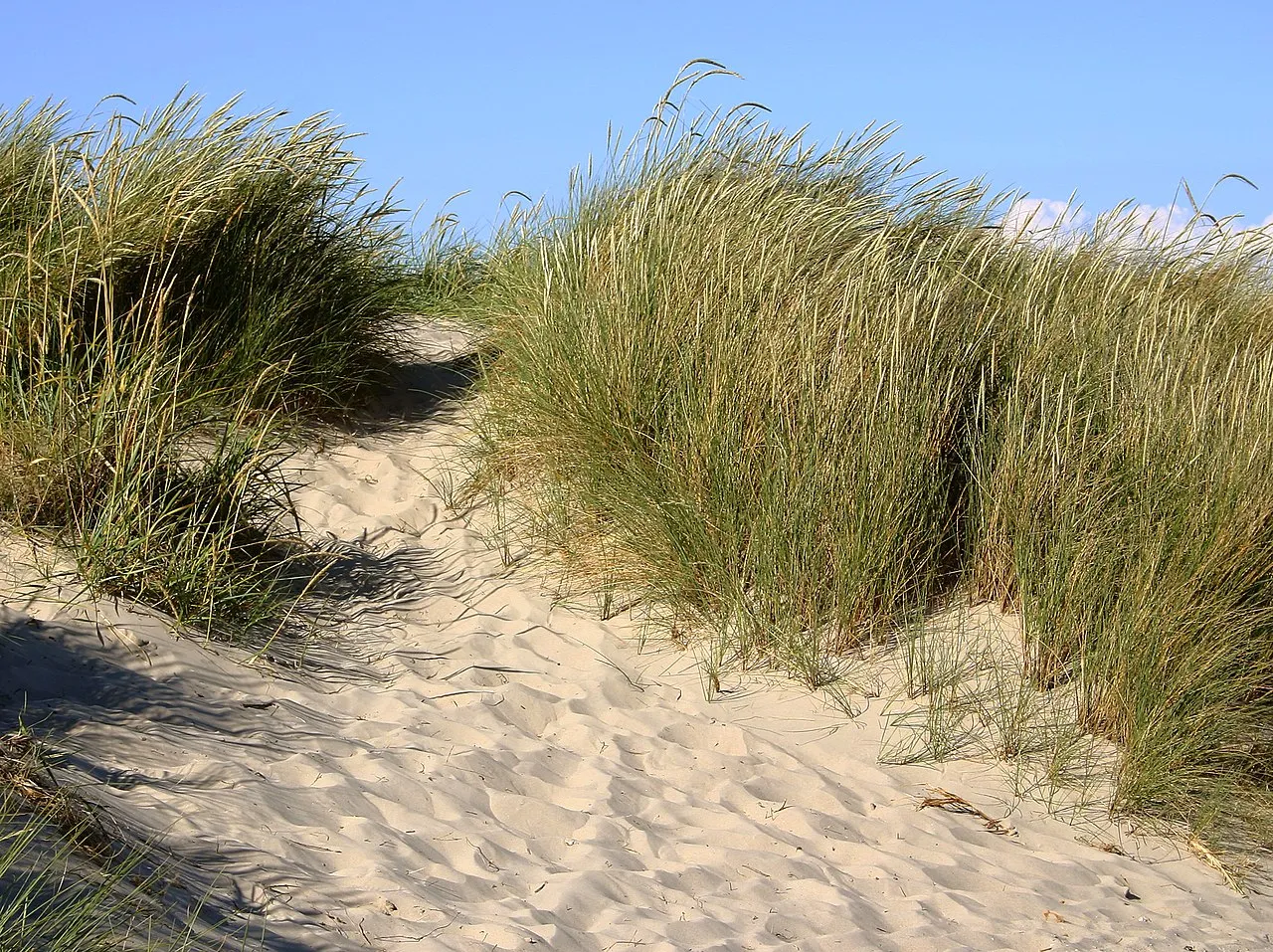
How we know this (1) Methods & honest limits
A recorded categorical fact: each species is tagged C3 (standard), C4 (heat/water-efficient) or CAM (succulent, night-time CO₂ uptake) — or a facultative combination. We only show a trait card for the noteworthy C4/CAM cases; C3 is the unremarkable majority, kept in the data but not surfaced as a card.
Sources for this entry (27) Open & cited
Cite this page Open data, please attribute
PlantKey’s data is open under CC BY-SA 4.0 — free to reuse and adapt, with attribution and the same licence. Photos keep their own per-image licence + credit (see Sources above).
Loading…
BibTeX
Loading…