PlantKey Open ecological atlas
Planner
Home / Browse / Anadenanthera / Cohoba Tree
iNaturalist — CC, credited & licensed per image
Fabaceae family

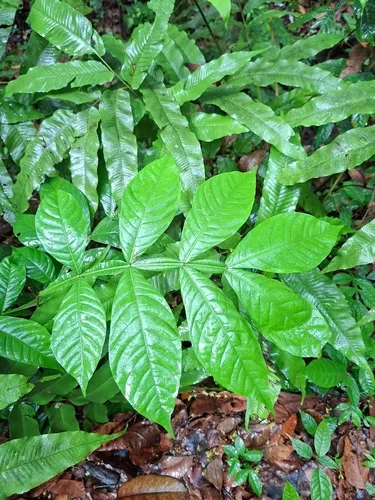
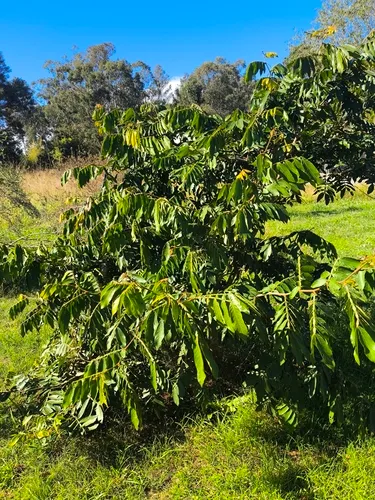
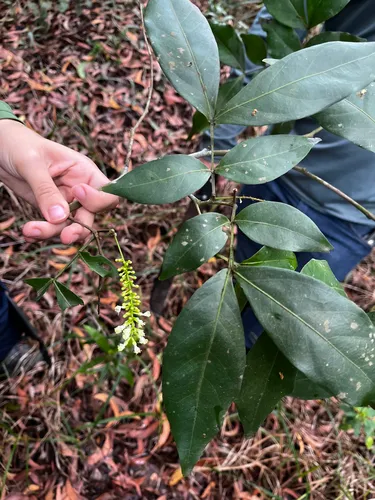
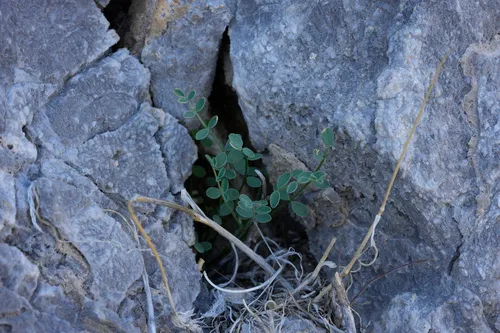
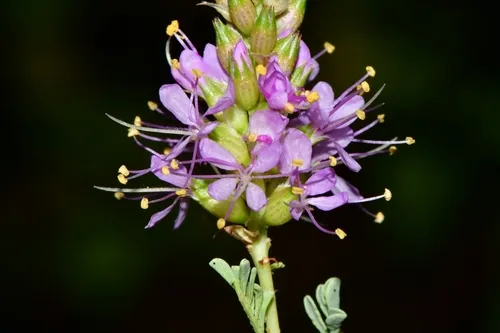
Cohoba Tree Anadenanthera peregrina

Native

Cohoba Tree is a perennial tree native to Puerto Rico.

More about this plant

Anadenanthera peregrina, also known as yopo, jopo, cohoba, cojoba, parica or calcium tree, is a perennial tree in the family Fabaceae native to the Caribbean and South America. It grows up to 20 m (70 ft) tall, and has a thorny bark. Its flowers grow in small, pale yellow to white spherical clusters resembling Acacia inflorescences. This plant consists of two species A. colubrina and A. peregrina It is an entheogen which has been used in healing ceremonies and rituals for thousands of years in northern South America and the Caribbean. Although the seeds of the yopo tree were originally gathered from the wild, increased competition between tribes over access to the seeds led to it being intentionally cultivated and transported elsewhere. Wikipedia →

Growing & care

USDA PLANTS · TRY
Size & form
Sources · Size & form
USDA PLANTS — Lifespan
TRY Plant Trait Database (CC BY 4.0) — Foliage
Lifespan
Perennial
Foliage
Evergreen broadleaf
In the garden
Tree layer (canopy / understory) — Sits in the tree of a layered food forest or polyculture.Open guide →
Nitrogen fixer — Fixes atmospheric nitrogen through root-nodule bacteria — builds soil fertility for itself and its neighbours, cutting fertiliser need.Open guide →
derived roles
Species characteristics from USDA PLANTS (public domain) + TRY (CC BY) — general guidance, not a guarantee for your exact site. Deer "browsing" is documented palatability, not a deer-proof claim.
How we know this (1) Methods & honest limits
Photosynthesis Direct fact

A recorded categorical fact: each species is tagged C3 (standard), C4 (heat/water-efficient) or CAM (succulent, night-time CO₂ uptake) — or a facultative combination. We only show a trait card for the noteworthy C4/CAM cases; C3 is the unremarkable majority, kept in the data but not surfaced as a card.

Kattge, J. et al. TRY plant trait database — Categorical Traits Dataset (2012).
Derived values are computed from open data by a published method — labelled, cited, and never shown as a direct observation. Full methodology →
Sources for this entry (14) Open & cited
[01] Scientific name & family — USDA PLANTS (DwCA, Zenodo 17903503)
[02] Growth habit & duration — USDA PLANTS (DwCA, Zenodo 17903503)
[03] Native status & distribution — USDA PLANTS (DwCA, Zenodo 17903503)
[04] Common name — USDA PLANTS (via GBIF)
[05] Invasive / introduced status — USDA PLANTS (DwCA, Zenodo 17903503) — native status
[07] Description — Wikipedia (CC BY-SA)
[08] Ecological value — GloBI
[10] Functional traits — TRY Plant Trait Database (CC BY 4.0)
[11] Photosynthetic pathway — TRY Plant Trait Database (CC BY 4.0)
[12] Nitrogen fixation — Werner et al. 2014 (Dryad, CC0)
Spot an error or have a better photo? Every field links to its source, and the whole dataset is open.
Cite this page Open data, please attribute

PlantKey’s data is open under CC BY-SA 4.0 — free to reuse and adapt, with attribution and the same licence. Photos keep their own per-image licence + credit (see Sources above).

Citation

Loading…

BibTeX
Loading…