
Columbian Windflower Anemone deltoidea
Columbian Windflower is a perennial wildflower native to the lower 48 states. It blooms May – Jul.
More about this plant
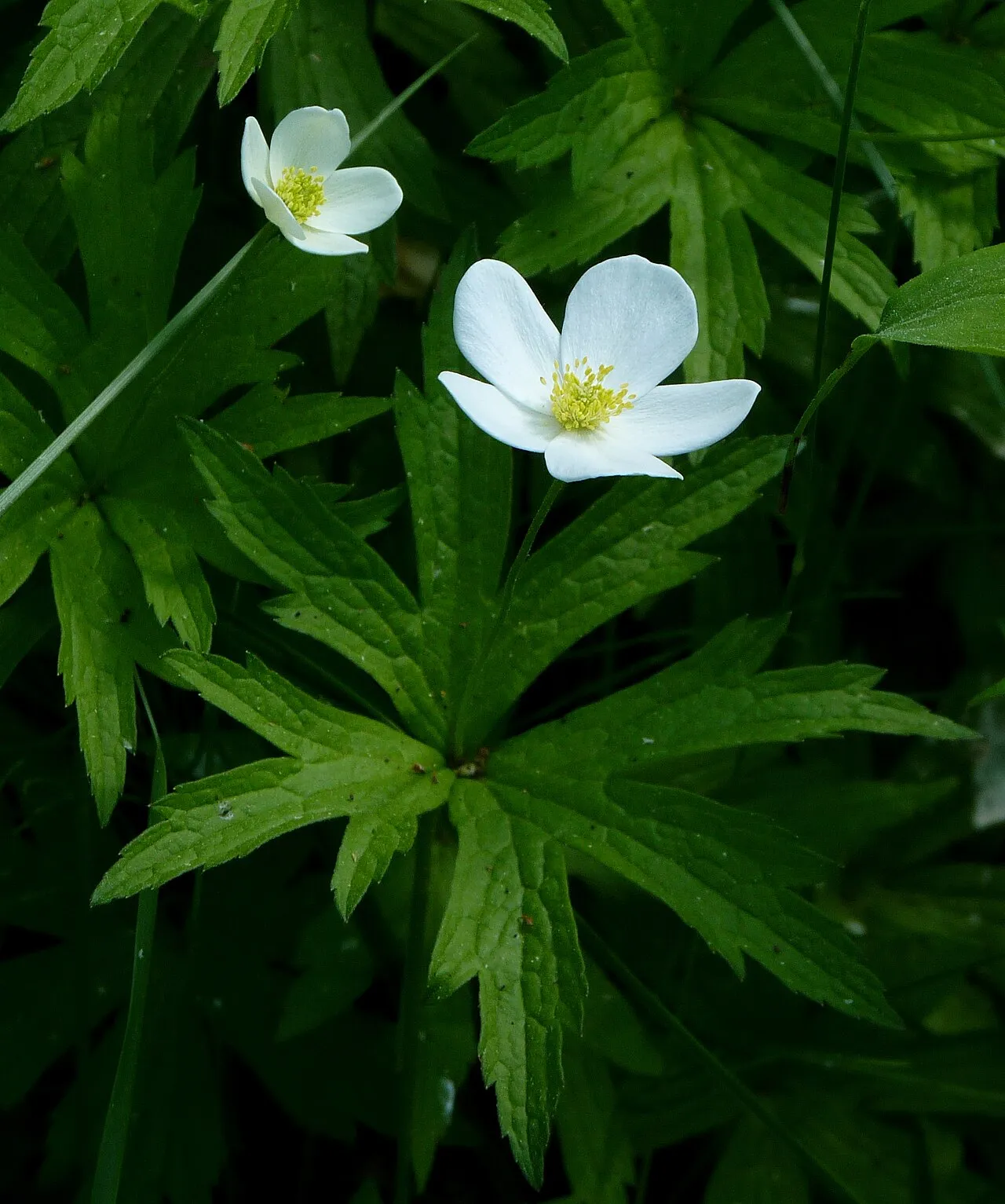
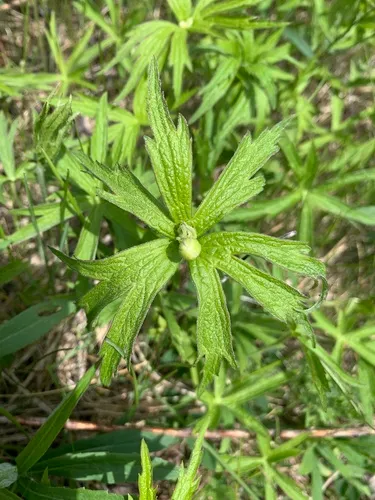
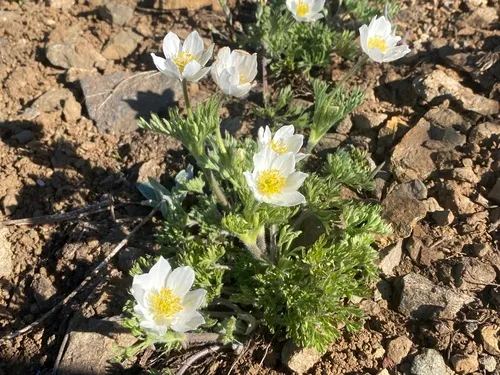
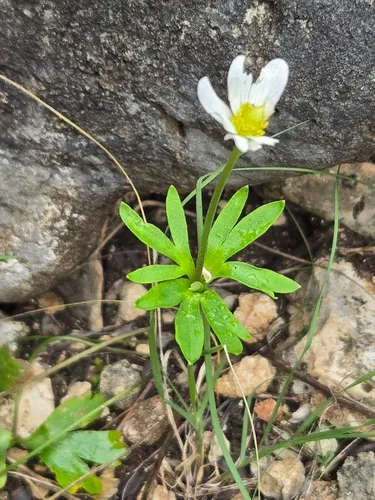
Anemonastrum deltoideum, also known by the common names Columbian windflower and western white anemone, is a species of flowering plant in the buttercup family Ranunculaceae. It is native to the forests of the west coast of the United States. This is a rhizomatous perennial herb growing between 10 and 30 centimeters tall. There is usually a single basal leaf which is divided into three large toothed leaflets, each up to 6 centimeters long. There may be more leaves along the mostly naked stem which are similar in appearance to the leaflets on the basal leaf. The inflorescence has three leaflike bracts and a single flower. The flower has no petals but five petal-like white sepals each one to two centimeters long. There are up to 120 whiskery stamens and many pistils. The fruit is a cluster of spherical achenes. Wikipedia →
Growing & care
USDA PLANTS · TRY- Hardiness
- ≥ zone 9 derived from its U.S. range
- Lifespan
- Perennial
- Foliage
- Broadleaf
Wildlife & pollinators
How pollinator value is scored →❧ Caterpillar hosts ~1 caterpillar species
Anemone supports ~1 caterpillar species.
Native butterfly & moth caterpillars are the base of the terrestrial food web — most songbirds rear their young almost entirely on them. As a host for native Lepidoptera this is a modest genus.
Recorded feeding on Anemone in North America, including:

Related plants
More Anemone →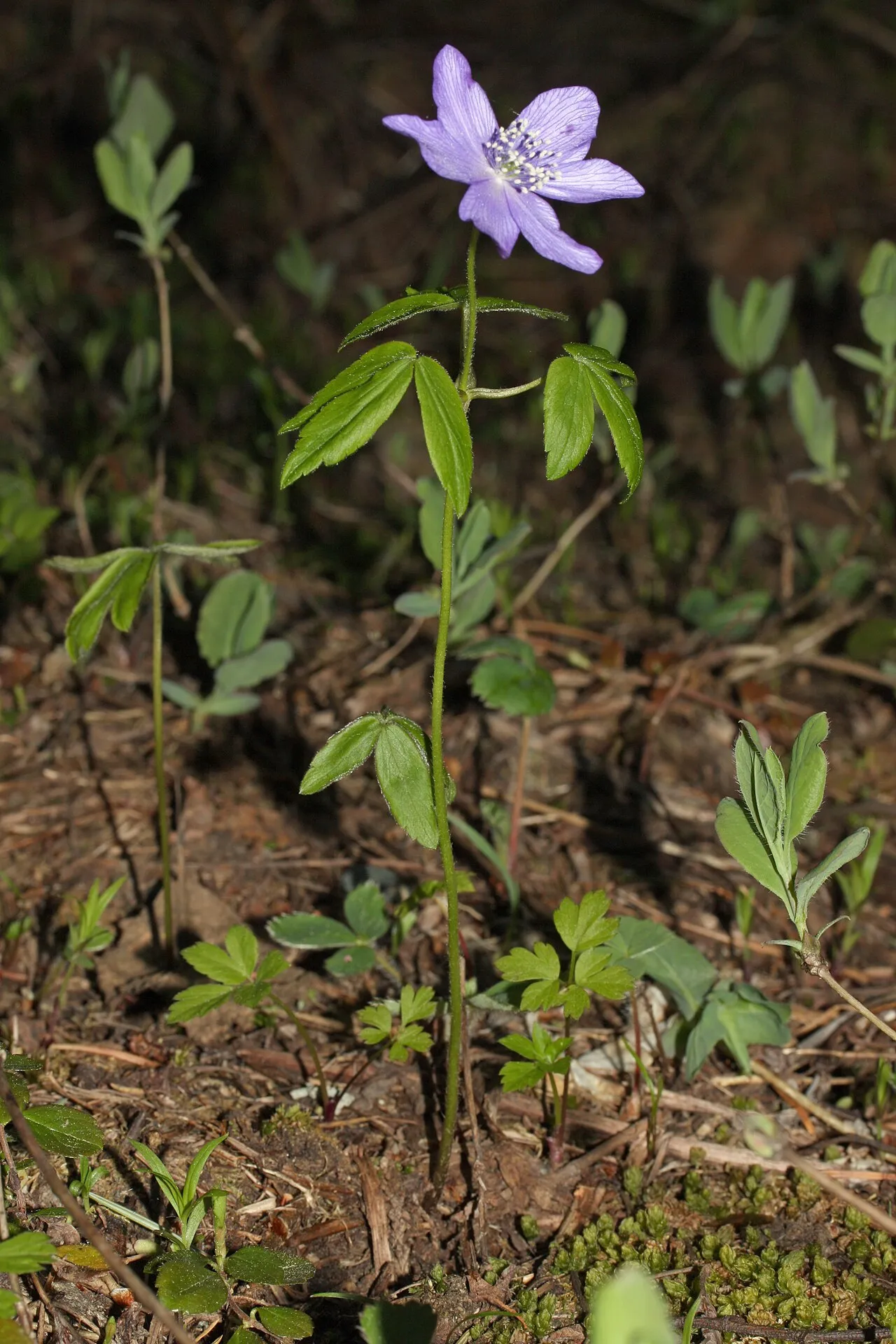
How we know this (1) Methods & honest limits
A recorded categorical fact: each species is tagged C3 (standard), C4 (heat/water-efficient) or CAM (succulent, night-time CO₂ uptake) — or a facultative combination. We only show a trait card for the noteworthy C4/CAM cases; C3 is the unremarkable majority, kept in the data but not surfaced as a card.
Sources for this entry (16) Open & cited
Cite this page Open data, please attribute
PlantKey’s data is open under CC BY-SA 4.0 — free to reuse and adapt, with attribution and the same licence. Photos keep their own per-image licence + credit (see Sources above).
Loading…
BibTeX
Loading…