
Poison Angelica Angelica lineariloba
Poison Angelica is a perennial wildflower native to the lower 48 states. It blooms Jun – Aug.
More about this plant
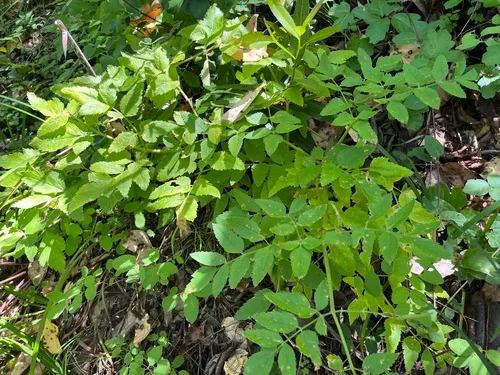
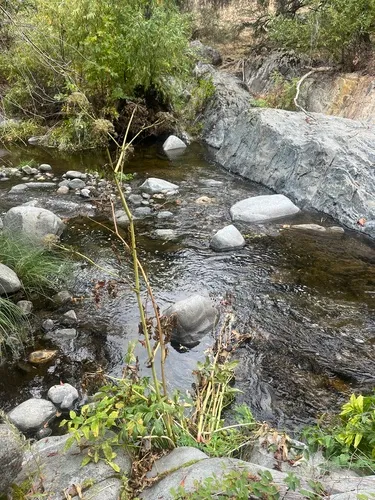
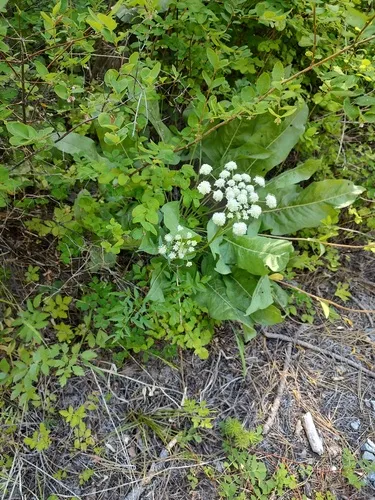
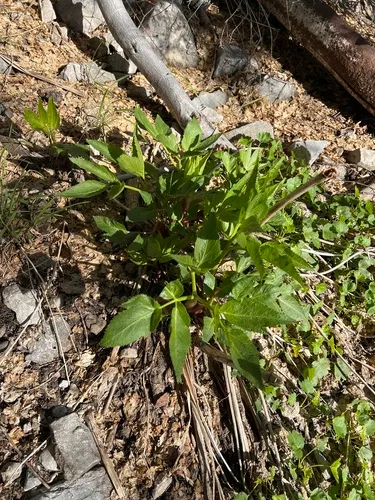
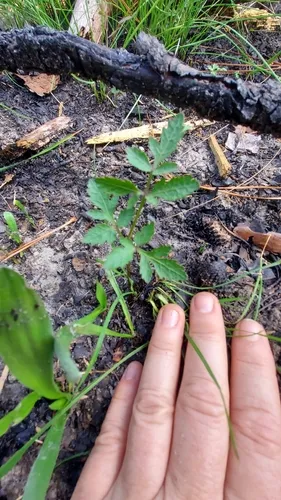
Angelica lineariloba is a species of Angelica known as poison angelica or Sierra angelica. It is native to the Sierra Nevada and nearby slopes and flats in California and western Nevada from 6000 to 10,600 ft in elevation. This is a taprooted perennial herb producing an erect, hollow stem up to about 1.5 meters tall. The large but feathery leaves are made up of many highly dissected leaflets which are linear to threadlike in shape. The inflorescence is a compound umbel with up to 40 rays holding clusters of small white to cream flowers. There are papery sheaths at the base of each petiole where it branches from the stem. The plants overall are rather similar to the other large umbellifers cow parsnip and swamp whiteheads, but cow parsnips have huge lobed but undivided leaves, while swamp whiteheads have pinnate leaves and the individual flowerheads are dense, round balls. Wikipedia →
Growing & care
USDA PLANTS · TRY- Hardiness
- ≥ zone 10 derived from its U.S. range
- Lifespan
- Perennial
- Flower colour
- White AI AI image-analysis of community-science photos (~87% expert agreement) — not a botanical record
Wildlife & pollinators
How pollinator value is scored →❧ Caterpillar hosts ~5 caterpillar species
Angelica supports ~5 caterpillar species.
Native butterfly & moth caterpillars are the base of the terrestrial food web — most songbirds rear their young almost entirely on them. As a host for native Lepidoptera this is a modest genus.
Recorded feeding on Angelica in North America, including:


+ 7 more species → ↑ show fewer


Related plants
More Angelica →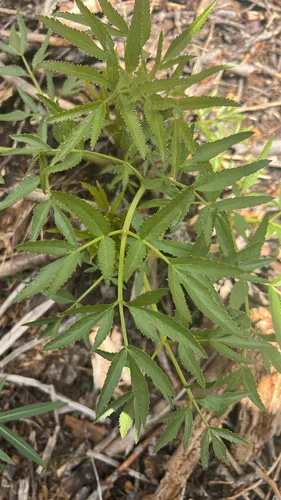
How we know this (2) Methods & honest limits
We take the plant’s U.S. county range and look up each county’s long-term climate, then summarise: native rainfall = the median annual rainfall across its counties; heat tolerance = the warm end (90th percentile) of average temperature across its range (mirroring how our cold-hardiness floor uses an extreme). Counties + medians blunt the roadside/observer bias that makes point-level climate unreliable. Needs at least five placeable counties.
Honest limits: A realized, sampling-biased niche (where it has been recorded, not its physiological optimum), and county climate is coarse — large Western counties span deserts and mountains. Derived guide, never a measured fact.
McKenzie et al. assigned each species a flower colour with a GPT-4V vision model over iNaturalist photos. We use the confident tier plus a separately-labelled lower-confidence top-up (mostly inconspicuous green/brown flowers), and render it as a small tint — never as an asserted fact, and kept out of the written synopsis.
Honest limits: AI image inference (~87% expert agreement on the confident tier); a decorative, confidence-tiered indicator, not a measured trait.
Sources for this entry (16) Open & cited
Cite this page Open data, please attribute
PlantKey’s data is open under CC BY-SA 4.0 — free to reuse and adapt, with attribution and the same licence. Photos keep their own per-image licence + credit (see Sources above).
Loading…
BibTeX
Loading…