
Pallid Milkweed (subsp. cryptoceras) Asclepias cryptoceras subsp. cryptoceras subspecies
Pallid Milkweed (subsp. cryptoceras) is a perennial wildflower native to the lower 48 states. Monarch host plant.
More about this plant
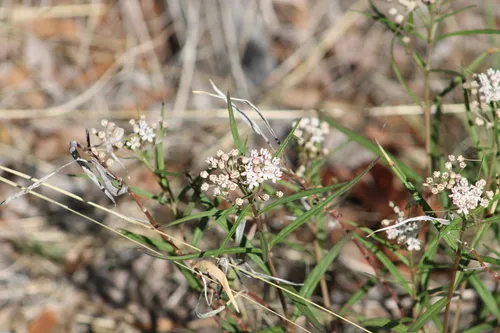
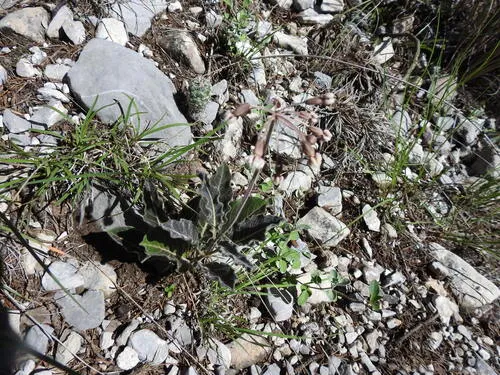
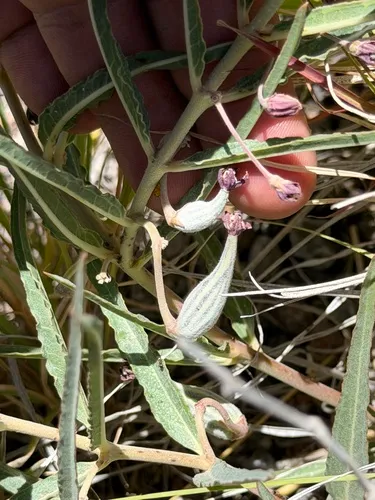
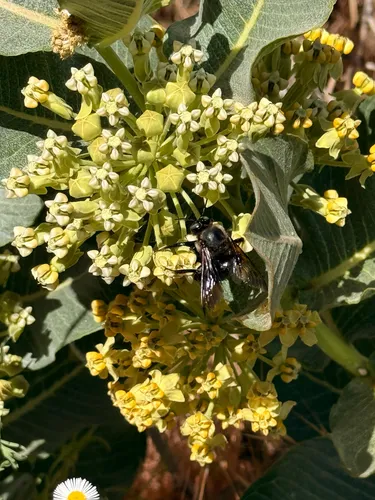
Asclepias cryptoceras is a species of milkweed known by the common names jewel milkweed, pallid milkweed, Humboldt Mountains milkweed, and cow-cabbage. It is native to the Great Basin of western North America, where it grows in many types of habitat, especially dry areas. This is a perennial herb growing low against the ground or drooping. It arises from a fleshy, woody rhizome-like root. The thick leaves are round to heart-shaped and arranged oppositely on the short stem. The inflorescence is a cluster of small flowers with centers of bright to dull pink hoods surrounded by pale-colored reflexed corollas. The fruit is a follicle held erect on a small stalk. Wikipedia →
Growing & care
USDA PLANTS · TRY- Hardiness
- ≥ zone 6 derived from its U.S. range
- Lifespan
- Perennial
Wildlife & pollinators
How pollinator value is scored →★ Monarch Larval host plant
A monarch host plant.
Monarch caterpillars eat only milkweeds (Asclepias). As a native milkweed, Pallid Milkweed (subsp. cryptoceras) is a documented larval host across its breeding range.
❧ Caterpillar hosts ~12 caterpillar species
Asclepias supports ~12 caterpillar species.
Native butterfly & moth caterpillars are the base of the terrestrial food web — most songbirds rear their young almost entirely on them. As a host for native Lepidoptera this is a moderate genus.
Recorded feeding on Asclepias in North America, including:


+ 8 more species → ↑ show fewer


Related plants
More Asclepias →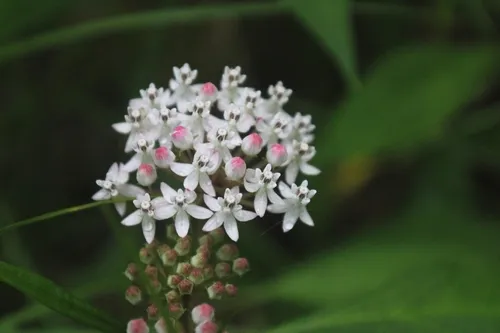

Sources for this entry (11) Open & cited
Cite this page Open data, please attribute
PlantKey’s data is open under CC BY-SA 4.0 — free to reuse and adapt, with attribution and the same licence. Photos keep their own per-image licence + credit (see Sources above).
Loading…
BibTeX
Loading…