
Oregon Bensoniella Bensoniella oregona
Oregon Bensoniella is a perennial wildflower native to the lower 48 states. It blooms Jun – Jul.
More about this plant
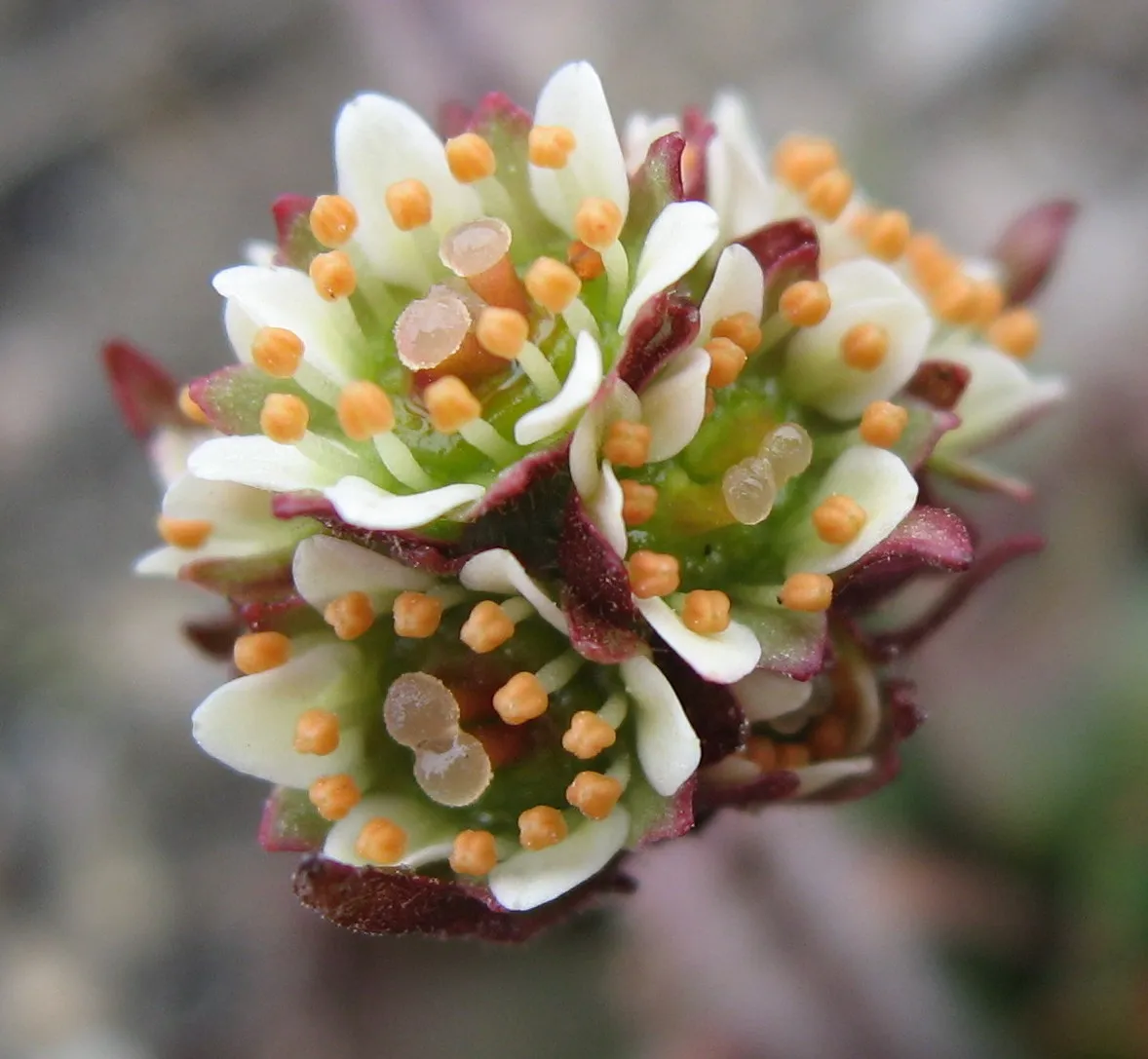
Bensoniella is a monotypic genus of plants in the saxifrage family containing the single species Bensoniella oregona, which is known by the common name Oregon bensoniella, or simply bensoniella. This plant is endemic to the Klamath Mountains of northern California and southern Oregon. This is a plant of the wet forest understory and meadows above 1000 meters in elevation. It is a perennial herb which grows from a rhizome and bears rounded to heart-shaped lobed leaves with woolly petioles and tall, thin racemes of flowers. Each flower is white with bright yellow-pink anthers. The plant produces capsules of abundant seeds but also reproduces vegetatively. When it does reproduce sexually, it often self-pollinates. Bensoniella is not endangered but it is a species of some concern for several reasons, including lack of genetic diversity in part due to its habit of self-pollination and asexual reproduction, its relatively narrow tolerance of habitats, its small range of distribution, habitat destruction due to logging, grazing, and road-building, and erosion. The plant was first collected in 1916 by John Hunter Thompson. Wikipedia →
Growing & care
USDA PLANTS · TRY- Hardiness
- ≥ zone 9 derived from its U.S. range
- Lifespan
- Perennial
- Flower colour
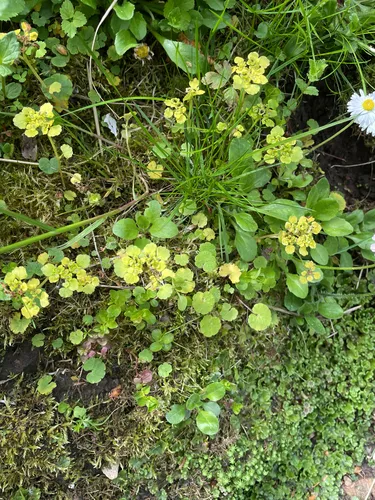
- Yellow AI AI image-analysis of community-science photos (~87% expert agreement) — not a botanical record
Related plants
More Bensoniella →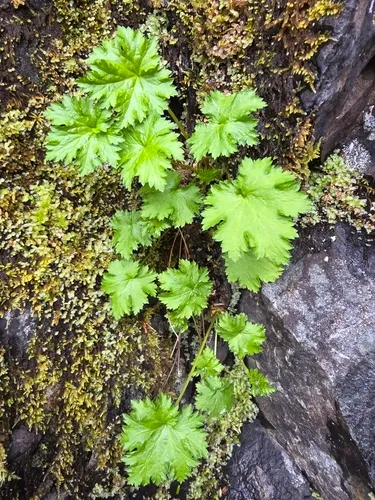
How we know this (1) Methods & honest limits
McKenzie et al. assigned each species a flower colour with a GPT-4V vision model over iNaturalist photos. We use the confident tier plus a separately-labelled lower-confidence top-up (mostly inconspicuous green/brown flowers), and render it as a small tint — never as an asserted fact, and kept out of the written synopsis.
Honest limits: AI image inference (~87% expert agreement on the confident tier); a decorative, confidence-tiered indicator, not a measured trait.
Sources for this entry (14) Open & cited
Cite this page Open data, please attribute
PlantKey’s data is open under CC BY-SA 4.0 — free to reuse and adapt, with attribution and the same licence. Photos keep their own per-image licence + credit (see Sources above).
Loading…
BibTeX
Loading…