
Golden Snakecactus Bergerocactus emoryi
Golden Snakecactus is a perennial shrub native to the lower 48 states. It blooms Apr – Jun.
More about this plant
Bergerocactus emoryi is a species of cactus, known commonly as the golden-spined cereus, golden snake cactus, velvet cactus or golden club cactus. It is a relatively small cactus, but it can form dense thickets or colonies, with the dense yellow spines giving off a velvety appearance when backlit by the sun. From April to May, yellow, green-tinged flowers emerge, which transform into reddish, globular fruit. This species is native to the California Floristic Province, and is found in northwestern Baja California and a small part of California, in San Diego County and on the southern Channel Islands. Where the Mediterranean climate of the California Floristic Province collides with the subtropical Sonoran Desert near El Rosario, hybrids with two other species of cacti are found. It is the sole member of the monotypic genus Bergerocactus. Wikipedia →
Growing & care
USDA PLANTS · TRY- Hardiness
- ≥ zone 11 derived from its U.S. range
- Lifespan
- Perennial
- Flower colour
- Yellow AI AI image-analysis of community-science photos (~87% expert agreement) — not a botanical record
Related plants
More Bergerocactus →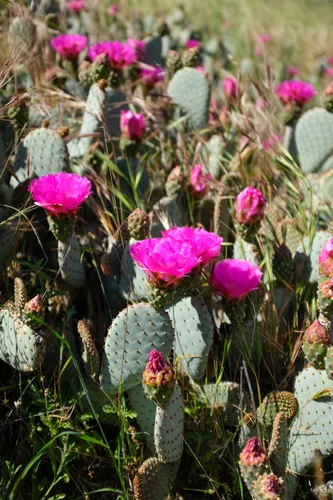
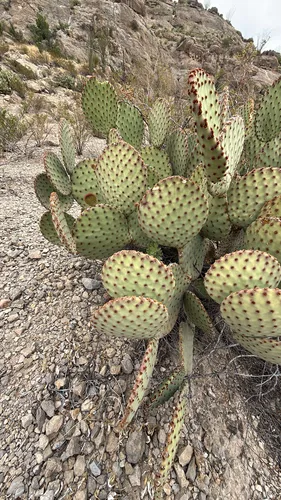
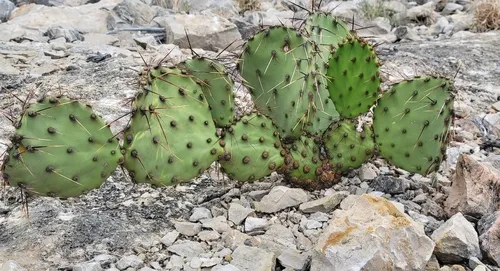
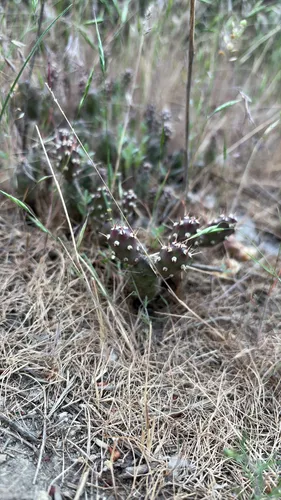
How we know this (2) Methods & honest limits
A recorded categorical fact: each species is tagged C3 (standard), C4 (heat/water-efficient) or CAM (succulent, night-time CO₂ uptake) — or a facultative combination. We only show a trait card for the noteworthy C4/CAM cases; C3 is the unremarkable majority, kept in the data but not surfaced as a card.
McKenzie et al. assigned each species a flower colour with a GPT-4V vision model over iNaturalist photos. We use the confident tier plus a separately-labelled lower-confidence top-up (mostly inconspicuous green/brown flowers), and render it as a small tint — never as an asserted fact, and kept out of the written synopsis.
Honest limits: AI image inference (~87% expert agreement on the confident tier); a decorative, confidence-tiered indicator, not a measured trait.
Sources for this entry (14) Open & cited
Cite this page Open data, please attribute
PlantKey’s data is open under CC BY-SA 4.0 — free to reuse and adapt, with attribution and the same licence. Photos keep their own per-image licence + credit (see Sources above).
Loading…
BibTeX
Loading…