
Chinese Grass Boehmeria nivea
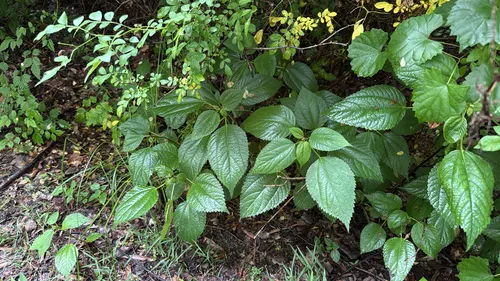
Chinese Grass is an introduced perennial shrub, found in the lower 48 states and Puerto Rico. It grows to 5 ft.
More about this plant
Boehmeria nivea, commonly known as ramie, Chinese grass or Chinese silk plant, is a monoecious shrub or subshrub in the family Urticaceae commonly found in China. It is native to warm temperate and tropical regions of the eastern Himalaya, and east and southeastern Asia. It grows to 2 metres tall, with alternately-arranged leaves 7–15 cm long and 6–12 cm broad, oval-acuminate with a serrated margin. Boehmeria nivea has been cultivated in China and elsewhere in southeast Asia for thousands of years, as the source of the fibre crop ramie. It has been introduced into tropical and subtropical parts of other continents, such the southeastern United States. Wikipedia →
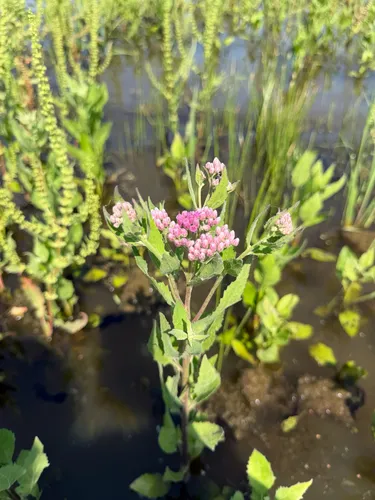
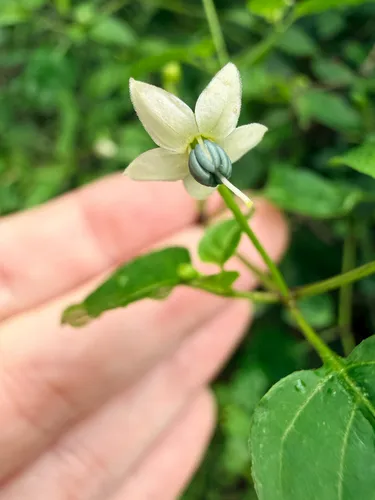
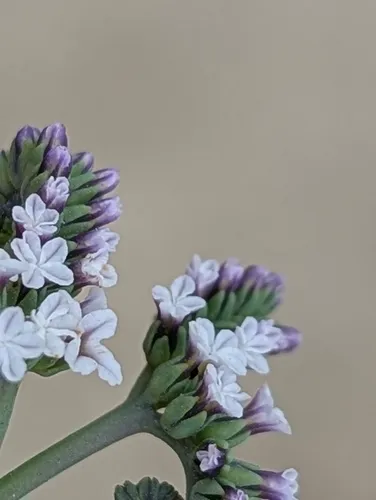
Chinese Grass is flagged invasive in the U.S. These natives fill a similar niche — same growth habit, bloom season, height, and region — so you keep the look and feed local wildlife instead of spreading a problem.
Growing & care
USDA PLANTS · TRY- Hardiness
- ≥ zone 8 derived from its U.S. range
- Height
- 5 ft
- Lifespan
- Perennial
- Foliage
- Broadleaf
Wildlife & pollinators
How pollinator value is scored →❧ Caterpillar hosts ~6 caterpillar species
Boehmeria supports ~6 caterpillar species.
Native butterfly & moth caterpillars are the base of the terrestrial food web — most songbirds rear their young almost entirely on them. As a host for native Lepidoptera this is a modest genus.
Recorded feeding on Boehmeria in North America, including:


+ 2 more species → ↑ show fewer


Wildlife & visitors 1 nectaring
Open records of who else uses Chinese Grass — a generalist food-web signal, kept separate from the keystone Ecological Value.
1 adult butterfly & moth species is recorded nectaring at its flowers:

Related plants
More Boehmeria →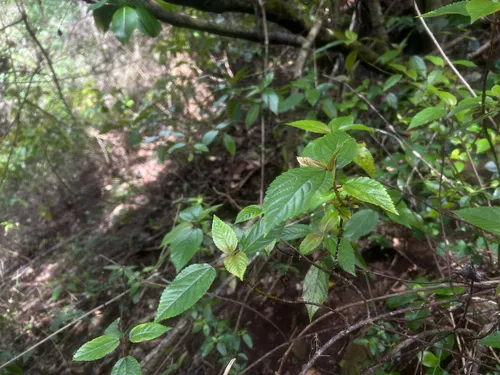
How we know this (1) Methods & honest limits
A recorded categorical fact: each species is tagged C3 (standard), C4 (heat/water-efficient) or CAM (succulent, night-time CO₂ uptake) — or a facultative combination. We only show a trait card for the noteworthy C4/CAM cases; C3 is the unremarkable majority, kept in the data but not surfaced as a card.
Sources for this entry (19) Open & cited
Cite this page Open data, please attribute
PlantKey’s data is open under CC BY-SA 4.0 — free to reuse and adapt, with attribution and the same licence. Photos keep their own per-image licence + credit (see Sources above).
Loading…
BibTeX
Loading…