No openly-licensed photo yetWe add Creative-Commons photos from iNaturalist as they’re published.
Sterculiaceae family
Whiteflower Kurrajong Brachychiton populneum
Whiteflower Kurrajong is an introduced perennial tree, found in the lower 48 states and the U.S. Virgin Islands.
More about this plant
Brachychiton populneus, commonly known as the kurrajong, is a small to medium-sized tree found naturally in Australia in a diversity of habitats from wetter coastal districts to semi-arid interiors of Victoria, New South Wales and Queensland. Carrejun and carrejan were the indigenous names of trees in the foothills of the Blue Mountains near Sydney, and the bark was used for twine and fishing lines. Wikipedia →
Growing & care
USDA PLANTS · TRY Conditions
Sources · Conditions
Cold hardiness (derived) — Hardiness
- Hardiness
- ≥ zone 10 derived from its U.S. range
Size & form
Sources · Size & form
USDA Urban Tree DB (public domain) — open-grown crown width — Mature width
USDA PLANTS — Lifespan
TRY Plant Trait Database (CC BY 4.0) — Foliage
- Mature width
- ≈ 30 ft wide open-grown, the broad end of measured crowns
- Lifespan
- Perennial
- Foliage
- Broadleaf
In the garden
Tree layer (canopy / understory) — Sits in the tree of a layered food forest or polyculture.Open guide →
derived roles
Species characteristics from USDA PLANTS (public domain) + TRY (CC BY) — general guidance, not a
guarantee for your exact site. Deer "browsing" is documented palatability, not a deer-proof claim.
Related plants
More Brachychiton →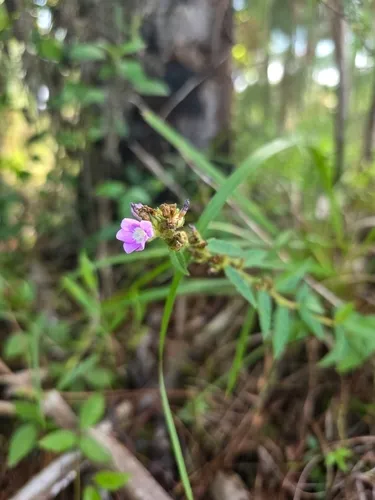
Native
Bretonica Peluda
Melochia spicata
●●●○○ 
Native
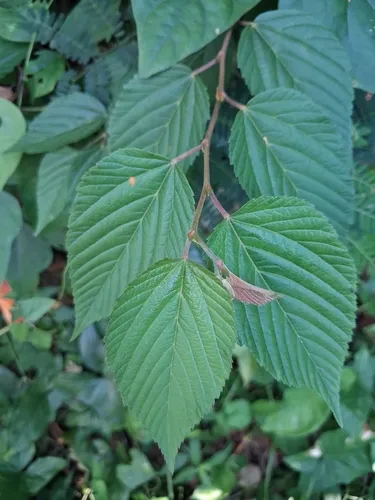
Bretonica Prieta
Melochia nodiflora
●●●○○ 
Native
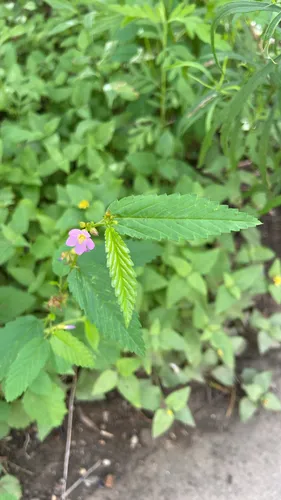
Pyramidflower
Melochia pyramidata
●●●○○ Native
Raichie
Waltheria calcicola
●●●○○ 
Native
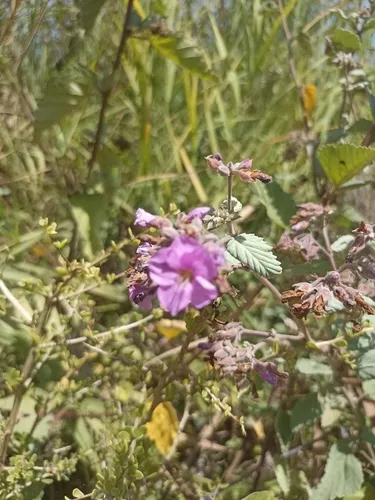
Teabush
Melochia tomentosa
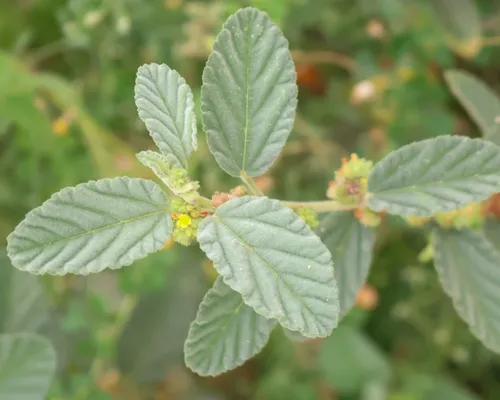
●●●○○ 
Native
Uhaloa
Waltheria indica
●●●○○ Same genus / family, ranked by ecological value — from the PlantKey catalog
Sources for this entry (10) Open & cited
[01] Scientific name & family — USDA PLANTS (DwCA, Zenodo 17903503)
[02] Growth habit & duration — USDA PLANTS (DwCA, Zenodo 17903503)
[03] Native status & distribution — USDA PLANTS (DwCA, Zenodo 17903503)
[04] Common name — USDA PLANTS (via GBIF)
[05] Invasive / introduced status — USDA PLANTS (DwCA, Zenodo 17903503) — native status
[06] Description — Wikipedia (CC BY-SA)
[07] Ecological value — GloBI
[08] Foliage — TRY Plant Trait Database (CC BY 4.0)
[09] Cold hardiness (derived) — Derived from U.S. range × USDA PHZM zones
[10] Mature width — USDA Urban Tree DB (public domain) — open-grown crown width
Spot an error or have a better photo? Every field links to its source, and the whole dataset is open.
Cite this page Open data, please attribute
PlantKey’s data is open under CC BY-SA 4.0 — free to reuse and adapt, with attribution and the same licence. Photos keep their own per-image licence + credit (see Sources above).
Citation
Loading…
BibTeX
Loading…