
Lanceleaf Thorow Wax Bupleurum lancifolium
Lanceleaf Thorow Wax is an introduced annual herb, found in the lower 48 states.
More about this plant
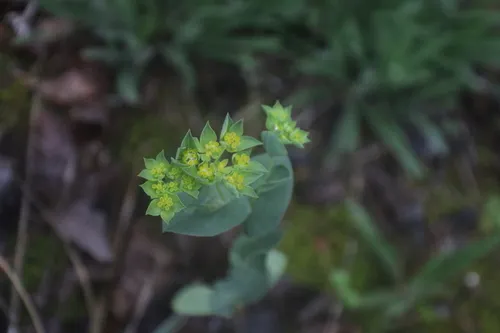
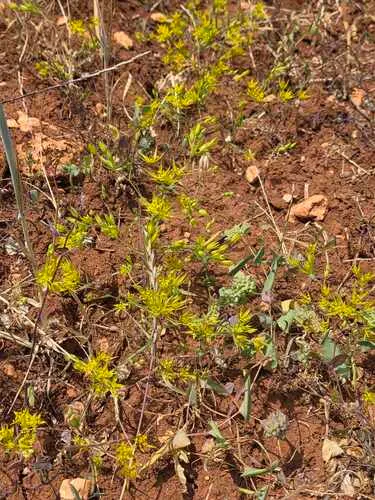
Bupleurum lancifolium is a species of flowering plant in the family Apiaceae known by the common name lanceleaf thorow-wax. It is native to the Mediterranean Basin and it is known elsewhere, including parts of North America, as an introduced species. It grows up to 50 centimetres (20 in) tall with a hairless, waxy stem around which leaves are fused at their bases. The dull, waxy, deep-green leaves are narrowly lance-shaped to nearly oval and 3 to 10 centimetres long. The inflorescence is a compound umbel borne on a peduncle which may be several centimeters tall. The umbel is surrounded by five wide, round to oval, and sometimes pointed bractlets at the base. The flowers are yellow to yellow-green. Wikipedia →
Growing & care
USDA PLANTS · TRY- Hardiness
- ≥ zone 7 derived from its U.S. range
- Lifespan
- Annual
- Foliage
- Broadleaf
Related plants
More Bupleurum →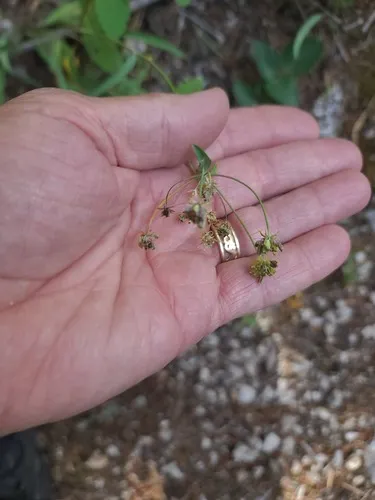
How we know this (1) Methods & honest limits
A recorded categorical fact: each species is tagged C3 (standard), C4 (heat/water-efficient) or CAM (succulent, night-time CO₂ uptake) — or a facultative combination. We only show a trait card for the noteworthy C4/CAM cases; C3 is the unremarkable majority, kept in the data but not surfaced as a card.
Sources for this entry (14) Open & cited
Cite this page Open data, please attribute
PlantKey’s data is open under CC BY-SA 4.0 — free to reuse and adapt, with attribution and the same licence. Photos keep their own per-image licence + credit (see Sources above).
Loading…
BibTeX
Loading…