
Oklahoma Grasspink Calopogon oklahomensis
Oklahoma Grasspink is a perennial wildflower native to the lower 48 states.
More about this plant
Calopogon oklahomensis, commonly known as the Oklahoma grass pink or prairie grass pink, is a terrestrial species of orchid native to the United States. It is restricted to the states of Alabama, Arkansas, Georgia, Illinois, Indiana, Iowa, Kansas, Louisiana, Minnesota, Mississippi, Missouri, Oklahoma, South Carolina, Tennessee, Texas, and Wisconsin. It is extirpated throughout most of its range. Calopogon oklahomensis is a perennial herb with flowers that are white, pink or purple, with a labellum with an apical region of yellow hairs. Flowers bloom March to July. Its habitats include coastal prairies, savannas, edges of bogs, and oak woodlands. It was described by Douglas H. Goldman in 1995. Wikipedia →
Growing & care
USDA PLANTS · TRY- Hardiness
- ≥ zone 5 derived from its U.S. range
- Lifespan
- Perennial
Related plants
More Calopogon →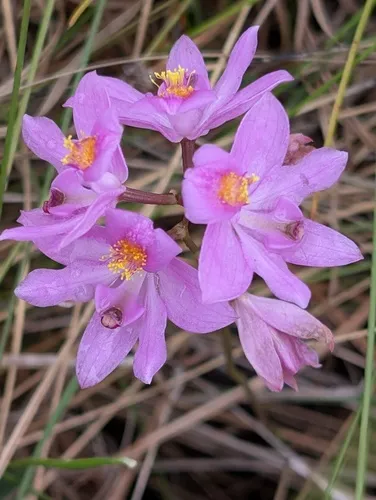
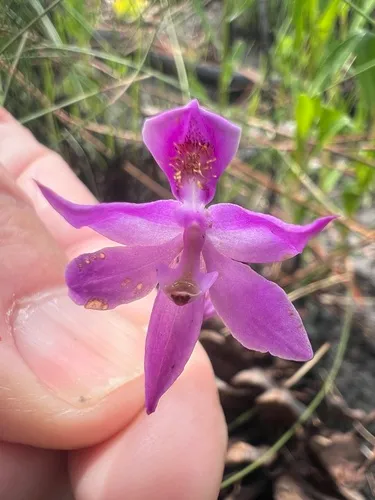
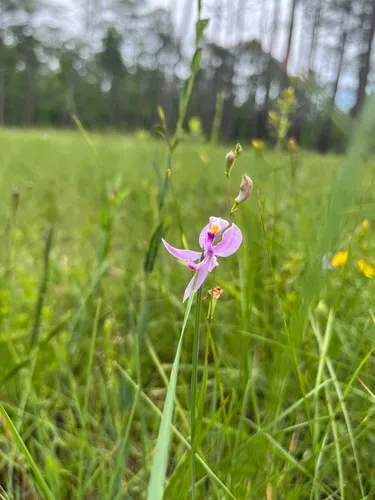
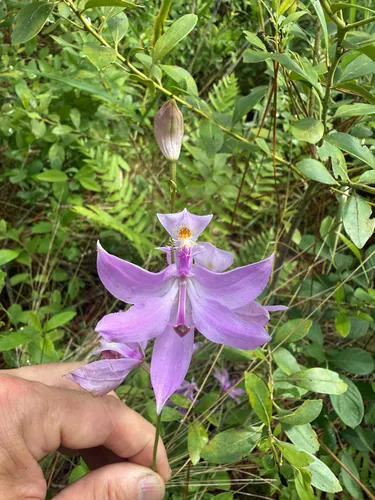
How we know this (1) Methods & honest limits
We take the plant’s U.S. county range and look up each county’s long-term climate, then summarise: native rainfall = the median annual rainfall across its counties; heat tolerance = the warm end (90th percentile) of average temperature across its range (mirroring how our cold-hardiness floor uses an extreme). Counties + medians blunt the roadside/observer bias that makes point-level climate unreliable. Needs at least five placeable counties.
Honest limits: A realized, sampling-biased niche (where it has been recorded, not its physiological optimum), and county climate is coarse — large Western counties span deserts and mountains. Derived guide, never a measured fact.
Sources for this entry (12) Open & cited
Cite this page Open data, please attribute
PlantKey’s data is open under CC BY-SA 4.0 — free to reuse and adapt, with attribution and the same licence. Photos keep their own per-image licence + credit (see Sources above).
Loading…
BibTeX
Loading…