
Griffin's Bellflower Campanula griffinii
Griffin's Bellflower is an annual wildflower native to the lower 48 states. It blooms Apr – Jun. A host for pollen-specialist native bees.
More about this plant
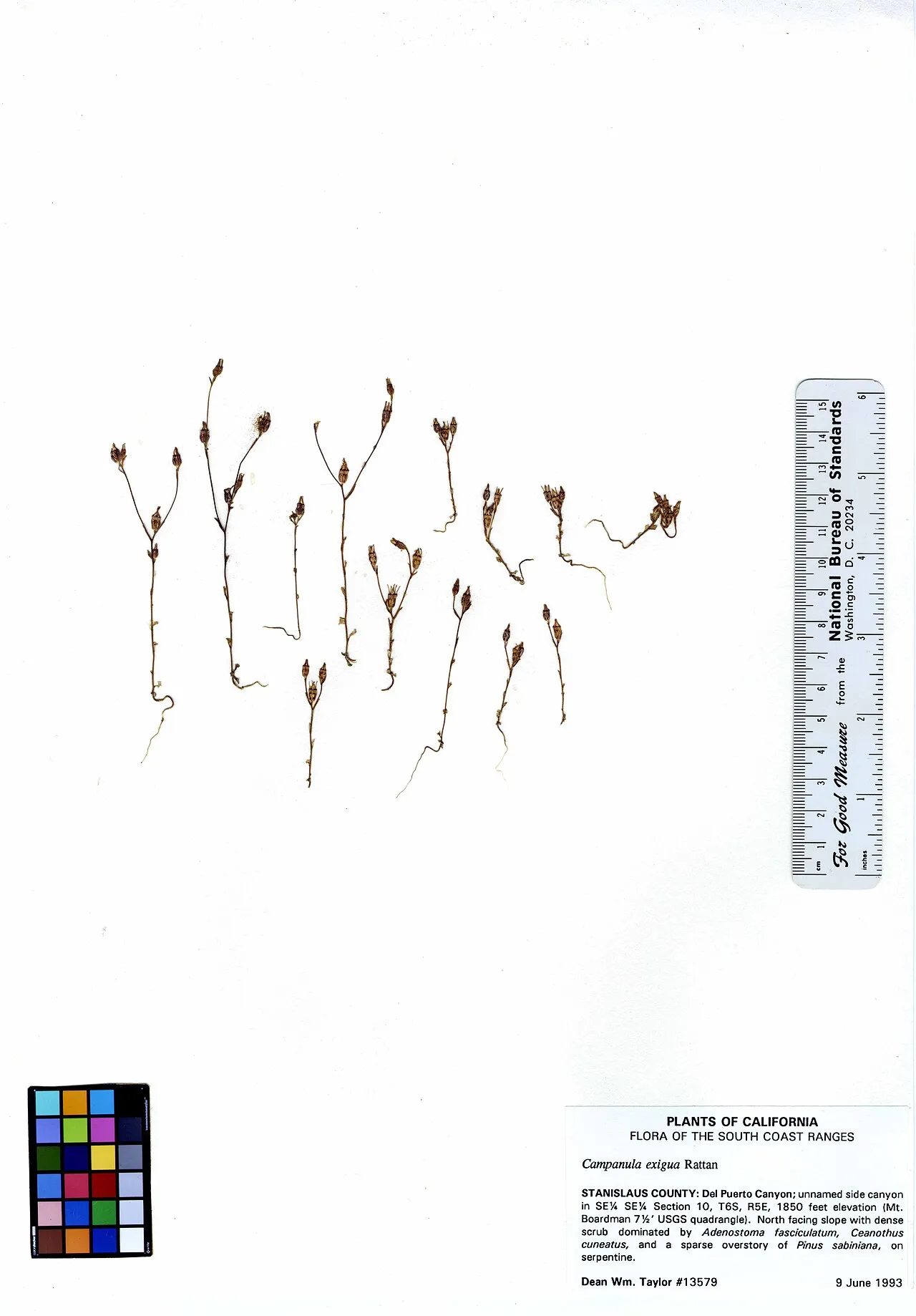
Ravenella griffinii is a species of bellflower known by the common name Griffin's bellflower. It is endemic to California, where it grows in the North and Central Coast Ranges in chaparral habitat on serpentine soils. This is an annual herb producing a thin, erect stem up to 20 centimeters tall. The leathery leaves are linear in shape, toothed along the edges, and less than a centimeter long. The stem and foliage are sometimes reddish in color and may have stiff hairs. The small, cylindrical flower is pale blue to white and less than 4 millimeters long. The fruit is an oblong, ribbed capsule. Wikipedia →
Growing & care
USDA PLANTS · TRY- Hardiness
- ≥ zone 11 derived from its U.S. range
- Lifespan
- Annual
Wildlife & pollinators
How pollinator value is scored →✦ Bees specialist-bee host
Specialist native bees depend on it.
Some native bees are pollen specialists (oligolectic) — they raise young only on pollen from particular plant genera. Campanula is a recorded specialist-bee host, so losing it can mean losing the bee that relies on it.
Related plants
More Campanula →
Sources for this entry (10) Open & cited
Cite this page Open data, please attribute
PlantKey’s data is open under CC BY-SA 4.0 — free to reuse and adapt, with attribution and the same licence. Photos keep their own per-image licence + credit (see Sources above).
Loading…
BibTeX
Loading…