
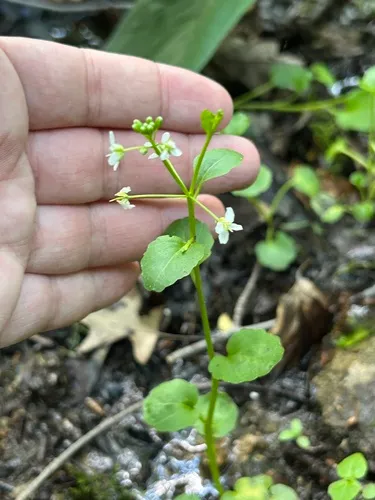
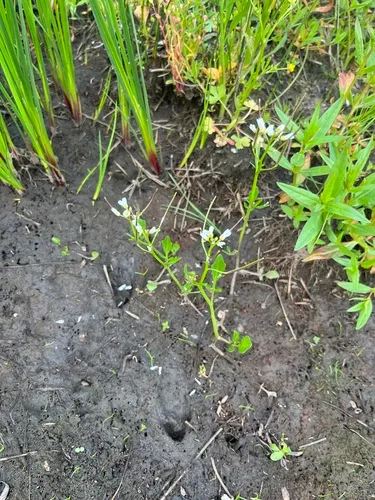
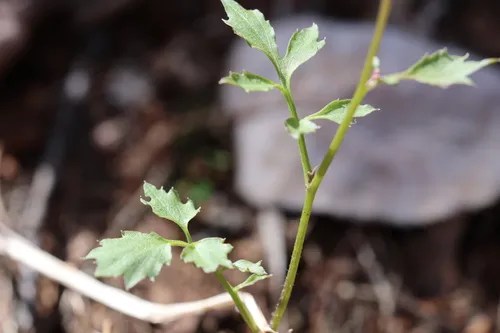
Streambank Bittercress Cardamine micranthera
Streambank Bittercress is a biennial wildflower native to the lower 48 states. A host for pollen-specialist native bees.
More about this plant
Cardamine micranthera is a rare species of flowering plant in the mustard family known by the common names small-anthered bittercress and streambank bittercress. It is endemic to the Piedmont region around the border between Virginia and North Carolina, and is today restricted to the Dan River watershed. It is in decline mainly because its habitat has been disturbed and destroyed by a number of processes. By the 1960s the only known populations of the plant had disappeared and in the 1970s it was feared extinct. The plant was rediscovered in the 1980s and for a while was presumed to be a rare North Carolina endemic; populations in Virginia have been confirmed since. The plant was federally listed as an endangered species in 1989 when it was known from only four tiny populations on unprotected private land. Today there are about 32 occurrences; one occurrence in North Carolina has been extirpated and five others there had no specimens found at the most recent survey. Wikipedia →
Growing & care
USDA PLANTS · TRY- Hardiness
- ≥ zone 8 derived from its U.S. range
- Lifespan
- Biennial
Wildlife & pollinators
How pollinator value is scored →❧ Caterpillar hosts ~6 caterpillar species
Cardamine supports ~6 caterpillar species.
Native butterfly & moth caterpillars are the base of the terrestrial food web — most songbirds rear their young almost entirely on them. As a host for native Lepidoptera this is a modest genus.
Recorded feeding on Cardamine in North America, including:


✦ Bees specialist-bee host
Specialist native bees depend on it.
Some native bees are pollen specialists (oligolectic) — they raise young only on pollen from particular plant genera. Cardamine is a recorded specialist-bee host, so losing it can mean losing the bee that relies on it.
Related plants
More Cardamine →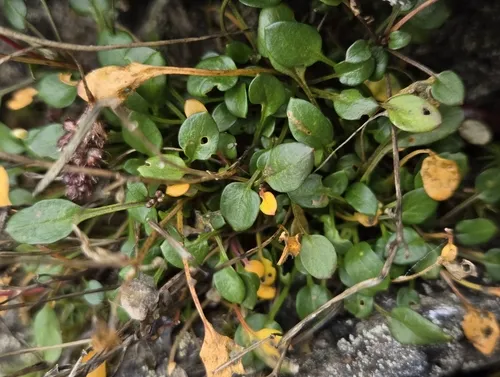
Sources for this entry (15) Open & cited
Cite this page Open data, please attribute
PlantKey’s data is open under CC BY-SA 4.0 — free to reuse and adapt, with attribution and the same licence. Photos keep their own per-image licence + credit (see Sources above).
Loading…
BibTeX
Loading…