PlantKey Open ecological atlas
Planner
Home / Browse / Carex / Bur-reed Sedge
Wikimedia Commons — CC, credited & licensed per image
Cyperaceae family

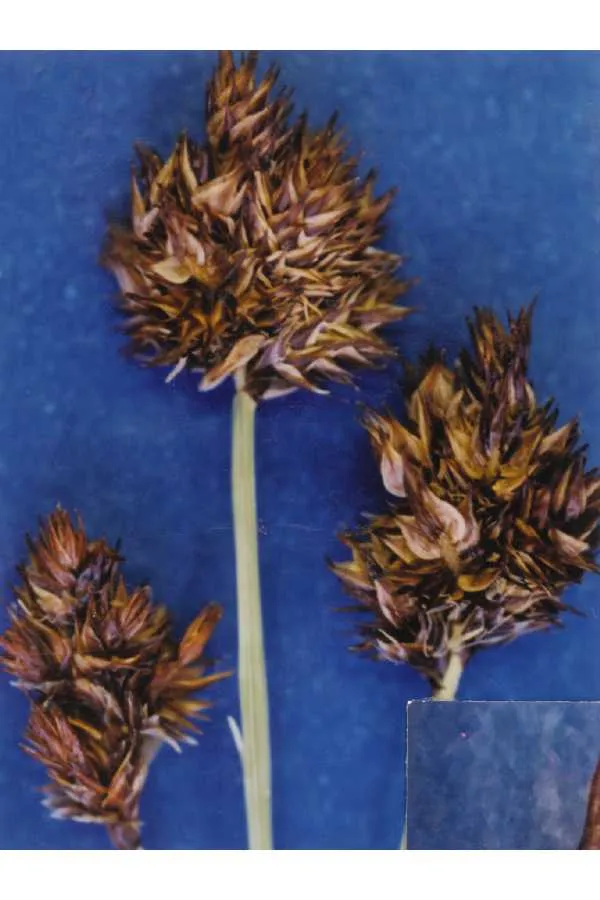
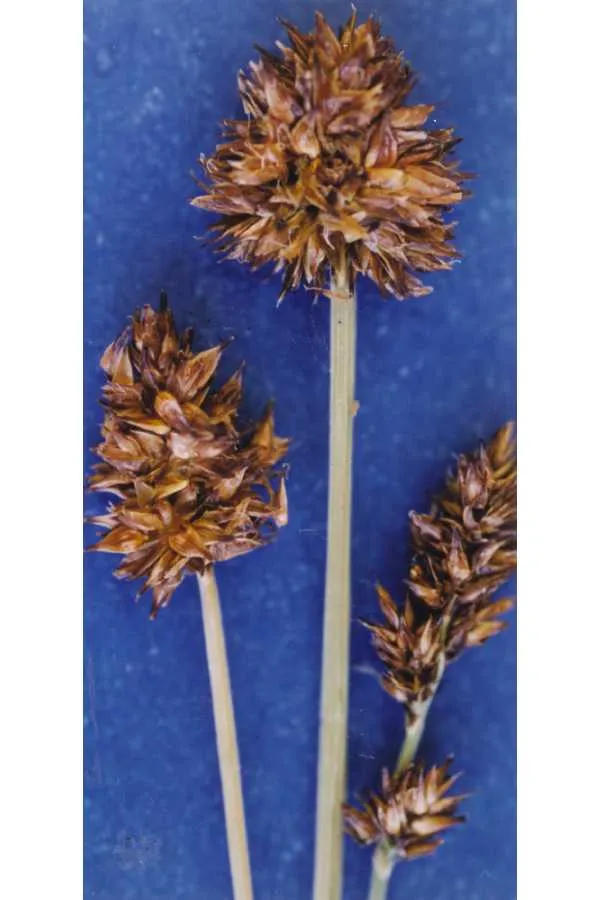
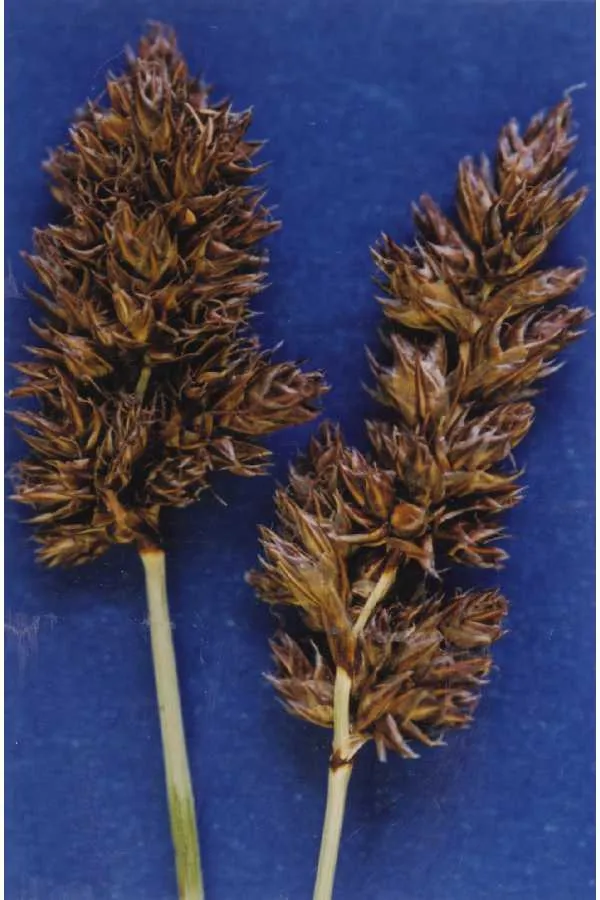
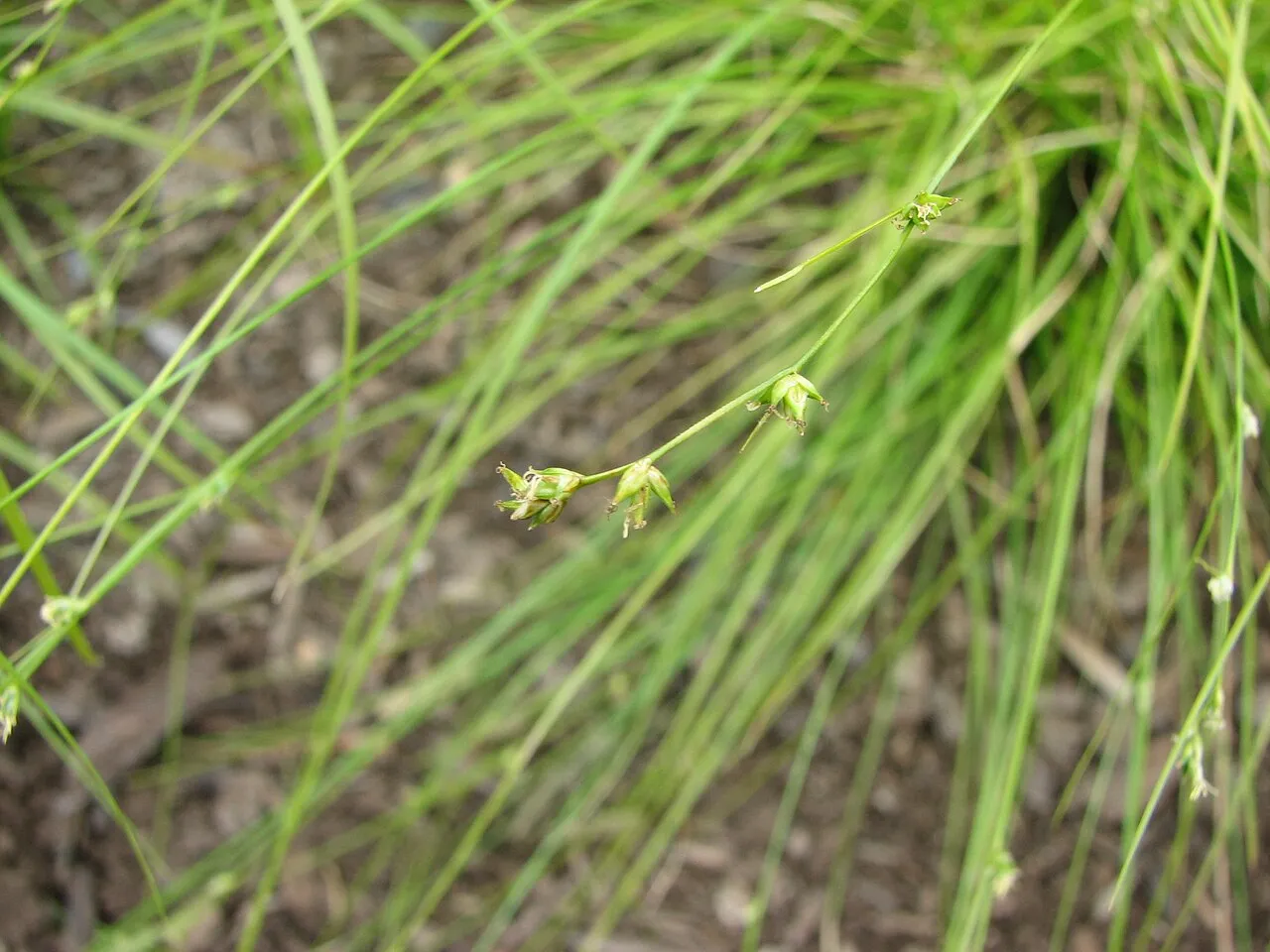
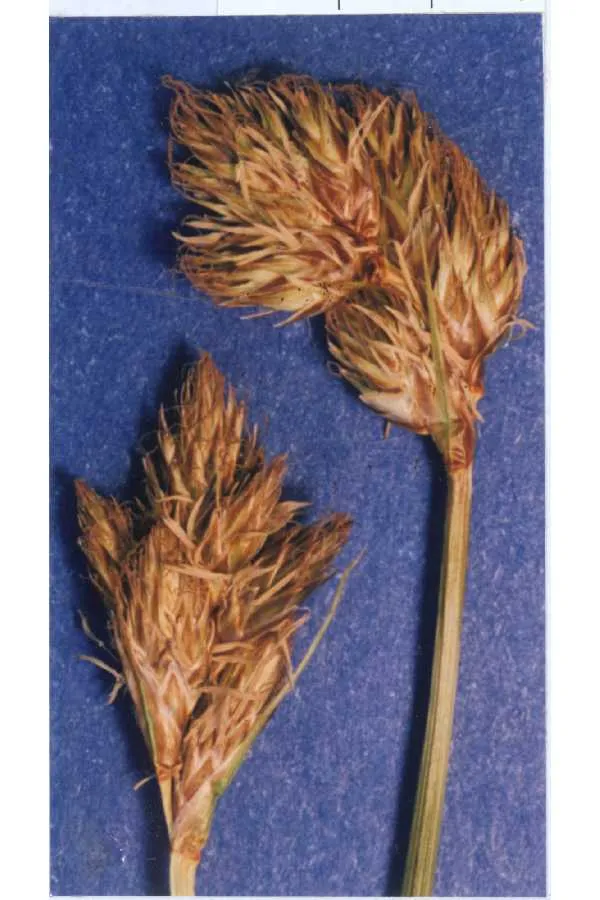
Bur-reed Sedge Carex sparganioides

Native
Deer-resistant — Low palatability to browsing deer. Usually passed over, but no plant is truly deer-proof when food is scarce.

Bur-reed Sedge is a perennial grass native to Canada and the lower 48 states. It grows to 3 ft and blooms May in full sun, with brown fruit.

More about this plant

Carex sparganioides, known as bur-reed sedge or loose-headed bracted sedge, is a perennial plant belonging to the sedge family (Cyperaceae). Its native range includes most of the eastern and central United States and eastern Canada. In Maine, it is typically found in hardwood or mixed forests. Wikipedia →

Growing & care

USDA PLANTS · TRY
Conditions
Sources · Conditions
USDA PLANTS — Sun · Soil & moisture
USDA — SoilPH — Soil pH
USDA PLANTS (DwCA, Zenodo 17903503) — Fertility Requirement / Soil Adaptation — Fertility need · Adapts to
USDA — Temp-Min °F — Hardiness
Sun
Full sun
Soil & moisture
High moisture
Soil pH
5–6.8
Fertility need
High
Adapts to
Medium (loam)
Hardiness
USDA zone 4+
Size & form
Sources · Size & form
USDA PLANTS (DwCA, Zenodo 17903503) — Height, Mature — Height
USDA PLANTS (DwCA, Zenodo 17903503) — Planting Density (per acre) — Spacing
USDA PLANTS (DwCA, Zenodo 17903503) — Growth Rate / Spread / Growth Form / Lifespan / Active Growth Period / Seed Period — Spread · Growth rate · Growth form · Active growth
USDA PLANTS — Lifespan
TRY Plant Trait Database (CC BY 4.0) · USDA PLANTS — Foliage
USDA PLANTS (DwCA, Zenodo 17903503) — Fruit/Seed Color / Fruit Persistence — Fruit
McKenzie et al. 2025 — community-science image analysis (MIT) — Flower colour
Height
3 ft
Spacing
3–4 ft apart from USDA planting density
Spread
None — clumping
Growth rate
Moderate
Growth form
Bunch
Lifespan
Perennial · long-lived
Foliage
Broadleaf · coarse texture
Active growth
Spring & summer
Fruit
Brown
Flower colour
Green AI AI image-analysis of community-science photos (~87% expert agreement) — not a botanical record
In the garden
Sources · In the garden
USDA PLANTS (DwCA, Zenodo 17903503) — Propagation Method / Commercial Availability — Propagate by · In the trade
USDA PLANTS (DwCA, Zenodo 17903503) — Germination (cold stratification) — Seed starting
USDA PLANTS — Seed Period — Seeds ripen
USDA PLANTS (DwCA, Zenodo 17903503) — Foliage Texture / Browse Palatability / Resprout — Deer browsing · Resprouts if cut
Propagate by
Seed, Bare root, Sprigs
Seed starting
No stratification needed
Seeds ripen
Spring – Summer seed-collection / harvest window
In the trade
No known commercial source
Deer browsing
Low often deer-resistant
Resprouts if cut
No
Herb layer — Sits in the herb of a layered food forest or polyculture.Open guide →
Chop-and-drop biomass — Soft, low-density wood is quick-growing and easy to cut back — coppice it and drop the trimmings in place as mulch.Open guide →
derived roles
AI = read by an AI vision model · DERIVED = a computed estimate, not a direct measurement. The “How we know this” section below details each.
The garden year bloom → fruit → fall colour
J
F
M
A
M
J
J
A
S
O
N
D
Bloom
Bloom (the flower's colour)
Bloom · May — USDA PLANTS (DwCA, Zenodo 17903503) — BloomPeriod
When to sow · for your area

Sow timing keys off your local last- and first-frost dates.

Species characteristics from USDA PLANTS (public domain) + TRY (CC BY) — general guidance, not a guarantee for your exact site. Deer "browsing" is documented palatability, not a deer-proof claim.

Wildlife & pollinators

How pollinator value is scored →
❧ Caterpillar hosts ~36 caterpillar species

Carex supports ~36 caterpillar species.

Native butterfly & moth caterpillars are the base of the terrestrial food web — most songbirds rear their young almost entirely on them. As a host for native Lepidoptera this is a strong genus.

Keystone count (genus-level) from Warren II 2026 (CC0) · Tallamy host-use records. Named species (a documented Nearctic sample, not exhaustive) from NHM HOSTS (CC0).
Species thumbnails re-hosted from iNaturalist — Creative Commons, credited per image (hover for credit). Click any species to see it on iNaturalist. Not exhaustive; many taxa have no openly-licensed photo yet.
How we know this (4) Methods & honest limits
Leaf build Direct fact

We read each species’ measured specific leaf area (leaf area per unit dry weight) from the Global Spectrum dataset and band it: thin & fast (high SLA), medium, or thick & tough (low SLA). The global median is about 10 mm²/mg.

Honest limits: A species-mean from pooled measurements — individual plants vary with light and site. A broad strategy signal, not a precise per-plant figure.

Díaz, S. et al. (2022) The global spectrum of plant form and function: enhanced species-level trait dataset. Scientific Data 9:755.
Growth strategy Derived

We place each species on Grime’s competitor–stress-tolerator–ruderal (C–S–R) triangle using the globally-calibrated “StrateFy” method: leaf size drives the competitor score, dense low-area leaves the stress-tolerator score, and thin high-area leaves the ruderal score. The result is a C/S/R percentage mix and one of 19 strategy classes; we show it in plain words and keep the percentages for the curious.

Honest limits: A species-mean strategy from pooled global leaf measurements — a broad ecological signal, not a precise per-plant or per-site value. Derived, never a measured fact.

Pierce, S. et al. (2017) A global method for calculating plant CSR ecological strategies applied across biomes world-wide. Functional Ecology 31:444–457.
Climate niche (heat tolerance & native rainfall) Derived

We take the plant’s U.S. county range and look up each county’s long-term climate, then summarise: native rainfall = the median annual rainfall across its counties; heat tolerance = the warm end (90th percentile) of average temperature across its range (mirroring how our cold-hardiness floor uses an extreme). Counties + medians blunt the roadside/observer bias that makes point-level climate unreliable. Needs at least five placeable counties.

Honest limits: A realized, sampling-biased niche (where it has been recorded, not its physiological optimum), and county climate is coarse — large Western counties span deserts and mountains. Derived guide, never a measured fact.

Realized-niche / climate-envelope approach (Pearson & Dawson 2003; Soberón 2007). Climate: NOAA NCEI nClimDiv county normals (1991–2020).
Flower colour Derived

McKenzie et al. assigned each species a flower colour with a GPT-4V vision model over iNaturalist photos. We use the confident tier plus a separately-labelled lower-confidence top-up (mostly inconspicuous green/brown flowers), and render it as a small tint — never as an asserted fact, and kept out of the written synopsis.

Honest limits: AI image inference (~87% expert agreement on the confident tier); a decorative, confidence-tiered indicator, not a measured trait.

McKenzie, P., Berardi, A.E., Hopkins, R. (2025). flower_color_phenology (MIT).
Derived values are computed from open data by a published method — labelled, cited, and never shown as a direct observation. Full methodology →
Sources for this entry (31) Open & cited
[01] Scientific name & family — USDA PLANTS (DwCA, Zenodo 17903503)
[02] Growth habit & duration — USDA PLANTS (DwCA, Zenodo 17903503)
[03] Native status & distribution — USDA PLANTS (DwCA, Zenodo 17903503)
[04] Common name — USDA PLANTS (via GBIF)
[18] Invasive / introduced status — USDA PLANTS (DwCA, Zenodo 17903503) — native status
[19] Wetland indicator — USACE National Wetland Plant List (2022)
[21] Description — Wikipedia (CC BY-SA)
[22] Ecological value — Warren II 2026 (CC0) · Tallamy host-use counts
[23] Conservation rank — NatureServe Explorer (CC BY)
[25] Functional traits — TRY Plant Trait Database (CC BY 4.0)
[27] Climate niche — Derived — realized climate niche from U.S. county occurrences (GBIF) × NOAA NCEI county climate normals 1991–2020 (public domain)
[29] Caterpillar host count — Warren II 2026 (Dryad, CC0) · Tallamy host-use counts
[30] Caterpillar species — NHM HOSTS (CC0)
[31] County range — GBIF Open Data — open-licensed occurrences (CC0/CC-BY) → county
Spot an error or have a better photo? Every field links to its source, and the whole dataset is open.
Cite this page Open data, please attribute

PlantKey’s data is open under CC BY-SA 4.0 — free to reuse and adapt, with attribution and the same licence. Photos keep their own per-image licence + credit (see Sources above).

Citation

Loading…

BibTeX
Loading…