
Thickstem Wild Cabbage Caulanthus crassicaulis
Thickstem Wild Cabbage is a biennial wildflower native to the lower 48 states. It blooms May – Jun.
More about this plant
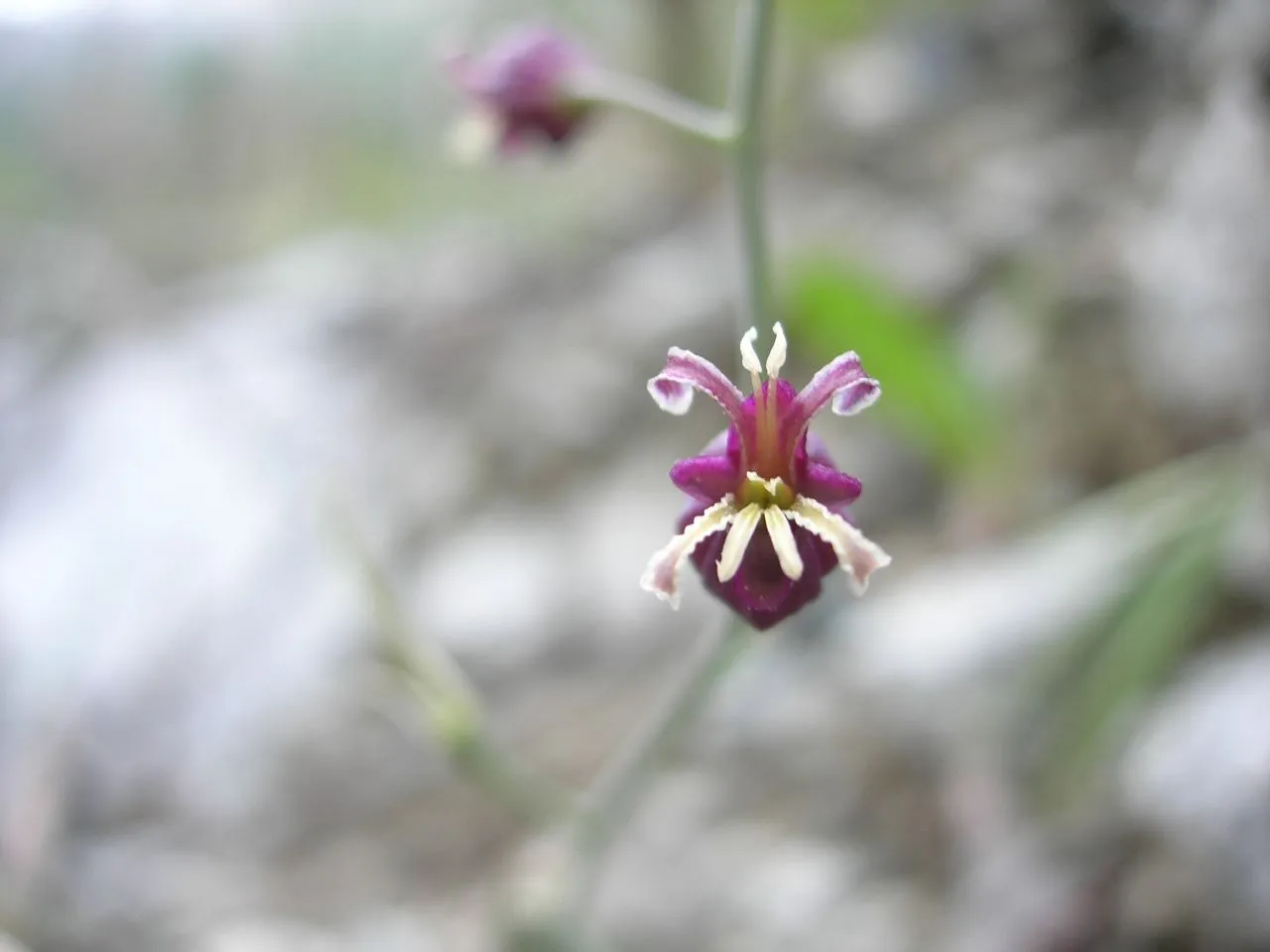
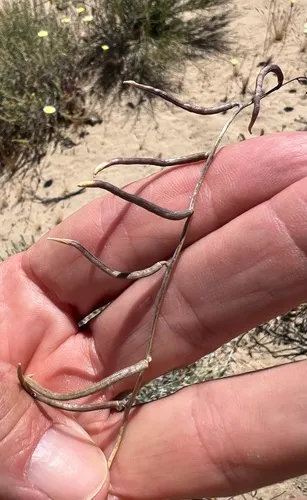
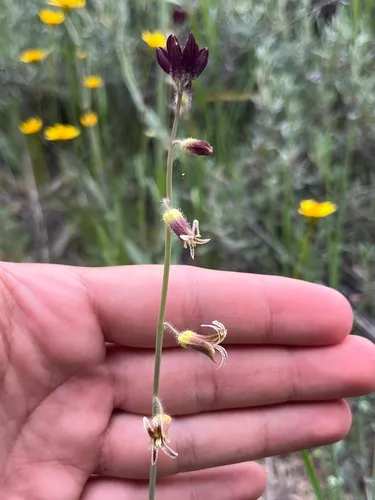
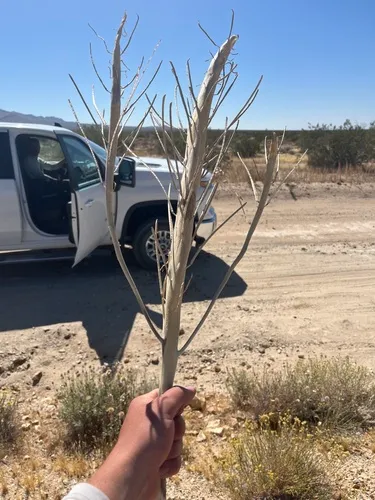
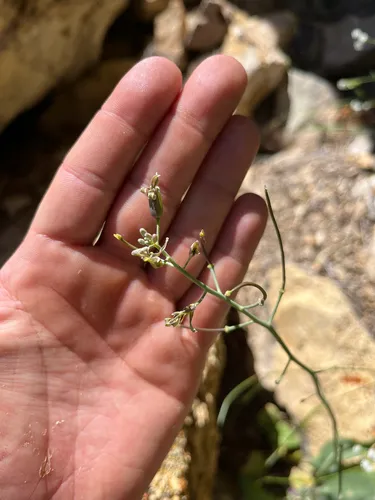
Caulanthus crassicaulis is a species of flowering plant in the family Brassicaceae known by the common name thickstem wild cabbage. It is native to the western United States where it is a member of the flora in sagebrush, woodland, and desert scrub habitats. This is a perennial herb producing a stout, inflated stem from a woody caudex base. The leaves form a basal rosette and occur at intervals along the stem. They are broadly lance-shaped on the lower stem and much smaller and linear in shape higher up. They may have smooth, toothed, or deeply cut edges. The rounded flower has a coat of thick, pouched sepals which part at the flower tip to reveal narrow dark purple or brown petals. There are two varieties of this species: var. crassicaulis generally has hairy flowers, while var. glaber has hairless. The fruit is a long, thin silique which may approach 13 centimeters (5.1 in) in length. Wikipedia →
Growing & care
USDA PLANTS · TRY- Hardiness
- ≥ zone 6 derived from its U.S. range
- Lifespan
- Biennial
- Flower colour
- Green AI AI image-analysis of community-science photos — lower-confidence (a more subjective call, often an inconspicuous flower); not a botanical record
Wildlife & pollinators
How pollinator value is scored →❧ Caterpillar hosts Documented caterpillar host
Recorded feeding on Caulanthus in North America, including:


Related plants
More Caulanthus →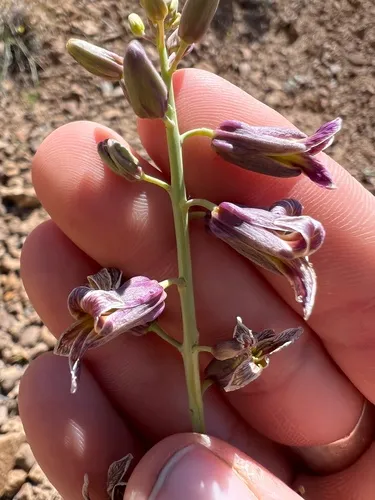
How we know this (1) Methods & honest limits
McKenzie et al. assigned each species a flower colour with a GPT-4V vision model over iNaturalist photos. We use the confident tier plus a separately-labelled lower-confidence top-up (mostly inconspicuous green/brown flowers), and render it as a small tint — never as an asserted fact, and kept out of the written synopsis.
Honest limits: AI image inference (~87% expert agreement on the confident tier); a decorative, confidence-tiered indicator, not a measured trait.
Sources for this entry (13) Open & cited
Cite this page Open data, please attribute
PlantKey’s data is open under CC BY-SA 4.0 — free to reuse and adapt, with attribution and the same licence. Photos keep their own per-image licence + credit (see Sources above).
Loading…
BibTeX
Loading…