PlantKey Open ecological atlas
Planner
Home / Browse / Caulanthus / Hairy Wild Cabbage
iNaturalist — CC, credited & licensed per image
Brassicaceae family

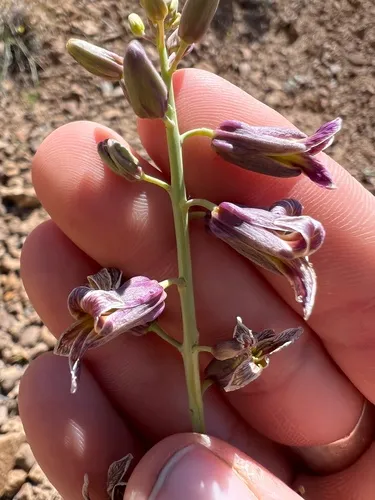
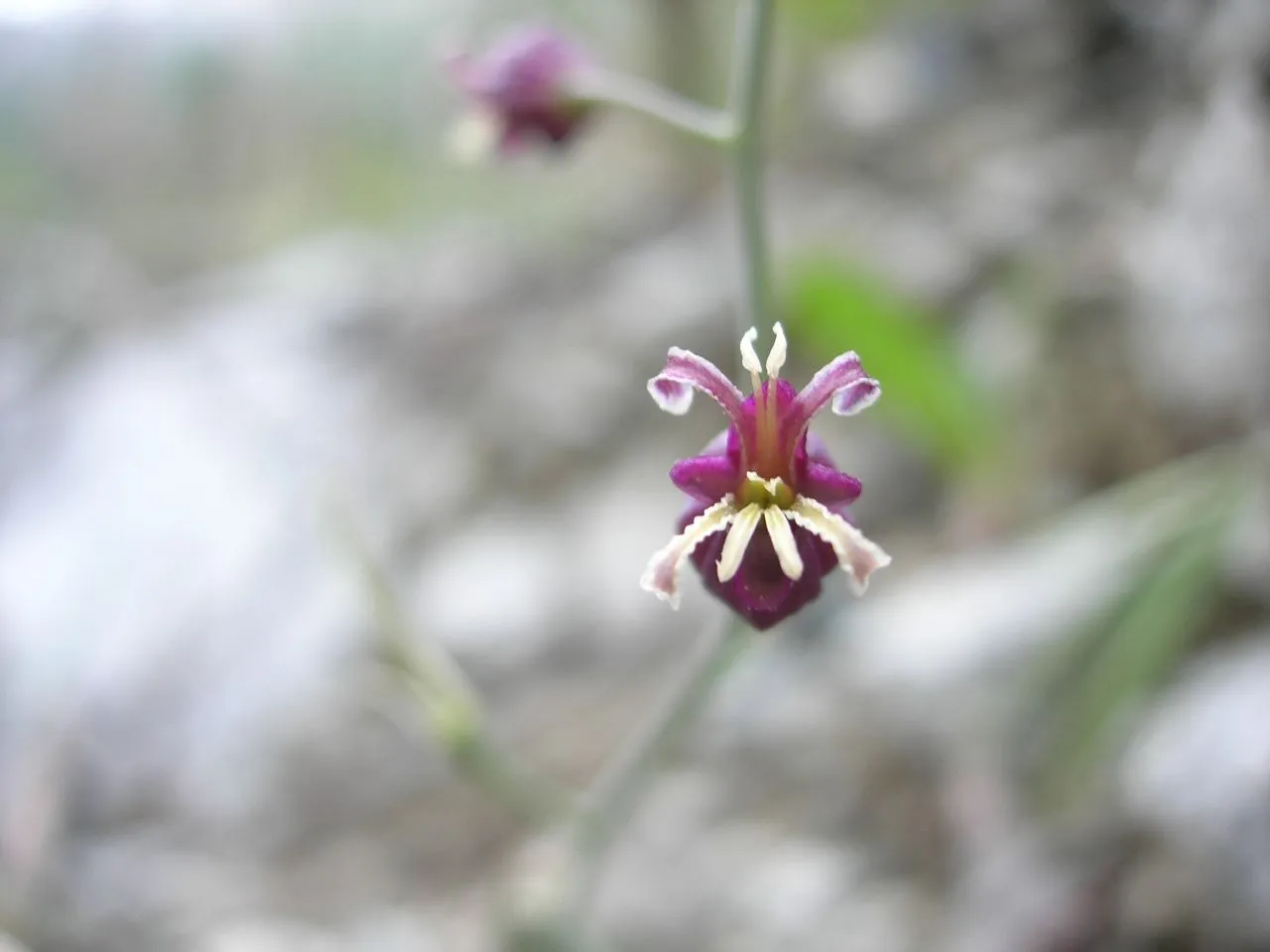
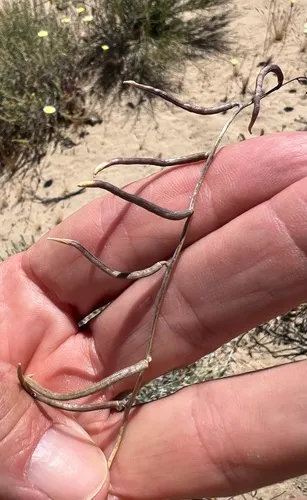
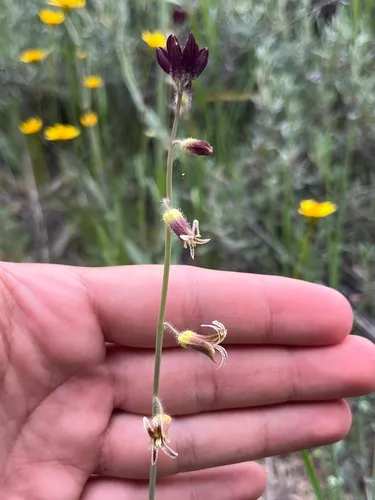
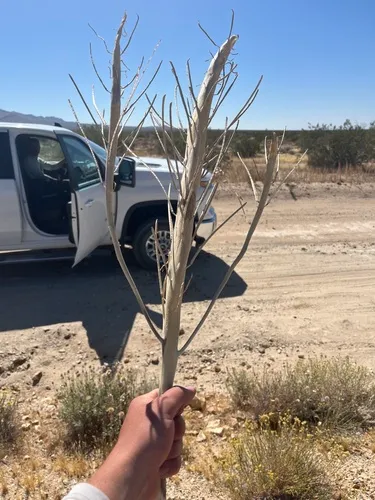
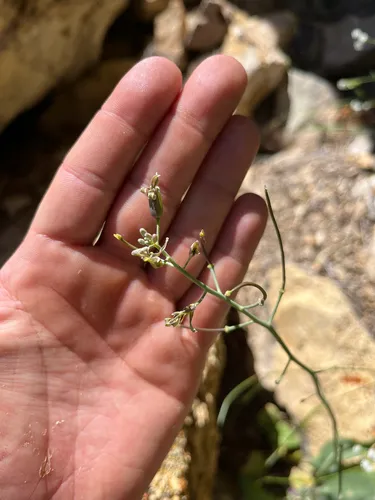
Hairy Wild Cabbage Caulanthus pilosus

Native

Hairy Wild Cabbage is an annual wildflower native to the lower 48 states. It blooms Apr – Jul.

More about this plant

Caulanthus pilosus is a species of flowering plant in the family Brassicaceae known by the common names hairy wild cabbage and chocolate drops. It is native to open, dry habitat in the Great Basin of Nevada, the Eastern slope of the Sierra Nevada to 9,000 ft (2,700 m) and surrounding regions of the United States northward to the SE corner of Oregon. It is an annual or occasionally perennial herb coated in thin hairs, especially toward the base. Wikipedia →

Growing & care

USDA PLANTS · TRY
Conditions
Sources · Conditions
Cold hardiness (derived) — Hardiness
Hardiness
≥ zone 7 derived from its U.S. range
Size & form
Sources · Size & form
USDA PLANTS — Lifespan
TRY Plant Trait Database (CC BY 4.0) — Foliage
McKenzie et al. 2025 — community-science image analysis (MIT), lower-confidence call — Flower colour
Lifespan
Annual
Foliage
Broadleaf
Flower colour
Brown AI AI image-analysis of community-science photos — lower-confidence (a more subjective call, often an inconspicuous flower); not a botanical record
In the garden
Herb layer — Sits in the herb of a layered food forest or polyculture.Open guide →
derived roles
AI = read by an AI vision model · DERIVED = a computed estimate, not a direct measurement. The “How we know this” section below details each.
The garden year bloom → fruit → fall colour
J
F
M
A
M
J
J
A
S
O
N
D
Bloom
Bloom (the flower's colour)
Bloom · Apr – Jul — 116 obs · Herbarium specimens — Park et al. 2023 (CC BY 4.0)
Species characteristics from USDA PLANTS (public domain) + TRY (CC BY) — general guidance, not a guarantee for your exact site. Deer "browsing" is documented palatability, not a deer-proof claim.

Wildlife & pollinators

How pollinator value is scored →
❧ Caterpillar hosts Documented caterpillar host
Species thumbnails re-hosted from iNaturalist — Creative Commons, credited per image (hover for credit). Click any species to see it on iNaturalist. Not exhaustive; many taxa have no openly-licensed photo yet.
How we know this (1) Methods & honest limits
Flower colour Derived

McKenzie et al. assigned each species a flower colour with a GPT-4V vision model over iNaturalist photos. We use the confident tier plus a separately-labelled lower-confidence top-up (mostly inconspicuous green/brown flowers), and render it as a small tint — never as an asserted fact, and kept out of the written synopsis.

Honest limits: AI image inference (~87% expert agreement on the confident tier); a decorative, confidence-tiered indicator, not a measured trait.

McKenzie, P., Berardi, A.E., Hopkins, R. (2025). flower_color_phenology (MIT).
Derived values are computed from open data by a published method — labelled, cited, and never shown as a direct observation. Full methodology →
Sources for this entry (15) Open & cited
[01] Scientific name & family — USDA PLANTS (DwCA, Zenodo 17903503)
[02] Growth habit & duration — USDA PLANTS (DwCA, Zenodo 17903503)
[03] Native status & distribution — USDA PLANTS (DwCA, Zenodo 17903503)
[04] Common name — USDA PLANTS (via GBIF)
[05] Invasive / introduced status — USDA PLANTS (DwCA, Zenodo 17903503) — native status
[07] Description — Wikipedia (CC BY-SA)
[08] Ecological value — GloBI
[10] Conservation rank — NatureServe Explorer (CC BY)
[12] Functional traits — TRY Plant Trait Database (CC BY 4.0)
[13] Cold hardiness (derived) — Derived from U.S. range × USDA PHZM zones
[15] Caterpillar species — NHM HOSTS (CC0)
Spot an error or have a better photo? Every field links to its source, and the whole dataset is open.
Cite this page Open data, please attribute

PlantKey’s data is open under CC BY-SA 4.0 — free to reuse and adapt, with attribution and the same licence. Photos keep their own per-image licence + credit (see Sources above).

Citation

Loading…

BibTeX
Loading…