
Mexican Buttonbush Cephalanthus salicifolius
Mexican Buttonbush is a perennial tree native to the lower 48 states. A host for pollen-specialist native bees.
More about this plant
Cephalanthus salicifolius is a species of flowering plant in the family Rubiaceae. Common names include Mexican buttonbush, mimbre, botoncillo, and Jazmin blanco. Its native range extends from the banks of the southernmost stretch of the Rio Grande in Cameron and Hidalgo Counties of Texas through much of Mexico from Coahuila to Oaxaca; a disjunct population exists in Honduras. Wikipedia →
Growing & care
USDA PLANTS · TRY- Hardiness
- ≥ zone 10 derived from its U.S. range
- Lifespan
- Perennial
- Flower colour
- White AI AI image-analysis of community-science photos (~87% expert agreement) — not a botanical record
Wildlife & pollinators
How pollinator value is scored →❧ Caterpillar hosts ~19 caterpillar species
Cephalanthus supports ~19 caterpillar species.
Native butterfly & moth caterpillars are the base of the terrestrial food web — most songbirds rear their young almost entirely on them. As a host for native Lepidoptera this is a moderate genus.
Recorded feeding on Cephalanthus in North America, including:


+ 8 more species → ↑ show fewer


✦ Bees specialist-bee host
Specialist native bees depend on it.
Some native bees are pollen specialists (oligolectic) — they raise young only on pollen from particular plant genera. Cephalanthus is a recorded specialist-bee host, so losing it can mean losing the bee that relies on it.
Related plants
More Cephalanthus →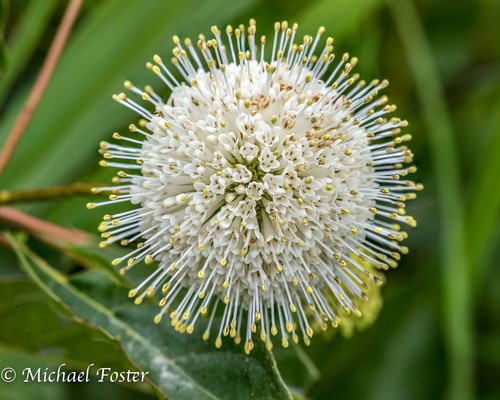
How we know this (1) Methods & honest limits
McKenzie et al. assigned each species a flower colour with a GPT-4V vision model over iNaturalist photos. We use the confident tier plus a separately-labelled lower-confidence top-up (mostly inconspicuous green/brown flowers), and render it as a small tint — never as an asserted fact, and kept out of the written synopsis.
Honest limits: AI image inference (~87% expert agreement on the confident tier); a decorative, confidence-tiered indicator, not a measured trait.
Sources for this entry (15) Open & cited
Cite this page Open data, please attribute
PlantKey’s data is open under CC BY-SA 4.0 — free to reuse and adapt, with attribution and the same licence. Photos keep their own per-image licence + credit (see Sources above).
Loading…
BibTeX
Loading…