
Curveseed Butterwort Ceratocephala testiculata
Curveseed Butterwort is an introduced annual herb, found in Canada and the lower 48 states. It blooms Apr – May.
More about this plant
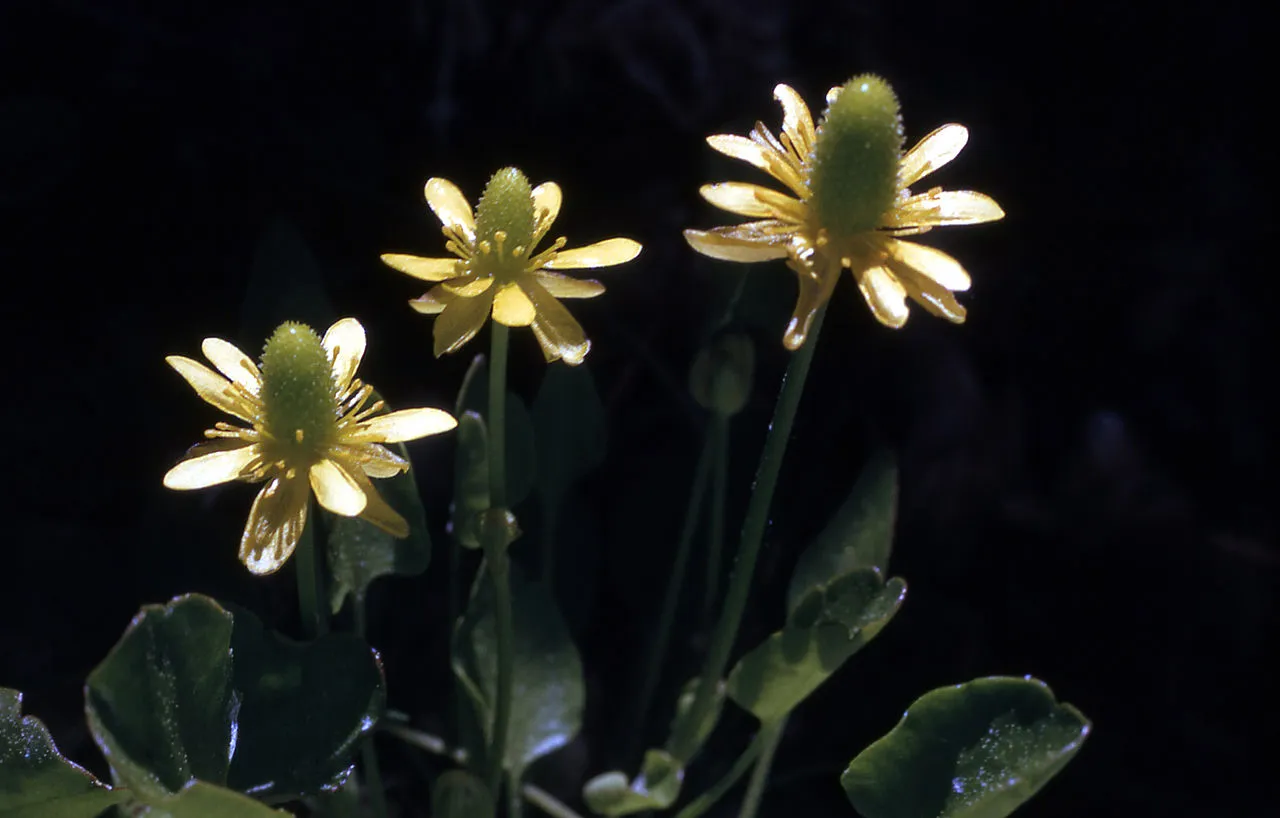
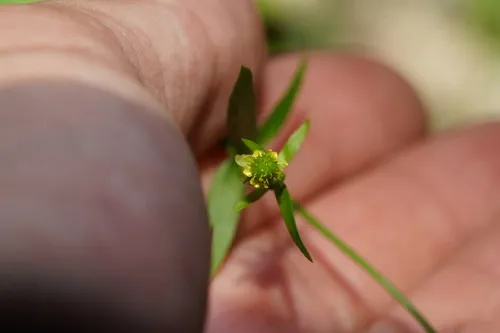
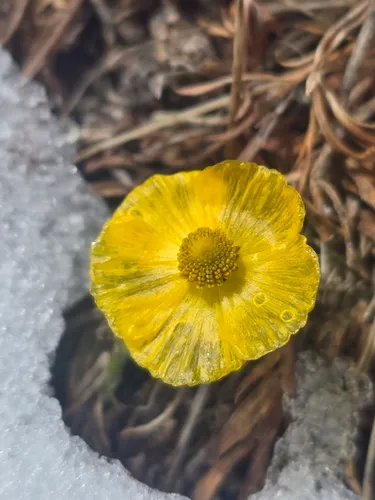
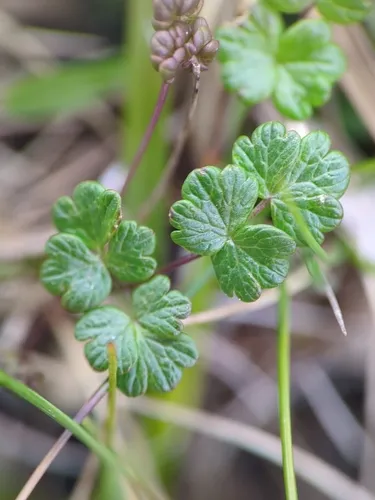
Ceratocephala testiculata is a flowering plant that is native to Eurasia. Common names include bur buttercup and curveseed butterwort. It is very small, usually only about an inch or two tall, but potentially growing to four inches. The flowers are small and dull yellow. The leaves are hairy and somewhat dissected. It produces a cluster of hard, spiny fruits. Like other members of the buttercup family, they are poisonous. Where they are present in large numbers, it is usually an indication of excessive disturbance to the land. Wikipedia →
Growing & care
USDA PLANTS · TRY- Hardiness
- ≥ zone 4 derived from its U.S. range
- Lifespan
- Annual
- Flower colour
- Yellow AI AI image-analysis of community-science photos (~87% expert agreement) — not a botanical record
Related plants
More Ceratocephala →
How we know this (2) Methods & honest limits
A recorded categorical fact: each species is tagged C3 (standard), C4 (heat/water-efficient) or CAM (succulent, night-time CO₂ uptake) — or a facultative combination. We only show a trait card for the noteworthy C4/CAM cases; C3 is the unremarkable majority, kept in the data but not surfaced as a card.
McKenzie et al. assigned each species a flower colour with a GPT-4V vision model over iNaturalist photos. We use the confident tier plus a separately-labelled lower-confidence top-up (mostly inconspicuous green/brown flowers), and render it as a small tint — never as an asserted fact, and kept out of the written synopsis.
Honest limits: AI image inference (~87% expert agreement on the confident tier); a decorative, confidence-tiered indicator, not a measured trait.
Sources for this entry (12) Open & cited
Cite this page Open data, please attribute
PlantKey’s data is open under CC BY-SA 4.0 — free to reuse and adapt, with attribution and the same licence. Photos keep their own per-image licence + credit (see Sources above).
Loading…
BibTeX
Loading…