PlantKey Open ecological atlas
Planner
Home / Browse / Cheilanthes / Coville's Lipfern
Wikimedia Commons — CC, credited & licensed per image
Pteridaceae family

Coville's Lipfern Cheilanthes covillei

Native
Early-season nectar — Flowers in a late-winter / early-spring window when few other plants in our catalog bloom — valuable early forage for pollinators (relative to our catalog's bloom coverage).

Coville's Lipfern is a perennial fern native to the lower 48 states.

More about this plant

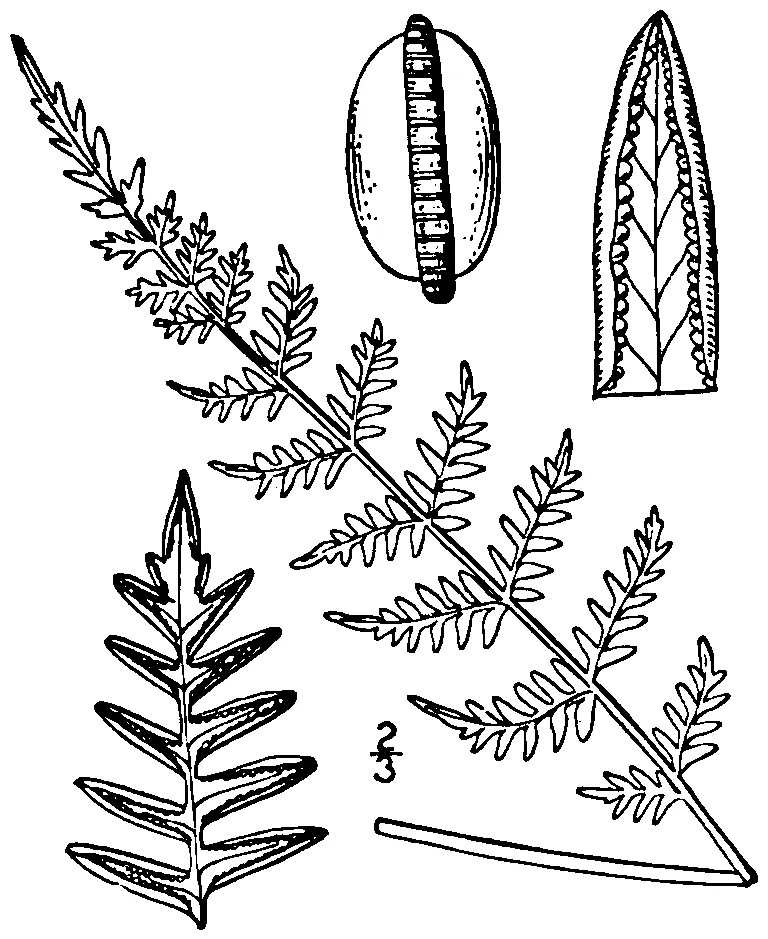
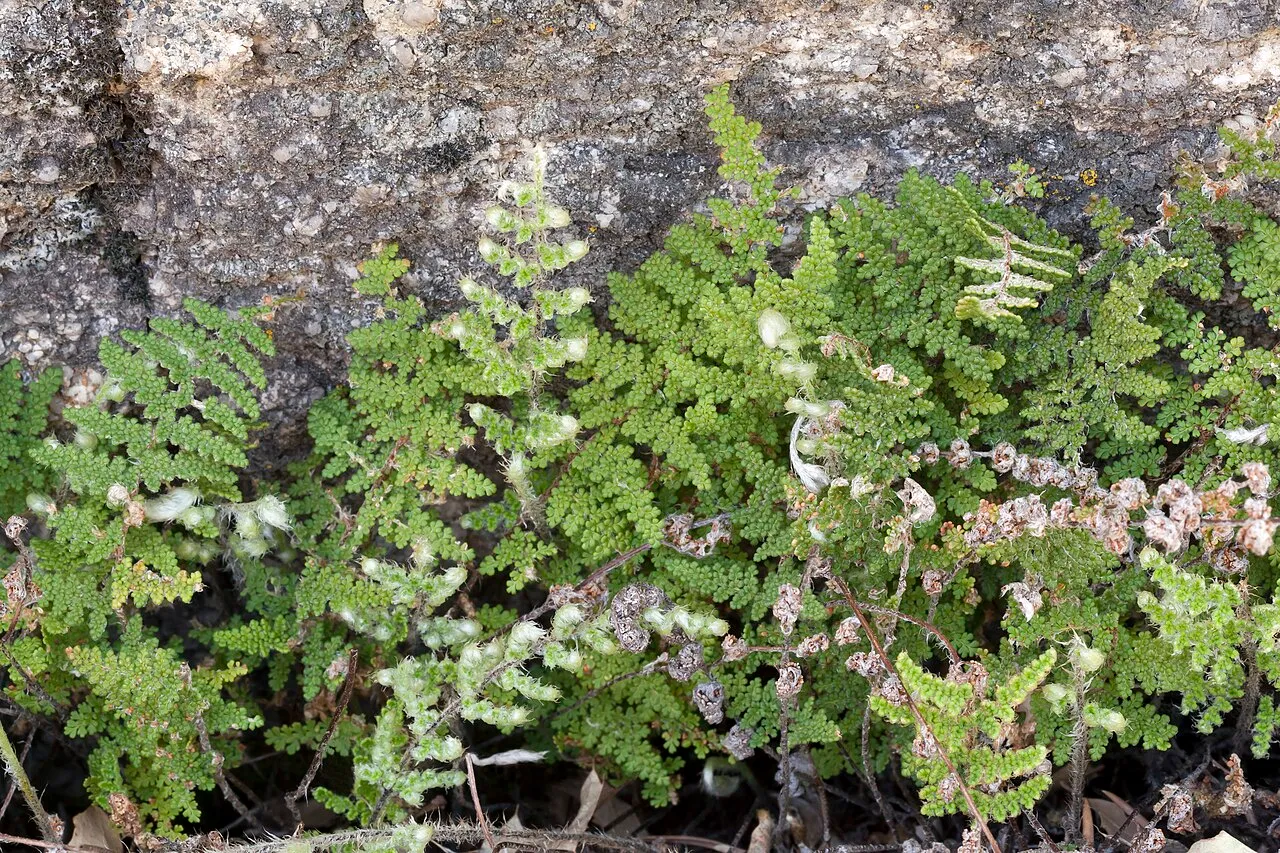
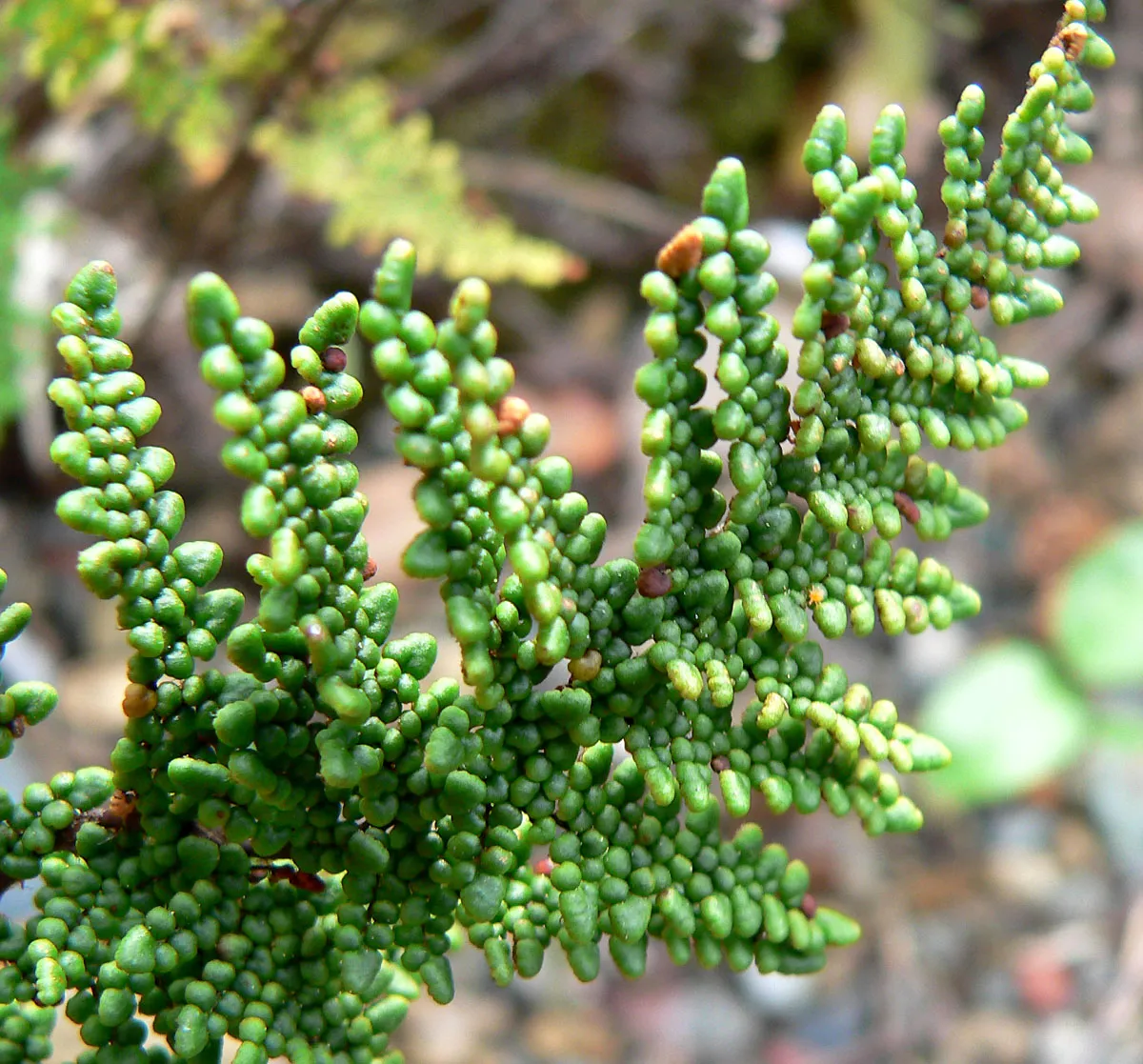
Myriopteris covillei, commonly known as Coville's lip fern, is a small fern found in the southwestern United States and on the Baja California peninsula, with an outlying population in southern Oregon. Its leaves grow in clusters and are dissected into beadlike segments; the undersides of the leaf axes are covered with whitish scales that conceal the green tissue of the leaf. One of the cheilanthoid lip ferns, it was usually classified in the genus Cheilanthes as Cheilanthes covillei until 2013, when the genus Myriopteris was again recognized as separate from Cheilanthes. The species usually grows on or near rocks. It is named in honor of the botanist Frederick Vernon Coville, co-collector of the type specimen in 1891. Wikipedia →

Growing & care

USDA PLANTS · TRY
Conditions
Sources · Conditions
Cold hardiness (derived) — Hardiness
Hardiness
≥ zone 8 derived from its U.S. range
Size & form
Sources · Size & form
USDA PLANTS — Lifespan
Lifespan
Perennial
In the garden
Herb layer — Sits in the herb of a layered food forest or polyculture.Open guide →
derived roles
The garden year bloom → fruit → fall colour
J
F
M
A
M
J
J
A
S
O
N
D
Bloom
Bloom (the flower's colour)
Bloom · Mar – Jul — 16 obs · Herbarium specimens — Park et al. 2023 (CC BY 4.0)
Species characteristics from USDA PLANTS (public domain) + TRY (CC BY) — general guidance, not a guarantee for your exact site. Deer "browsing" is documented palatability, not a deer-proof claim.
Sources for this entry (10) Open & cited
[01] Scientific name & family — USDA PLANTS (DwCA, Zenodo 17903503)
[02] Growth habit & duration — USDA PLANTS (DwCA, Zenodo 17903503)
[03] Native status & distribution — USDA PLANTS (DwCA, Zenodo 17903503)
[04] Common name — USDA PLANTS (via GBIF)
[05] Invasive / introduced status — USDA PLANTS (DwCA, Zenodo 17903503) — native status
[07] Description — Wikipedia (CC BY-SA)
[08] Ecological value — GloBI
[10] Cold hardiness (derived) — Derived from U.S. range × USDA PHZM zones
Spot an error or have a better photo? Every field links to its source, and the whole dataset is open.
Cite this page Open data, please attribute

PlantKey’s data is open under CC BY-SA 4.0 — free to reuse and adapt, with attribution and the same licence. Photos keep their own per-image licence + credit (see Sources above).

Citation

Loading…

BibTeX
Loading…