Parry's Pussypaws (var. parryi) Cistanthe parryi var. parryi variety
Parry's Pussypaws (var. parryi) is an annual wildflower native to the lower 48 states.
More about this plant
Calyptridium parryi, synonym Cistanthe parryi, is a species of flowering plant in the family Montiaceae. It is known by the common name Parry's pussypaws. It is native to the southwestern United States and Baja California. It is a small annual herb producing spreading stems up to about 11 centimeters long. There is a basal rosette of small, thick, spoon-shaped leaves no more than about 3 centimeters long, with many along the stems as well. The inflorescence is a cluster a few centimeters wide, with each bearing three white petals surrounded by a few thin sepals. The fruit is a capsule less than a centimeter wide. Wikipedia →
Growing & care
USDA PLANTS · TRY- Hardiness
- ≥ zone 11 derived from its U.S. range
- Lifespan
- Annual
Related plants
More Cistanthe →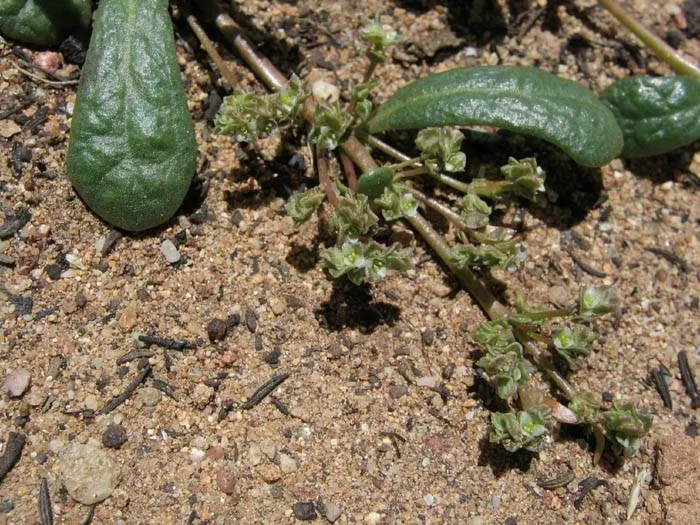
Sources for this entry (8) Open & cited
Cite this page Open data, please attribute
PlantKey’s data is open under CC BY-SA 4.0 — free to reuse and adapt, with attribution and the same licence. Photos keep their own per-image licence + credit (see Sources above).
Loading…
BibTeX
Loading…