
Small's Southern Clarkia Clarkia australis
Small's Southern Clarkia is an annual wildflower native to the lower 48 states. It blooms Jun – Jul. A host for pollen-specialist native bees.
More about this plant
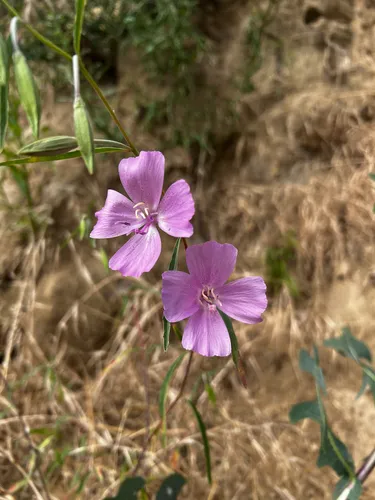
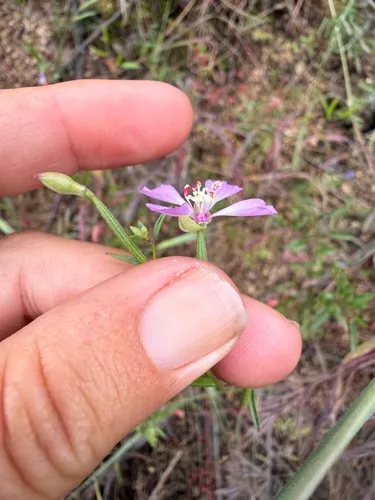
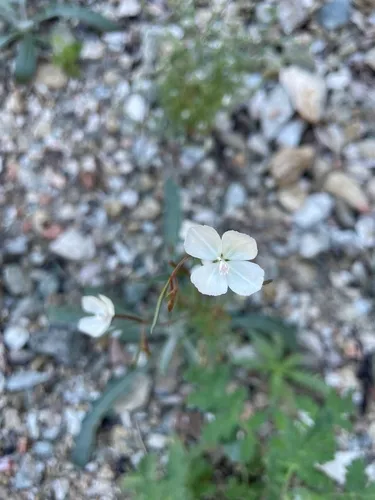
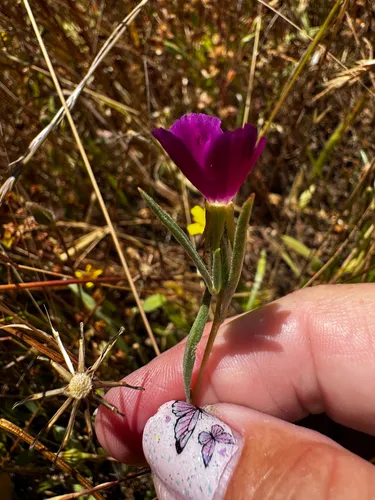
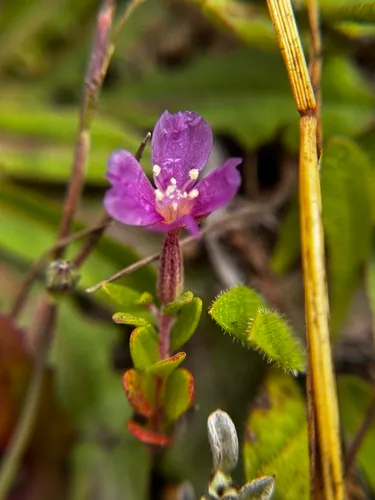
Clarkia australis is a species of flowering plant in the evening primrose family known by the common name Small's southern clarkia. It is endemic to California, where it grows in the forests of the central Sierra Nevada. It is an uncommon species threatened by such forest activities as logging. This annual herb produces a slender, erect stem approaching a meter in height. The leaves are widely linear in shape and borne on short petioles. The top of the stem is occupied by the tall inflorescence, which bears hanging buds that open from the lowest upward so that there are several closed buds above open flowers. The sepals do not remain fused as the flower opens. The petals are diamond-shaped and sometimes lobed and curling at the tip. They are mottled or spotted lavender, purple, and reddish in color, and each is up to 1.5 centimeters long. There are 8 long stamens tipped with large anthers bearing blue-gray pollen. The stigma protrudes past the anthers. Wikipedia →
Growing & care
USDA PLANTS · TRY- Hardiness
- ≥ zone 11 derived from its U.S. range
- Lifespan
- Annual
Wildlife & pollinators
How pollinator value is scored →❧ Caterpillar hosts ~3 caterpillar species
Clarkia supports ~3 caterpillar species.
Native butterfly & moth caterpillars are the base of the terrestrial food web — most songbirds rear their young almost entirely on them. As a host for native Lepidoptera this is a modest genus.
Recorded feeding on Clarkia in North America, including:


✦ Bees specialist-bee host
Specialist native bees depend on it.
Some native bees are pollen specialists (oligolectic) — they raise young only on pollen from particular plant genera. Clarkia is a recorded specialist-bee host, so losing it can mean losing the bee that relies on it.
Related plants
More Clarkia →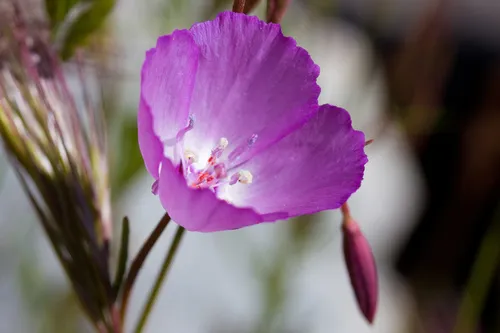
Sources for this entry (14) Open & cited
Cite this page Open data, please attribute
PlantKey’s data is open under CC BY-SA 4.0 — free to reuse and adapt, with attribution and the same licence. Photos keep their own per-image licence + credit (see Sources above).
Loading…
BibTeX
Loading…