
Laurel-leaf Snailseed Cocculus laurifolius
Laurel-leaf Snailseed is an introduced perennial tree, found in the lower 48 states.
More about this plant
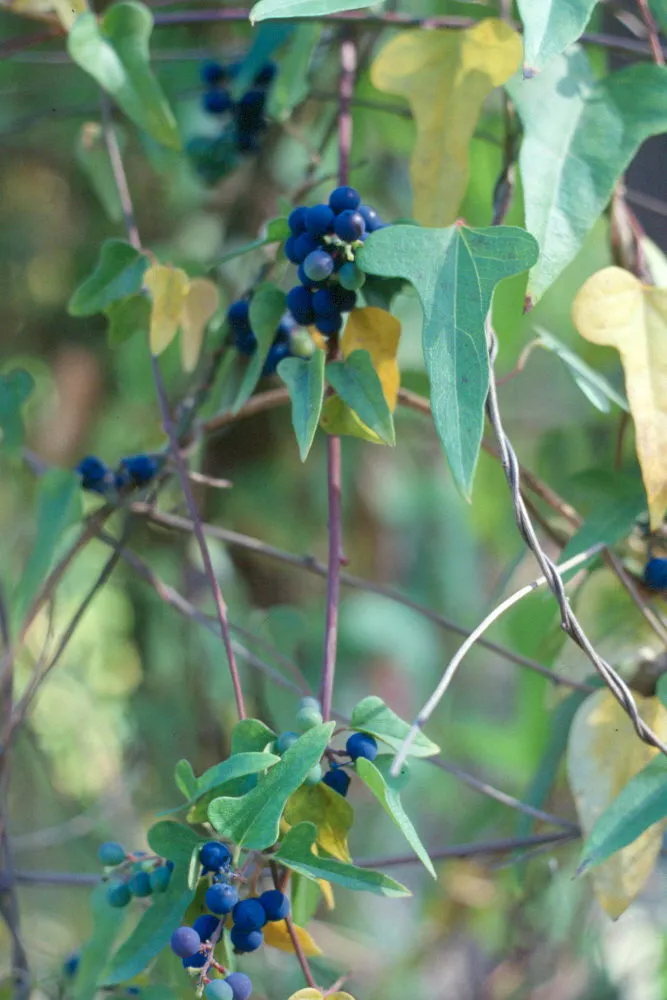
Pachygone laurifolia, the laurel-leaved snail tree, is a medium-sized, shrubby evergreen tree of the moonseed family, Menispermaceae. It is native to the foothills of the Himalayas, China, Taiwan, and Japan, where it commonly grows to a height of 2.3 m (7.5 ft), with an equal spread. In cultivation it can reach a similar size where conditions are favorable. Form is round-headed, with a medium to fast growth rate and a coarse texture. Leaves are ovate-lanceolate, about 150 mm (6 in) long by 51 mm (2 in) wide, with a spiral bud arrangement. Leaf color is medium green. This species is dioecious, with male and female flowers on separate plants. Flowers are insignificant: small, yellowish and appearing in spikes at leaf axils. Fruit is a small black drupe. With frequent shearing, plants may work well in a formal setting as a hedge or screen. Will take a wide range of sun and soil conditions within its temperature tolerance. Wikipedia →
Growing & care
USDA PLANTS · TRY- Hardiness
- ≥ zone 11 derived from its U.S. range
- Lifespan
- Perennial
Related plants
More Cocculus →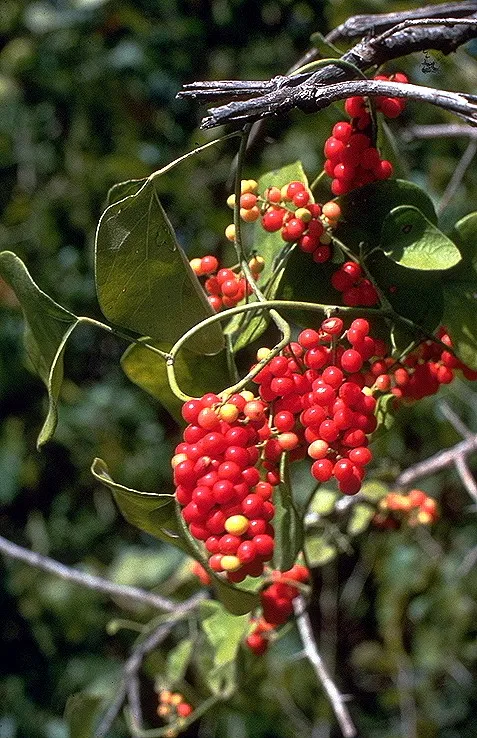
How we know this (1) Methods & honest limits
A recorded categorical fact: each species is tagged C3 (standard), C4 (heat/water-efficient) or CAM (succulent, night-time CO₂ uptake) — or a facultative combination. We only show a trait card for the noteworthy C4/CAM cases; C3 is the unremarkable majority, kept in the data but not surfaced as a card.
Sources for this entry (13) Open & cited
Cite this page Open data, please attribute
PlantKey’s data is open under CC BY-SA 4.0 — free to reuse and adapt, with attribution and the same licence. Photos keep their own per-image licence + credit (see Sources above).
Loading…
BibTeX
Loading…