PlantKey Open ecological atlas
Planner
Home / Browse / Cordylanthus / Mt. Diablo Bird's-beak
iNaturalist — CC, credited & licensed per image
Scrophulariaceae family

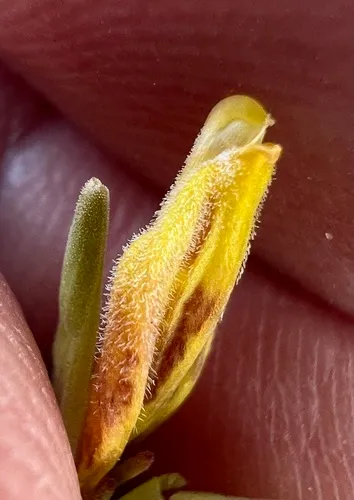
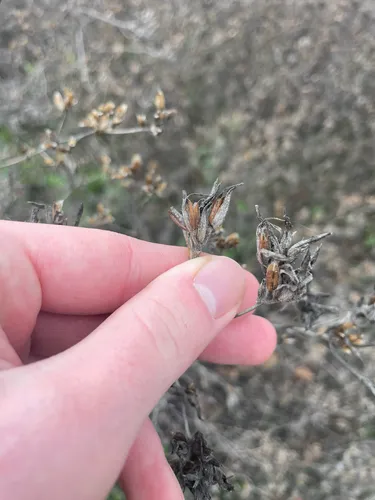
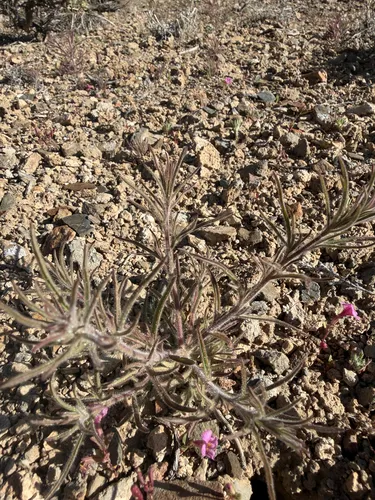
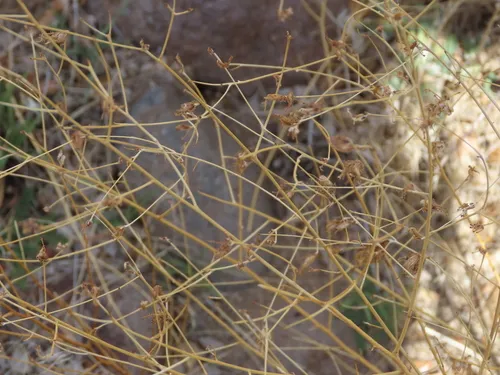
Mt. Diablo Bird's-beak Cordylanthus nidularius

Native Specialist-bee host

Mt. Diablo Bird's-beak is an annual wildflower native to the lower 48 states. A host for pollen-specialist native bees.

More about this plant

Cordylanthus nidularius is a rare species of flowering plant in the family Orobanchaceae known by the common name Mt. Diablo bird's beak. Wikipedia →

Growing & care

USDA PLANTS · TRY
Conditions
Sources · Conditions
Cold hardiness (derived) — Hardiness
Hardiness
≥ zone 11 derived from its U.S. range
Size & form
Sources · Size & form
USDA PLANTS — Lifespan
Lifespan
Annual
In the garden
Herb layer — Sits in the herb of a layered food forest or polyculture.Open guide →
derived roles
Species characteristics from USDA PLANTS (public domain) + TRY (CC BY) — general guidance, not a guarantee for your exact site. Deer "browsing" is documented palatability, not a deer-proof claim.

Wildlife & pollinators

How pollinator value is scored →
❧ Caterpillar hosts Documented caterpillar host

Recorded feeding on Cordylanthus in North America, including:

Named species (a documented Nearctic sample, not exhaustive) from NHM HOSTS (CC0).
✦ Bees specialist-bee host

Specialist native bees depend on it.

Some native bees are pollen specialists (oligolectic) — they raise young only on pollen from particular plant genera. Cordylanthus is a recorded specialist-bee host, so losing it can mean losing the bee that relies on it.

Specialist hosts from Smith et al. 2024.
Sources for this entry (12) Open & cited
[01] Scientific name & family — USDA PLANTS (DwCA, Zenodo 17903503)
[02] Growth habit & duration — USDA PLANTS (DwCA, Zenodo 17903503)
[03] Native status & distribution — USDA PLANTS (DwCA, Zenodo 17903503)
[04] Common name — USDA PLANTS (via GBIF)
[05] Invasive / introduced status — USDA PLANTS (DwCA, Zenodo 17903503) — native status
[07] Description — Wikipedia (CC BY-SA)
[08] Ecological value — GloBI · Smith et al. 2024 (CC BY)
[09] Conservation rank — NatureServe Explorer (CC BY)
[10] Cold hardiness (derived) — Derived from U.S. range × USDA PHZM zones
[11] Caterpillar species — NHM HOSTS (CC0)
[12] County range — GBIF Open Data — open-licensed occurrences (CC0/CC-BY) → county
Spot an error or have a better photo? Every field links to its source, and the whole dataset is open.
Cite this page Open data, please attribute

PlantKey’s data is open under CC BY-SA 4.0 — free to reuse and adapt, with attribution and the same licence. Photos keep their own per-image licence + credit (see Sources above).

Citation

Loading…

BibTeX
Loading…