
Hansen's Bird's Beak (subsp. hansenii) Cordylanthus pilosus subsp. hansenii subspecies
Hansen's Bird's Beak (subsp. hansenii) is an annual wildflower native to the lower 48 states. A host for pollen-specialist native bees.
More about this plant
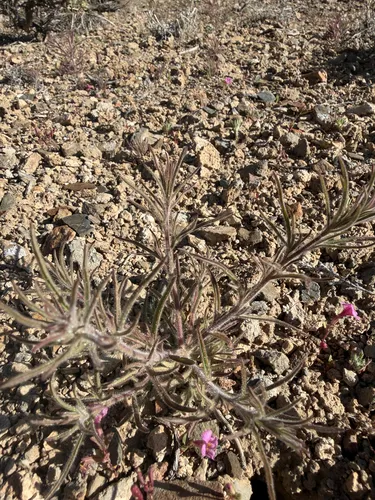
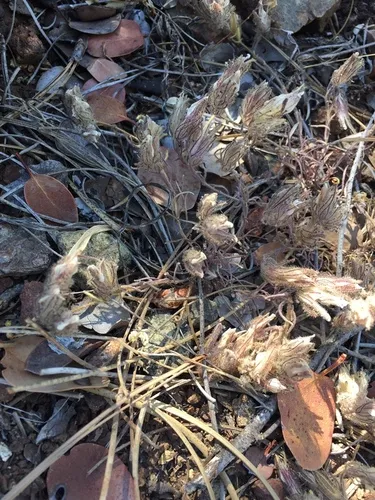
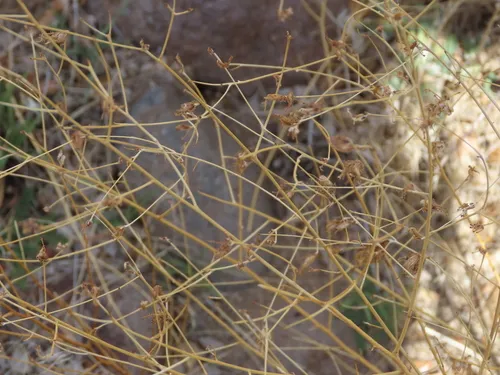
Cordylanthus pilosus is a species of flowering plant in the family Orobanchaceae known by the common name hairy bird's beak. It is endemic to the mountain ranges and foothills of northern California, where it grows in woodland and chaparral habitat, often on serpentine soils. There are three subspecies, each mainly limited to a different section of mountains. In general this annual herb is erect and branching, reaching a maximum height anywhere between 20 centimeters and 1.2 meters. It is purple-tinted gray-green in color and usually quite hairy in texture, the hairs sometimes associated with sticky glands. The branches have sparse tufts of small linear leaves. The flowers of the inflorescence have bracts which may be linear in shape or lobed, each lobe knobby or notched. The flower is up to 2 centimeters long and has a whitish pouch marked with yellow and purple enclosed in hairy sepals. Wikipedia →
Growing & care
USDA PLANTS · TRY- Hardiness
- ≥ zone 11 derived from its U.S. range
- Lifespan
- Annual
Wildlife & pollinators
How pollinator value is scored →❧ Caterpillar hosts Documented caterpillar host
Recorded feeding on Cordylanthus in North America, including:
✦ Bees specialist-bee host
Specialist native bees depend on it.
Some native bees are pollen specialists (oligolectic) — they raise young only on pollen from particular plant genera. Cordylanthus is a recorded specialist-bee host, so losing it can mean losing the bee that relies on it.
Related plants
More Cordylanthus →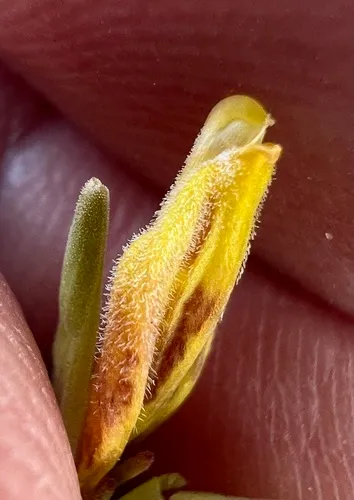
Sources for this entry (10) Open & cited
Cite this page Open data, please attribute
PlantKey’s data is open under CC BY-SA 4.0 — free to reuse and adapt, with attribution and the same licence. Photos keep their own per-image licence + credit (see Sources above).
Loading…
BibTeX
Loading…