
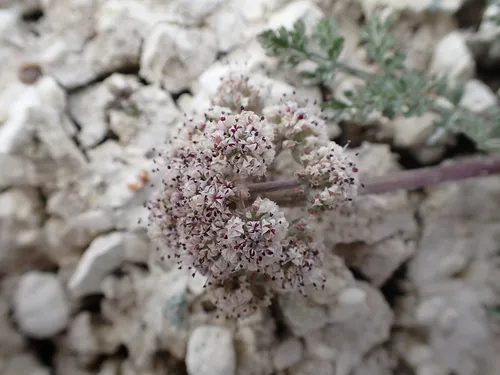
© Peter de Lange · CC0
iNaturalist — CC, credited & licensed per image
Apiaceae family
Cumin Cuminum cyminum
Cumin is an introduced annual herb, found in the lower 48 states. It grows to 0.8 ft.
More about this plant
Cumin is a flowering plant in the family Apiaceae, native to the Irano-Turanian Region. Its seeds – each one contained within a fruit, which is dried – are used in the cuisines of many cultures in both whole and ground form. Although cumin is used in traditional medicine, there is no high-quality evidence that it is safe or effective as a therapeutic agent. Wikipedia →
Growing & care
USDA PLANTS · TRY Conditions
Sources · Conditions
Cold hardiness (derived) — Hardiness
- Hardiness
- ≥ zone 7 derived from its U.S. range
Size & form
Sources · Size & form
TRY Plant Trait Database (CC BY 4.0) — Height · Foliage
USDA PLANTS — Lifespan
- Height
- 0.8 ft
- Lifespan
- Annual
- Foliage
- Broadleaf
In the garden
Ground-cover layer — Sits in the ground-cover of a layered food forest or polyculture.Open guide →
Living mulch / groundcover — Low, ground-hugging grower — can carpet bare soil as a living mulch, shading out weeds and holding moisture.Open guide →
derived roles
Species characteristics from USDA PLANTS (public domain) + TRY (CC BY) — general guidance, not a
guarantee for your exact site. Deer "browsing" is documented palatability, not a deer-proof claim.
Wildlife & pollinators
How pollinator value is scored →❧ Caterpillar hosts Documented caterpillar host
Recorded feeding on Cuminum in North America, including:
Named species (a documented Nearctic sample, not exhaustive) from NHM HOSTS (CC0).
Related plants
More Cuminum → Native
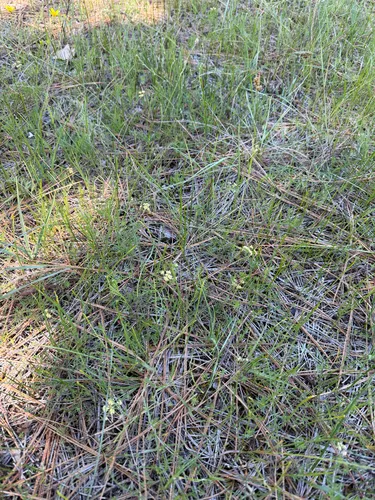
Adobe Desertparsley
Lomatium concinnum
●●●○○ 
Native
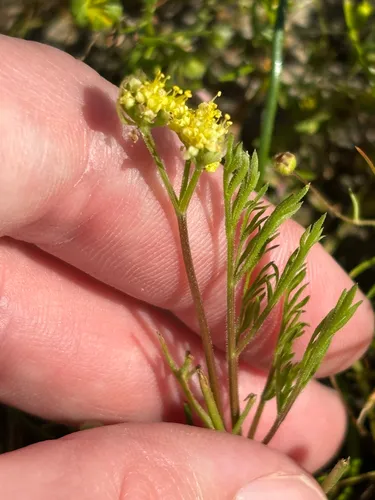
Agate Desertparsley
Lomatium cookii
●●●○○ 
Native
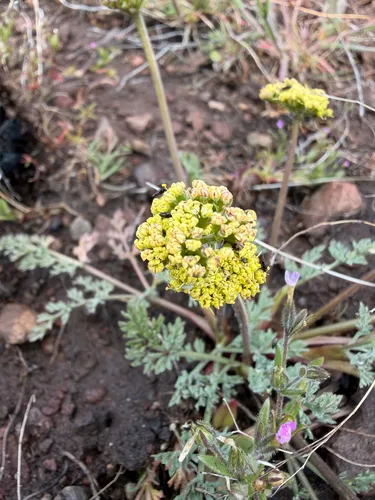
Alkali Desertparsley
Lomatium caruifolium
●●●○○ 
Native
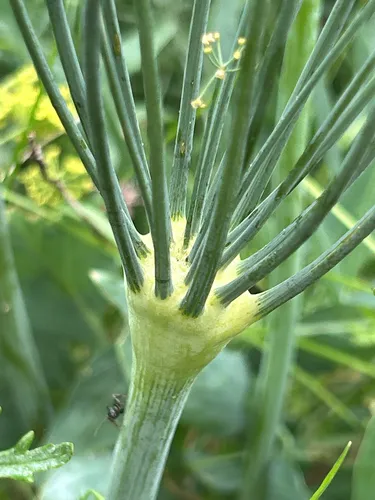
Austin Desertparsley
Lomatium austiniae
●●●○○ 
Native
Barestem Biscuitroot
Lomatium nudicaule
●●●○○ 
Native
Bentonite Desertparsley
Lomatium bentonitum
●●●○○ Same genus / family, ranked by ecological value — from the PlantKey catalog
Sources for this entry (15) Open & cited
[01] Scientific name & family — USDA PLANTS (DwCA, Zenodo 17903503)
[02] Growth habit & duration — USDA PLANTS (DwCA, Zenodo 17903503)
[03] Native status & distribution — USDA PLANTS (DwCA, Zenodo 17903503)
[04] Common name — USDA PLANTS (via GBIF)
[05] Invasive / introduced status — US-RIIS v2.0 (USGS)
[06] Photos — iNaturalist — CC, credited per image
[07] Description — Wikipedia (CC BY-SA)
[08] Ecological value — GloBI
[09] Foliage — TRY Plant Trait Database (CC BY 4.0)
[10] Height — TRY Plant Trait Database (CC BY 4.0)
[11] Functional traits — TRY Plant Trait Database (CC BY 4.0)
[12] Cold hardiness (derived) — Derived from U.S. range × USDA PHZM zones
[13] Chromosomes — ChromoDB — IAPT/IOPB chromosome data series (Zenodo, CC BY 4.0)
[14] Human uses — Dr. Duke's Phytochemical & Ethnobotanical Databases (USDA, CC0)
[15] Caterpillar species — NHM HOSTS (CC0)
Spot an error or have a better photo? Every field links to its source, and the whole dataset is open.
Cite this page Open data, please attribute
PlantKey’s data is open under CC BY-SA 4.0 — free to reuse and adapt, with attribution and the same licence. Photos keep their own per-image licence + credit (see Sources above).
Citation
Loading…
BibTeX
Loading…