
Brownspined Pricklypear (var. parkeri) Cylindropuntia californica var. parkeri variety
Brownspined Pricklypear (var. parkeri) is a perennial shrub native to the lower 48 states. A host for pollen-specialist native bees.
More about this plant
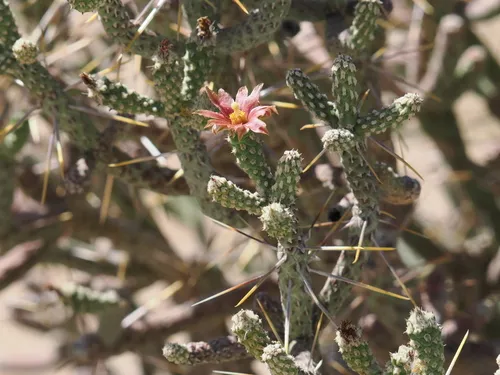
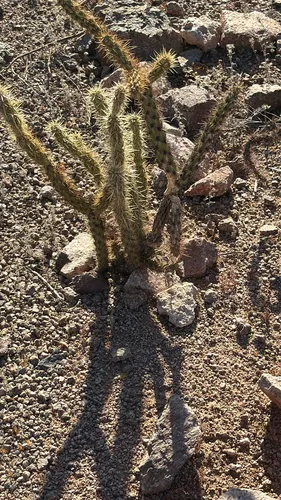
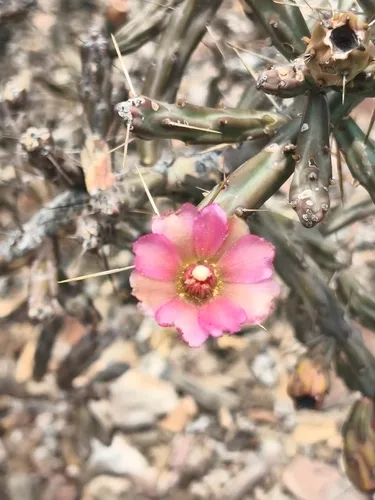
Cylindropuntia bernardina is a species of cholla cactus commonly known as the cane cholla or valley cholla, native to California and northwestern Baja California. It is an erect cholla that grows up to 2–3 meters tall, and occurs primarily in the foothills of the Transverse and Peninsular Ranges, parts of the Sonoran Desert, and in the Coast Ranges with a few populations around the Cuyama River. It was formerly placed as the variety parkeri of Cylindropuntia californica until it was renamed to C. bernardina. It is more closely related to Cylindropuntia ganderi than to C. californica. Wikipedia →
Growing & care
USDA PLANTS · TRY- Hardiness
- ≥ zone 11 derived from its U.S. range
- Lifespan
- Perennial
Wildlife & pollinators
How pollinator value is scored →✦ Bees specialist-bee host
Specialist native bees depend on it.
Some native bees are pollen specialists (oligolectic) — they raise young only on pollen from particular plant genera. Cylindropuntia is a recorded specialist-bee host, so losing it can mean losing the bee that relies on it.
Related plants
More Cylindropuntia →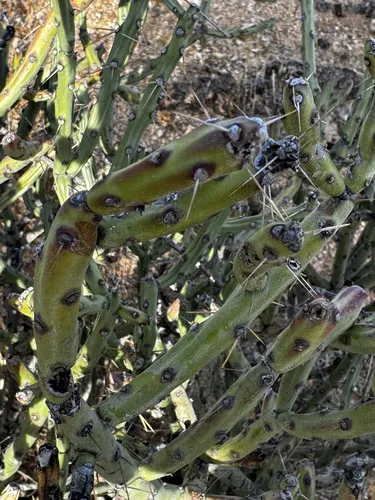
Sources for this entry (9) Open & cited
Cite this page Open data, please attribute
PlantKey’s data is open under CC BY-SA 4.0 — free to reuse and adapt, with attribution and the same licence. Photos keep their own per-image licence + credit (see Sources above).
Loading…
BibTeX
Loading…