
Stargrass Cynodon plectostachyus
Stargrass is an introduced perennial grass, found in the lower 48 states.
More about this plant
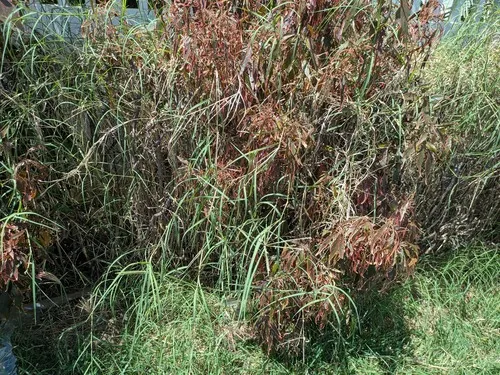
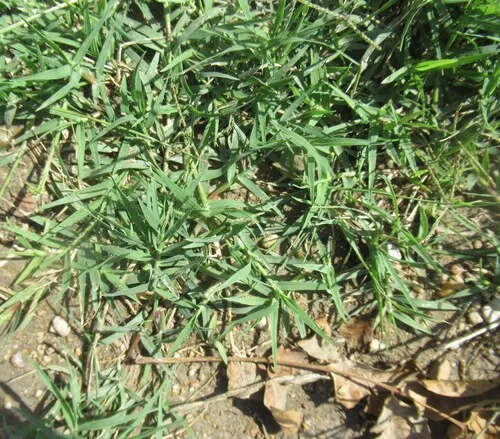
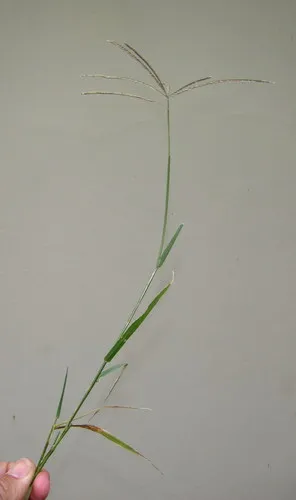
Cynodon plectostachyus, the giant star grass, is a species of grass. It is native to Chad, Ethiopia, Uganda, Kenya, and Tanzania, and has been introduced as a livestock forage to California and Florida in the United States, Mexico, Honduras, Cuba, the Dominican Republic, Haiti, Paraguay, Argentina, Nepal, and Bangladesh. An aggressive competitor, it is now the most widespread grass in the New World Tropics. It is typically paired in a silvopastoral system with Leucaena leucocephala. Wikipedia →
Stargrass is flagged invasive in the U.S. These natives fill a similar niche — same growth habit, bloom season, height, and region — so you keep the look and feed local wildlife instead of spreading a problem.
Growing & care
USDA PLANTS · TRY- Hardiness
- ≥ zone 11 derived from its U.S. range
- Lifespan
- Perennial
- Foliage
- Broadleaf
Wildlife & pollinators
How pollinator value is scored →❧ Caterpillar hosts ~12 caterpillar species
Cynodon supports ~12 caterpillar species.
Native butterfly & moth caterpillars are the base of the terrestrial food web — most songbirds rear their young almost entirely on them. As a host for native Lepidoptera this is a moderate genus for introduced plants — native genera typically support far more.
Recorded feeding on Cynodon in North America, including:


+ 8 more species → ↑ show fewer


Related plants
More Cynodon →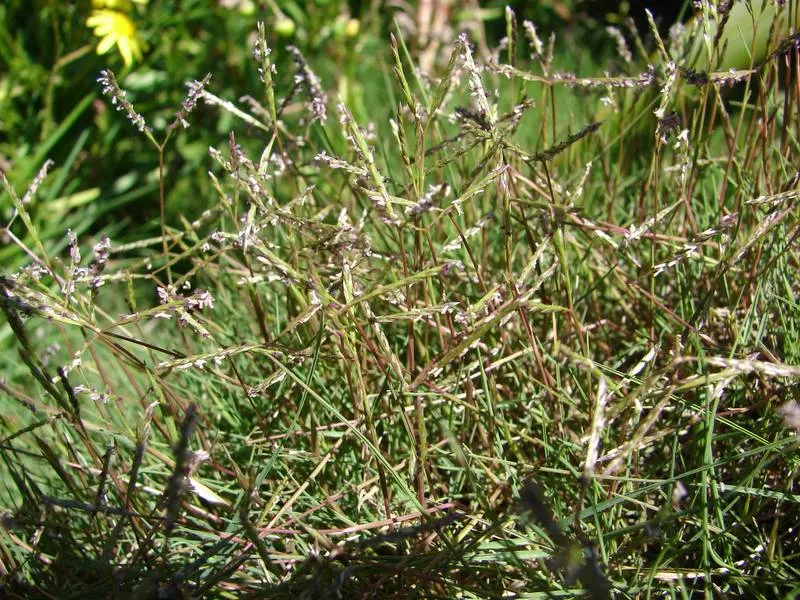
How we know this (1) Methods & honest limits
We read each species’ measured specific leaf area (leaf area per unit dry weight) from the Global Spectrum dataset and band it: thin & fast (high SLA), medium, or thick & tough (low SLA). The global median is about 10 mm²/mg.
Honest limits: A species-mean from pooled measurements — individual plants vary with light and site. A broad strategy signal, not a precise per-plant figure.
Sources for this entry (15) Open & cited
Cite this page Open data, please attribute
PlantKey’s data is open under CC BY-SA 4.0 — free to reuse and adapt, with attribution and the same licence. Photos keep their own per-image licence + credit (see Sources above).
Loading…
BibTeX
Loading…