PlantKey Open ecological atlas
Planner
Home / Browse / Daphne / Garland-flower
iNaturalist — CC, credited & licensed per image
Thymelaeaceae family

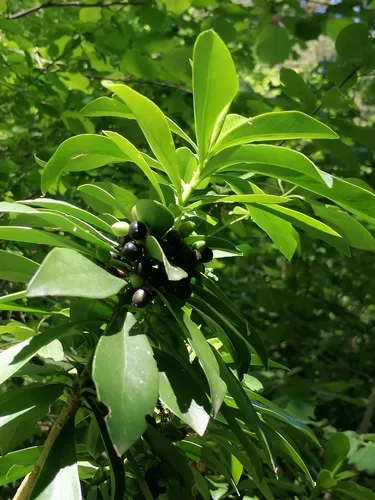
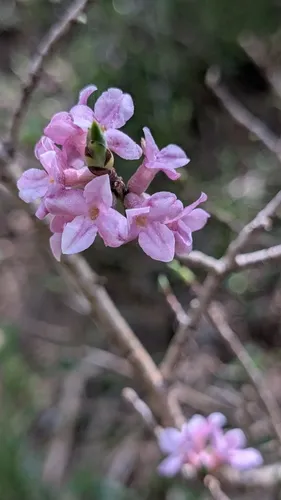
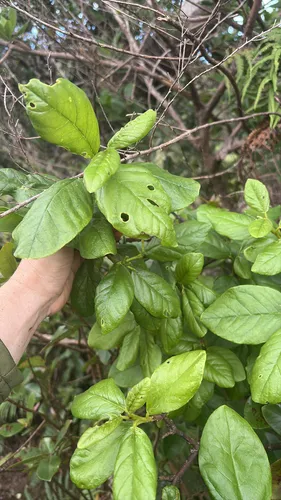
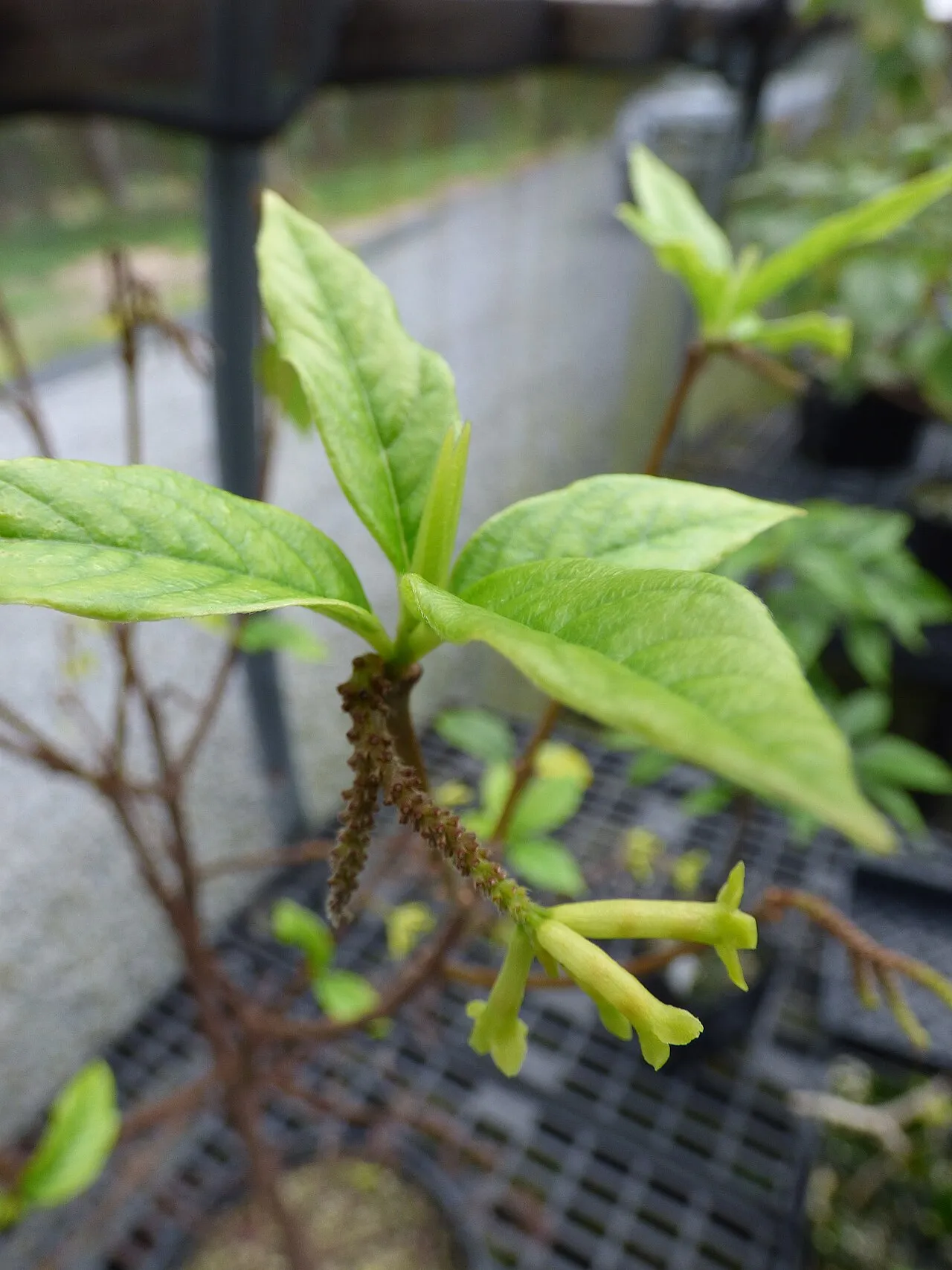
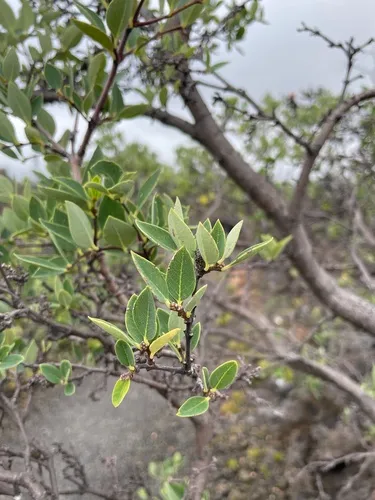
Garland-flower Daphne cneorum

Drought-tough — Rated High for drought tolerance — a water-wise pick once it's established.
Also known as: Rose Daphne

Garland-flower is an introduced plant, found in the lower 48 states. It grows to 0.5 ft.

More about this plant

Daphne cneorum, the rose daphne or garland flower, is a species of flowering plant in the family Thymelaeaceae, native across the mountains of central and southern Europe from the Pyrenees east through the Alps, the Apennine, Carpathian and the Balkan Peninsula mountains, and locally in lowlands further north and east to Ukraine and westernmost Russia. It is a prostrate spreading evergreen shrub growing to 50 cm (20 in) high, with downy stems bearing oblanceolate to spatulate, hairless, evergreen leaves 10–20 mm long and 3–5 mm wide, and highly fragrant pink flowers in dense clusters of 6–8 together in spring. All parts of the plant are poisonous to humans. Wikipedia →

Growing & care

USDA PLANTS · TRY
Conditions
Sources · Conditions
Cold hardiness (derived) — Hardiness
Niinemets & Valladares 2006 (CC0) — Drought tolerance · Shade tolerance · Wet-soil tolerance
Hardiness
≥ zone 7 derived from its U.S. range
Drought tolerance
High
Shade tolerance
Moderate
Wet-soil tolerance
Low waterlogging
Size & form
Sources · Size & form
TRY Plant Trait Database (CC BY 4.0) — Height · Foliage
Height
0.5 ft
Foliage
Evergreen broadleaf
In the garden
Ground-cover layer — Sits in the ground-cover of a layered food forest or polyculture.Open guide →
derived roles
Species characteristics from USDA PLANTS (public domain) + TRY (CC BY) — general guidance, not a guarantee for your exact site. Deer "browsing" is documented palatability, not a deer-proof claim.

Wildlife & pollinators

How pollinator value is scored →
❧ Caterpillar hosts Documented caterpillar host

Recorded feeding on Daphne in North America, including:

Named species (a documented Nearctic sample, not exhaustive) from NHM HOSTS (CC0).
Species thumbnails re-hosted from iNaturalist — Creative Commons, credited per image (hover for credit). Click any species to see it on iNaturalist. Not exhaustive; many taxa have no openly-licensed photo yet.
How we know this (1) Methods & honest limits
Photosynthesis Direct fact

A recorded categorical fact: each species is tagged C3 (standard), C4 (heat/water-efficient) or CAM (succulent, night-time CO₂ uptake) — or a facultative combination. We only show a trait card for the noteworthy C4/CAM cases; C3 is the unremarkable majority, kept in the data but not surfaced as a card.

Kattge, J. et al. TRY plant trait database — Categorical Traits Dataset (2012).
Derived values are computed from open data by a published method — labelled, cited, and never shown as a direct observation. Full methodology →
Sources for this entry (19) Open & cited
[01] Scientific name & family — USDA PLANTS (DwCA, Zenodo 17903503)
[02] Growth habit & duration — USDA PLANTS (DwCA, Zenodo 17903503)
[03] Native status & distribution — USDA PLANTS (DwCA, Zenodo 17903503)
[04] Common name — USDA PLANTS (via GBIF)
[05] Invasive / introduced status — US-RIIS v2.0 (USGS)
[07] Description — Wikipedia (CC BY-SA)
[08] Ecological value — GloBI
[11] Functional traits — TRY Plant Trait Database (CC BY 4.0)
[12] Photosynthetic pathway — TRY Plant Trait Database (CC BY 4.0)
[13] Cold hardiness (derived) — Derived from U.S. range × USDA PHZM zones
[16] Other common names — Wikidata (CC0)
[17] Stress tolerance — Niinemets & Valladares 2006 (CC0)
[18] Caterpillar species — NHM HOSTS (CC0)
[19] County range — GBIF Open Data — open-licensed occurrences (CC0/CC-BY) → county
Spot an error or have a better photo? Every field links to its source, and the whole dataset is open.
Cite this page Open data, please attribute

PlantKey’s data is open under CC BY-SA 4.0 — free to reuse and adapt, with attribution and the same licence. Photos keep their own per-image licence + credit (see Sources above).

Citation

Loading…

BibTeX
Loading…