
Coastal Larkspur (subsp. tracyi) Delphinium decorum subsp. tracyi subspecies
Coastal Larkspur (subsp. tracyi) is a perennial wildflower native to the lower 48 states.
More about this plant
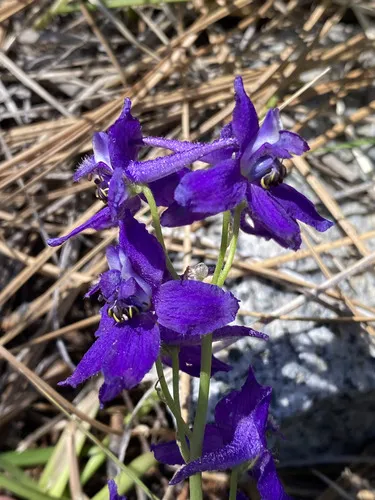
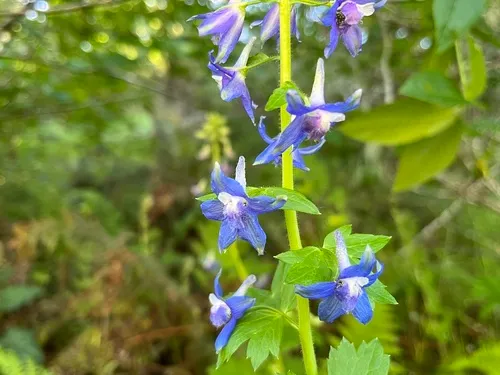
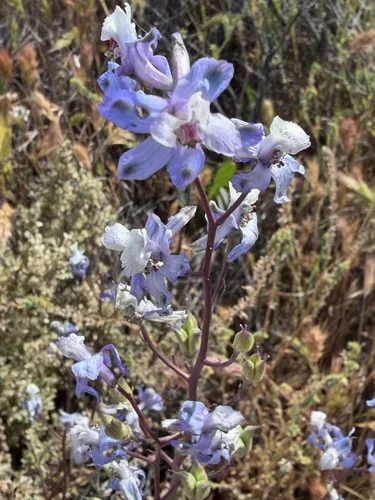
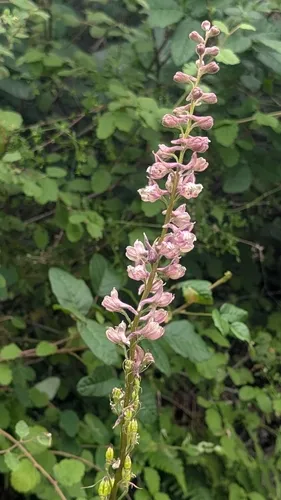
Delphinium decorum is a species of larkspur known by the common names coastal larkspur and yellow-tinge larkspur. This wildflower is native to California and Oregon, where it grows on the slopes of the coastal ranges from the San Francisco Bay Area north to the southern Oregon coast. It has an erect stem which approaches half a meter in height at maximum. The leaves, which are divided into a number of narrow lobes, are mostly located about the base of the plant. The spindly stem above bears two to twenty widely spaced flowers. Each flower is carried on a pedicel several centimeters long. The five long, flat sepals are extended to give the face of the flower a star shape, and they are usually deep blue to purple. The petals are similar in color, except the top two may be lighter to almost white. The spur is very thin and may be nearly two centimeters long. Wikipedia →
Growing & care
USDA PLANTS · TRY- Hardiness
- ≥ zone 11 derived from its U.S. range
- Lifespan
- Perennial
Wildlife & pollinators
How pollinator value is scored →❧ Caterpillar hosts ~10 caterpillar species
Delphinium supports ~10 caterpillar species.
Native butterfly & moth caterpillars are the base of the terrestrial food web — most songbirds rear their young almost entirely on them. As a host for native Lepidoptera this is a moderate genus.
Recorded feeding on Delphinium in North America, including:


+ 8 more species → ↑ show fewer


Related plants
More Delphinium →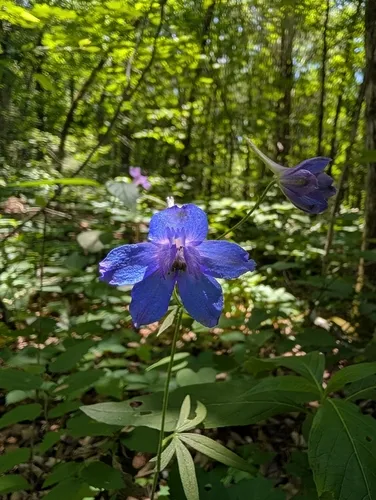
Sources for this entry (12) Open & cited
Cite this page Open data, please attribute
PlantKey’s data is open under CC BY-SA 4.0 — free to reuse and adapt, with attribution and the same licence. Photos keep their own per-image licence + credit (see Sources above).
Loading…
BibTeX
Loading…