
Lake Tahoe Draba (var. asterophora) Draba asterophora var. asterophora variety
Lake Tahoe Draba (var. asterophora) is a perennial wildflower native to the lower 48 states.
More about this plant
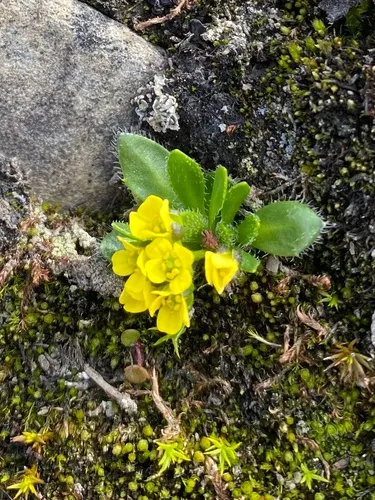
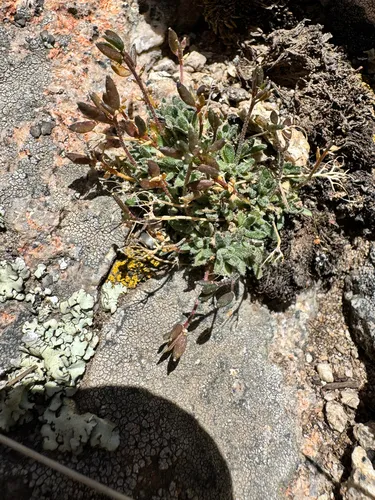
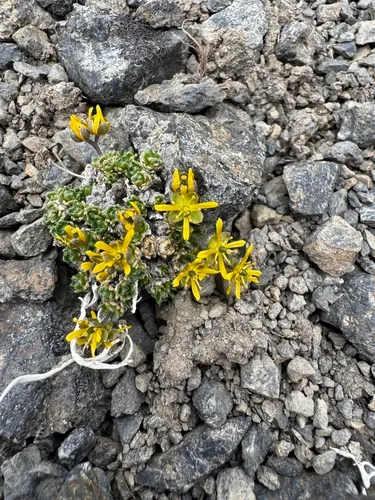
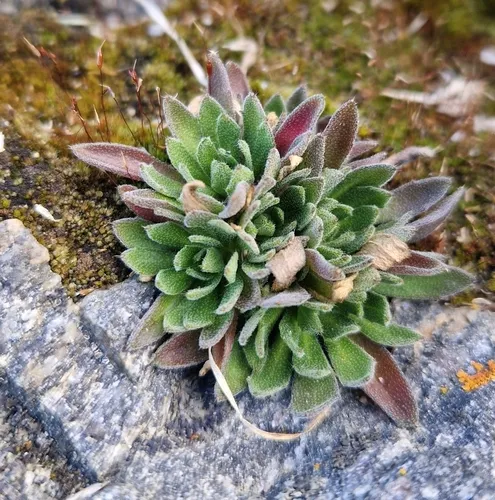
Draba asterophora is a species of flowering plant in the family Brassicaceae known by the common names Lake Tahoe draba or Tahoe whitlow-grass. This rare plant is known only from the Mount Rose and Slide Mountain areas of the northern Carson Range in extreme western Nevada, in and just outside of the Lake Tahoe drainage basin. It is a squat perennial herb which forms small mats in rocky habitat in the alpine climate of the high mountains. It forms a basal patch of thick, hairy oval leaves up to 1.5 centimeters long. A small, erect inflorescence arises from the patch bearing several yellow mustard-like flowers. The fruit is a flat, wavy silique which is oval in shape, somewhat membranous, and up to 1.5 centimeters long. It contains several flat, round seeds with wide wings along the edges. Wikipedia →
Growing & care
USDA PLANTS · TRY- Hardiness
- ≥ zone 10 derived from its U.S. range
- Lifespan
- Perennial
Wildlife & pollinators
How pollinator value is scored →❧ Caterpillar hosts ~2 caterpillar species
Draba supports ~2 caterpillar species.
Native butterfly & moth caterpillars are the base of the terrestrial food web — most songbirds rear their young almost entirely on them. As a host for native Lepidoptera this is a modest genus.
Recorded feeding on Draba in North America, including:


Related plants
More Draba →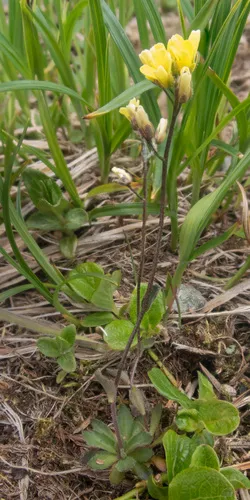
Sources for this entry (12) Open & cited
Cite this page Open data, please attribute
PlantKey’s data is open under CC BY-SA 4.0 — free to reuse and adapt, with attribution and the same licence. Photos keep their own per-image licence + credit (see Sources above).
Loading…
BibTeX
Loading…