
Marcescent Dudleya (subsp. marcescens) Dudleya cymosa subsp. marcescens subspecies
Marcescent Dudleya (subsp. marcescens) is a perennial wildflower native to the lower 48 states.
More about this plant
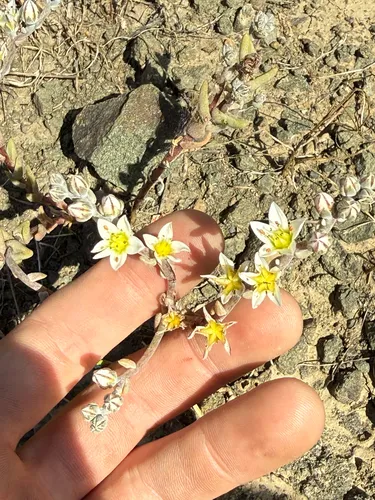
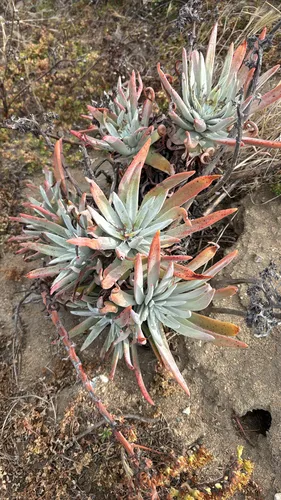
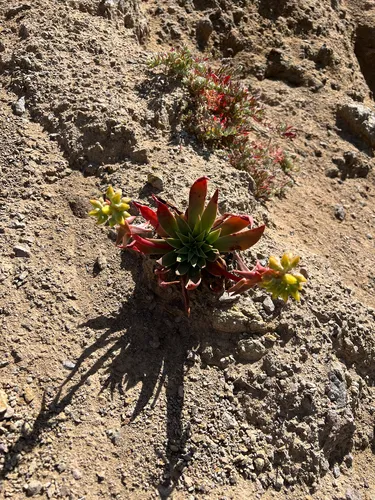
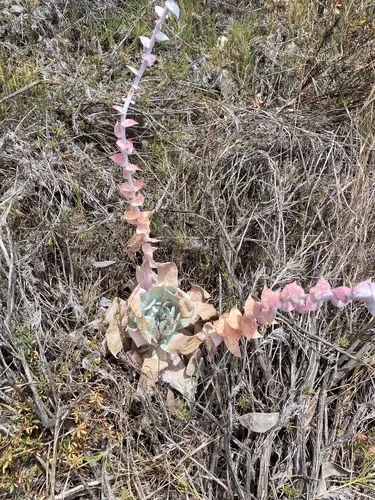
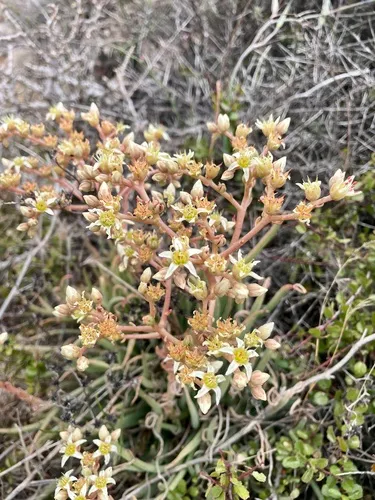
Dudleya cymosa subsp. marcescens is a species of summer-deciduous succulent plant known commonly as the marcescent dudleya or marcescent liveforever. Throughout the months of spring, it is characterized by a bloom of small, bright-yellow flowers with 5 petals, tinged with orange or red. It is a leaf succulent with a basal rosette, with the foliage withering in summer, going completely leafless, a neotenous trait in the genus. This species is endemic to the exposed volcanic rock of the Santa Monica Mountains in California, being found on shady slopes and outcroppings. It differs from its local congeners with its deciduous habit, slender caudex, and narrower leaf shape, although it is superseded in some of these characteristics by Dudleya parva, growing 13 km to the north, which has even narrower leaves and is quicker to lose them. Because of its restricted distribution and small size, it is vulnerable to habitat degradation and disturbance from acts of graffiti and rock climbers. It is listed as threatened by the United States Fish and Wildlife Service. Wikipedia →
Growing & care
USDA PLANTS · TRY- Hardiness
- ≥ zone 11 derived from its U.S. range
- Lifespan
- Perennial
Wildlife & pollinators
How pollinator value is scored →❧ Caterpillar hosts Documented caterpillar host
Recorded feeding on Dudleya in North America, including:


Related plants
More Dudleya →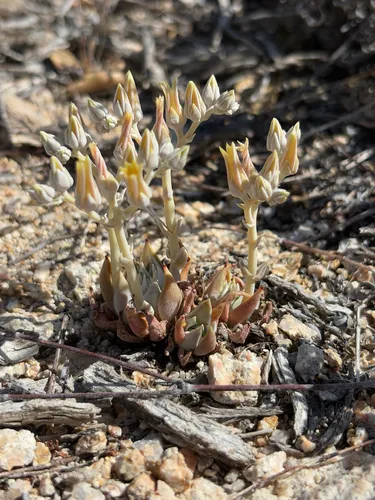
Sources for this entry (12) Open & cited
Cite this page Open data, please attribute
PlantKey’s data is open under CC BY-SA 4.0 — free to reuse and adapt, with attribution and the same licence. Photos keep their own per-image licence + credit (see Sources above).
Loading…
BibTeX
Loading…