PlantKey Open ecological atlas
Planner
Home / Browse / Eichhornia / Common Water Hyacinth
Wikimedia Commons — CC, credited & licensed per image
Pontederiaceae family

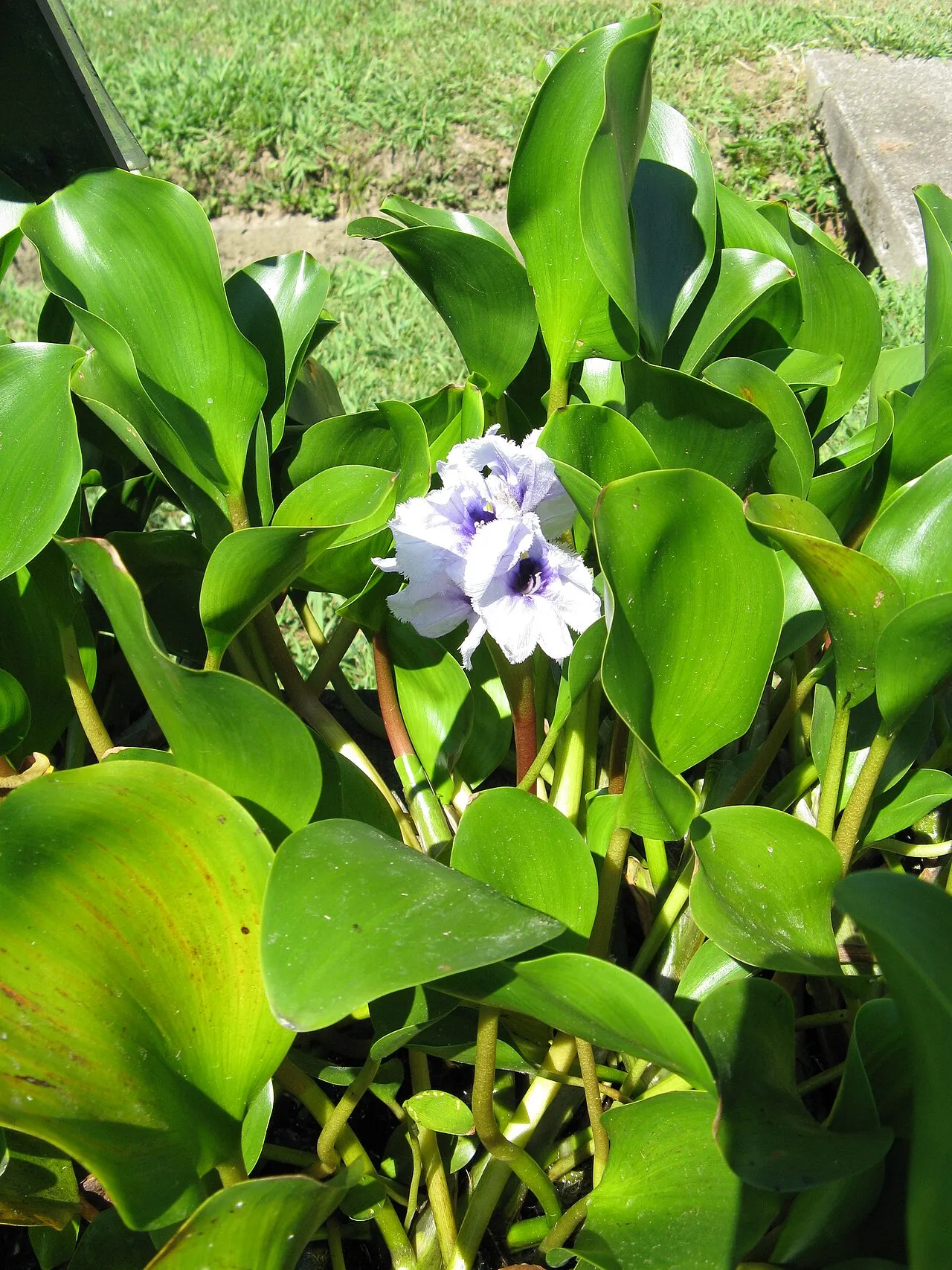
Common Water Hyacinth Eichhornia crassipes

Late-season nectar — Flowers in a late-autumn window when few other plants in our catalog bloom — valuable late forage for pollinators (relative to our catalog's bloom coverage).
Also known as: Waterhyacinth

Common Water Hyacinth is an introduced perennial herb, found in Hawaii, the lower 48 states, and the Pacific Basin. It blooms Mar – Nov.

More about this plant

Pontederia crassipes, commonly known as common water hyacinth, is an aquatic plant native to South America, naturalized throughout the world, and often invasive outside its native range. It is the sole species of the subgenus Oshunae within the genus Pontederia. Anecdotally, it is known as the "terror of Bengal" due to its invasive growth tendencies. Wikipedia →

⚠ Invasive here — plant a native instead USDA + GBIF

Common Water Hyacinth is flagged invasive in the U.S. These natives fill a similar niche — same growth habit, bloom season, height, and region — so you keep the look and feed local wildlife instead of spreading a problem.
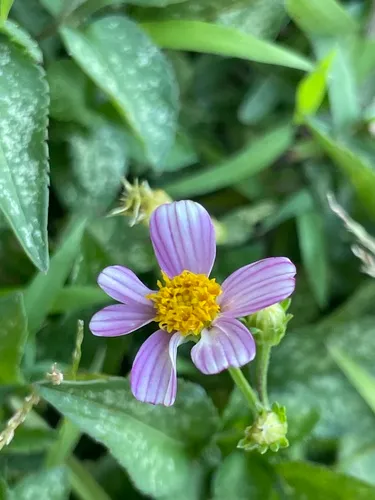
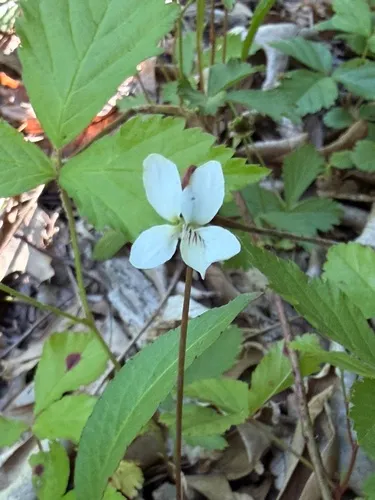
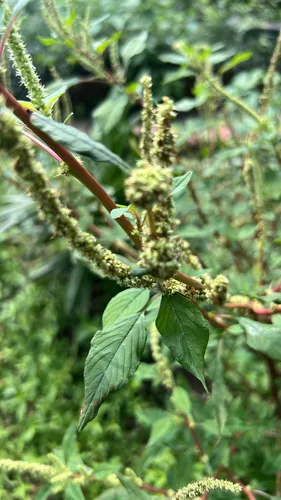
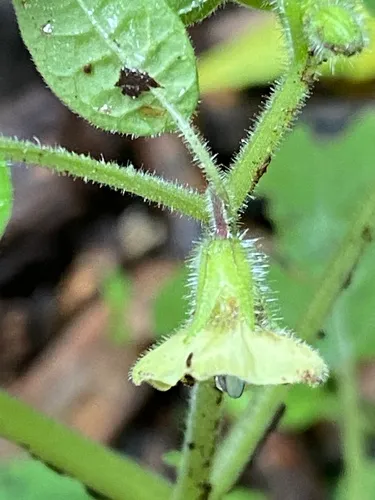
Matched on growth habit · bloom months · mature height · shared U.S. range (USDA + GBIF) — a starting point, not a prescription.

Growing & care

USDA PLANTS · TRY
Conditions
Sources · Conditions
Cold hardiness (derived) — Hardiness
Hardiness
≥ zone 7 derived from its U.S. range
Size & form
Sources · Size & form
USDA PLANTS — Lifespan
TRY Plant Trait Database (CC BY 4.0) — Foliage
Lifespan
Perennial
Foliage
Evergreen broadleaf
In the garden
Herb layer — Sits in the herb of a layered food forest or polyculture.Open guide →
High-nutrient foliage — Above-average measured leaf nitrogen — its prunings make rich compost and mulch (the measured stand-in for folklore "dynamic accumulator" lists).Open guide →
Rain garden / bioswale — Rated OBL on the wetland list — tolerates wet feet, so it suits the soggy zone of a rain garden or bioswale that catches and filters runoff.Open guide →
derived roles
The garden year bloom → fruit → fall colour
J
F
M
A
M
J
J
A
S
O
N
D
Bloom
Bloom (the flower's colour)
Bloom · Mar – Nov — 103 obs · Herbarium specimens — Park et al. 2023 (CC BY 4.0)
Species characteristics from USDA PLANTS (public domain) + TRY (CC BY) — general guidance, not a guarantee for your exact site. Deer "browsing" is documented palatability, not a deer-proof claim.

Wildlife & pollinators

How pollinator value is scored →
❧ Caterpillar hosts Documented caterpillar host
Named species (a documented Nearctic sample, not exhaustive) from NHM HOSTS (CC0). = recorded on this exact species.
Wildlife & visitors 4 birds

Open records of who else uses Common Water Hyacinth — a generalist food-web signal, kept separate from the keystone Ecological Value.

Interaction records (observations, not exhaustive) from GloBI → (CC0). Counts are distinct species; names are the most-recorded. Common names from Wikidata (CC0).
Species thumbnails re-hosted from iNaturalist — Creative Commons, credited per image (hover for credit). Click any species to see it on iNaturalist. Not exhaustive; many taxa have no openly-licensed photo yet.
How we know this (2) Methods & honest limits
Leaf build Direct fact

We read each species’ measured specific leaf area (leaf area per unit dry weight) from the Global Spectrum dataset and band it: thin & fast (high SLA), medium, or thick & tough (low SLA). The global median is about 10 mm²/mg.

Honest limits: A species-mean from pooled measurements — individual plants vary with light and site. A broad strategy signal, not a precise per-plant figure.

Díaz, S. et al. (2022) The global spectrum of plant form and function: enhanced species-level trait dataset. Scientific Data 9:755.
Photosynthesis Direct fact

A recorded categorical fact: each species is tagged C3 (standard), C4 (heat/water-efficient) or CAM (succulent, night-time CO₂ uptake) — or a facultative combination. We only show a trait card for the noteworthy C4/CAM cases; C3 is the unremarkable majority, kept in the data but not surfaced as a card.

Kattge, J. et al. TRY plant trait database — Categorical Traits Dataset (2012).
Derived values are computed from open data by a published method — labelled, cited, and never shown as a direct observation. Full methodology →
Sources for this entry (20) Open & cited
[01] Scientific name & family — USDA PLANTS (DwCA, Zenodo 17903503)
[02] Growth habit & duration — USDA PLANTS (DwCA, Zenodo 17903503)
[03] Native status & distribution — USDA PLANTS (DwCA, Zenodo 17903503)
[04] Common name — USDA PLANTS (via GBIF)
[05] Invasive / introduced status — US-RIIS v2.0 (USGS)
[06] Wetland indicator — USACE National Wetland Plant List (2022)
[08] Description — Wikipedia (CC BY-SA)
[09] Ecological value — GloBI
[11] Conservation rank — NatureServe Explorer (CC BY)
[13] Functional traits — TRY Plant Trait Database (CC BY 4.0)
[14] Photosynthetic pathway — TRY Plant Trait Database (CC BY 4.0)
[15] Cold hardiness (derived) — Derived from U.S. range × USDA PHZM zones
[16] Wildlife & visitors — GloBI — Global Biotic Interactions (CC0)
[19] Other common names — Wikidata (CC0)
[20] Caterpillar species — NHM HOSTS (CC0)
Spot an error or have a better photo? Every field links to its source, and the whole dataset is open.
Cite this page Open data, please attribute

PlantKey’s data is open under CC BY-SA 4.0 — free to reuse and adapt, with attribution and the same licence. Photos keep their own per-image licence + credit (see Sources above).

Citation

Loading…

BibTeX
Loading…