Sagebrush Fleabane Erigeron austiniae
Sagebrush Fleabane is a perennial wildflower native to the lower 48 states. A host for pollen-specialist native bees.
More about this plant
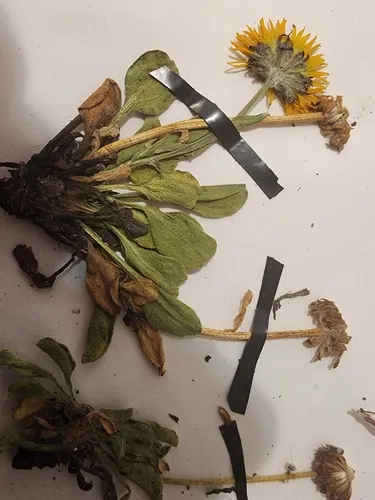
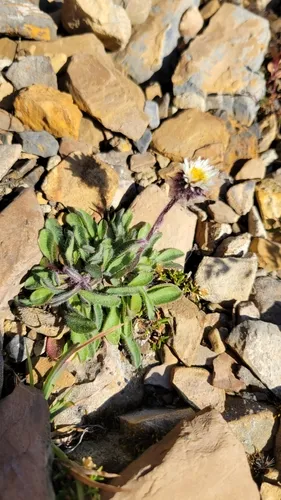
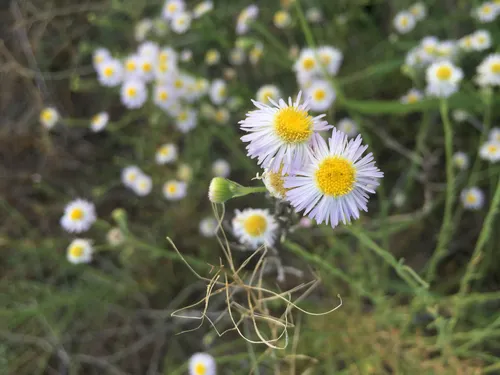
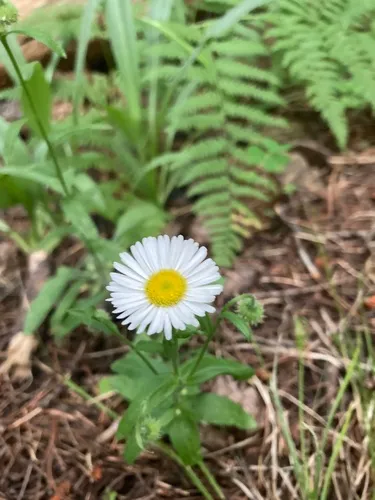
Erigeron chrysopsidis var. austiniae is a species of flowering plant in the family Asteraceae known by the common name sagebrush fleabane. It is sometimes considered a full species, Erigeron austiniae. It is native to the western United States from northeastern California to southwestern Idaho, where it grows in the sagebrush and juniper woodlands. It is a small, clumping perennial herb producing a hairy stem up to about 12 centimeters tall from a woody caudex and taproot surrounded by narrow linear to somewhat oval leaves up to 8 centimeters long. The inflorescence is a solitary flat-topped woolly flower head containing many yellow disc florets. There occasionally appears a yellow ray floret, but they are usually absent. The fruit is an achene with a pappus of bristles. Wikipedia →
Growing & care
USDA PLANTS · TRY- Hardiness
- ≥ zone 7 derived from its U.S. range
- Lifespan
- Perennial
Wildlife & pollinators
How pollinator value is scored →❧ Caterpillar hosts ~15 caterpillar species
Erigeron supports ~15 caterpillar species.
Native butterfly & moth caterpillars are the base of the terrestrial food web — most songbirds rear their young almost entirely on them. As a host for native Lepidoptera this is a moderate genus.
Recorded feeding on Erigeron in North America, including:


+ 8 more species → ↑ show fewer


✦ Bees specialist-bee host
Specialist native bees depend on it.
Some native bees are pollen specialists (oligolectic) — they raise young only on pollen from particular plant genera. Erigeron is a recorded specialist-bee host, so losing it can mean losing the bee that relies on it.
Related plants
More Erigeron →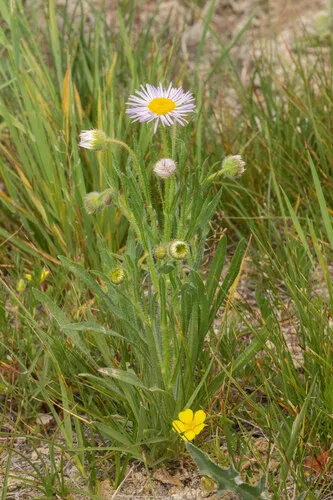
Sources for this entry (10) Open & cited
Cite this page Open data, please attribute
PlantKey’s data is open under CC BY-SA 4.0 — free to reuse and adapt, with attribution and the same licence. Photos keep their own per-image licence + credit (see Sources above).
Loading…
BibTeX
Loading…