
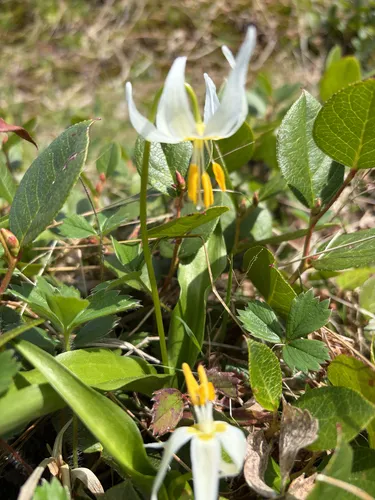
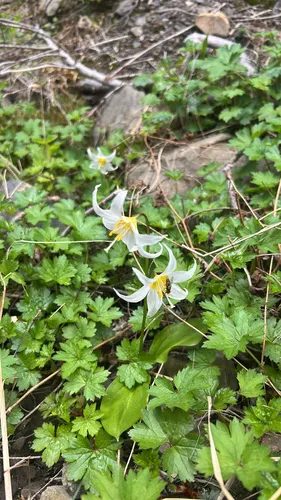
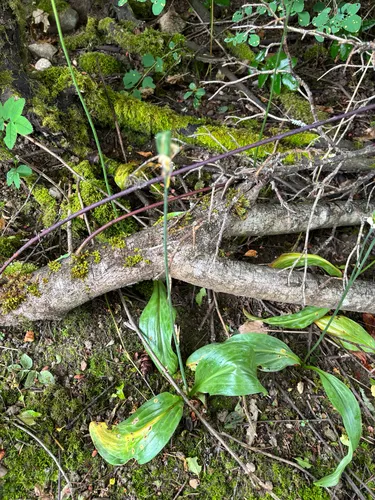
Cream Fawnlily (var. citrinum) Erythronium citrinum var. citrinum variety
Cream Fawnlily (var. citrinum) is a perennial wildflower native to the lower 48 states. A host for pollen-specialist native bees.
More about this plant
Erythronium citrinum, also known as citrus fawn lily or cream fawn lily, is a member of the lily family that is endemic to the Klamath Mountains. It is found in southwest Oregon and adjacent northwest California. The genus Erythronium, which can be found across northern North America, Europe and Asia, is most diverse in California, which is home to fifteen of about twenty-eight members of the genus. Wikipedia →
Growing & care
USDA PLANTS · TRY- Hardiness
- ≥ zone 9 derived from its U.S. range
- Lifespan
- Perennial
Wildlife & pollinators
How pollinator value is scored →✦ Bees specialist-bee host
Specialist native bees depend on it.
Some native bees are pollen specialists (oligolectic) — they raise young only on pollen from particular plant genera. Erythronium is a recorded specialist-bee host, so losing it can mean losing the bee that relies on it.
Related plants
More Erythronium →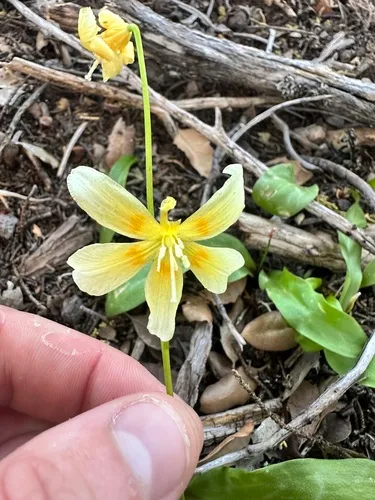
Sources for this entry (10) Open & cited
Cite this page Open data, please attribute
PlantKey’s data is open under CC BY-SA 4.0 — free to reuse and adapt, with attribution and the same licence. Photos keep their own per-image licence + credit (see Sources above).
Loading…
BibTeX
Loading…