
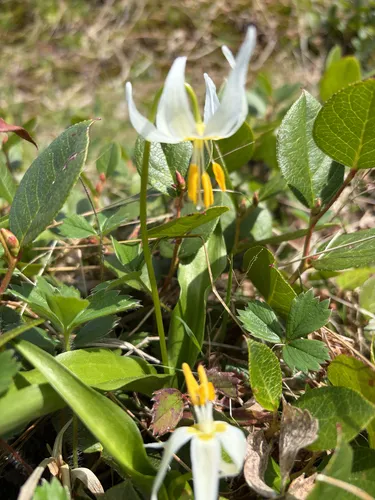
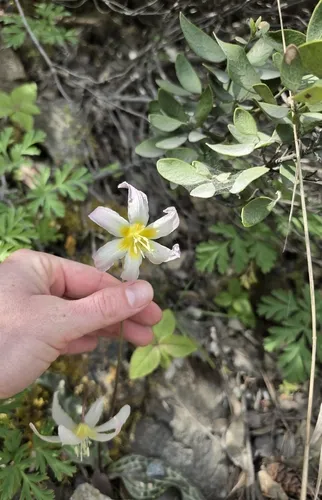
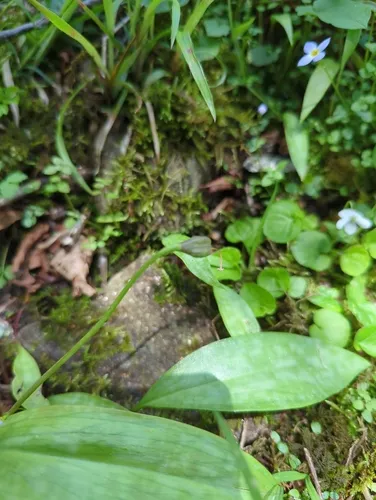
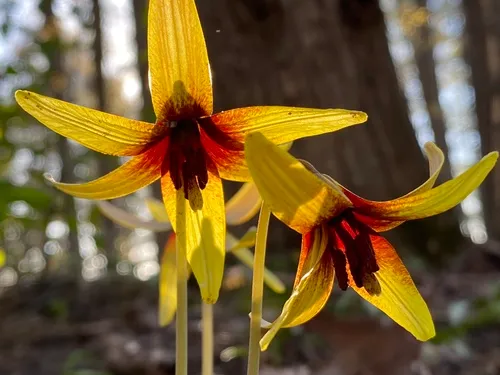
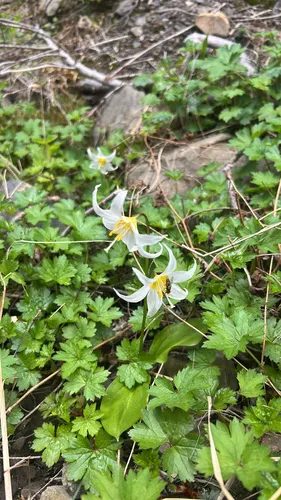
Taylor's Fawnlily Erythronium taylorii
Taylor's Fawnlily is a perennial wildflower native to the lower 48 states. A host for pollen-specialist native bees.
More about this plant
Erythronium taylorii is a rare species of flowering plant in the lily family known by the common names Pilot Ridge fawn lily, Taylor's fawnlily, and Yosemite fawn lily. It is endemic to Tuolumne County, California, where it is known only from Pilot Ridge, a remote mountain ridge outside of Yosemite National Park. It was discovered in 1996 and described to science as E. taylori in 1997, and it is now called E. taylorii. There are at least 1000 individuals in the single known population. It occurs on shaded north-facing cliffs. Wikipedia →
Growing & care
USDA PLANTS · TRY- Hardiness
- ≥ zone 11 derived from its U.S. range
- Lifespan
- Perennial
Wildlife & pollinators
How pollinator value is scored →✦ Bees specialist-bee host
Specialist native bees depend on it.
Some native bees are pollen specialists (oligolectic) — they raise young only on pollen from particular plant genera. Erythronium is a recorded specialist-bee host, so losing it can mean losing the bee that relies on it.
Related plants
More Erythronium →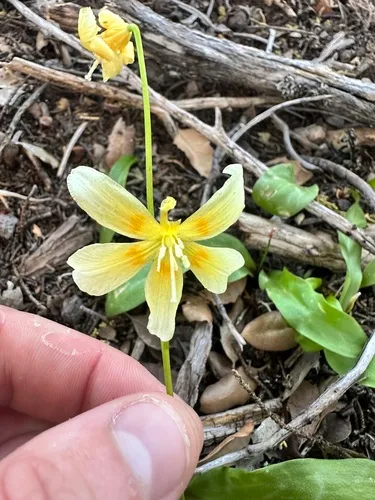
Sources for this entry (11) Open & cited
Cite this page Open data, please attribute
PlantKey’s data is open under CC BY-SA 4.0 — free to reuse and adapt, with attribution and the same licence. Photos keep their own per-image licence + credit (see Sources above).
Loading…
BibTeX
Loading…