
Poinsettia Euphorbia pulcherrima
Poinsettia is an introduced perennial tree, found in Hawaii, the Pacific Basin, and Puerto Rico. It grows to 12 ft.
More about this plant
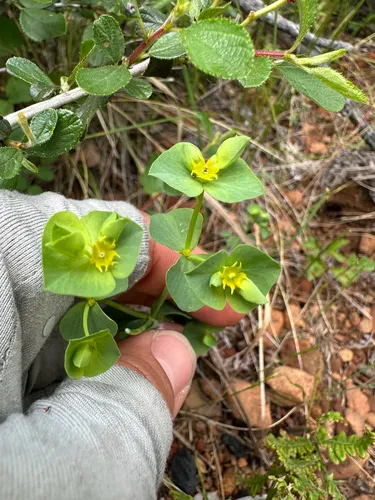
The poinsettia is a commercially important flowering plant species of the diverse spurge family Euphorbiaceae. Indigenous to Mexico and Central America, the poinsettia was first described by Europeans in 1834. It is particularly well known for its red and green foliage and is widely used in Christmas floral displays. It derives its common English name from Joel Roberts Poinsett, the first United States minister to Mexico, who is credited with introducing the plant to the US in the 1820s; however, there have been recent efforts to rename the flower to its Nahuatl name, "cuetlaxōchitl", due to Poinsett's involvement in slavery and the Trail of Tears. Poinsettias are shrubs or small trees, with heights of 0.6 to 4 m. Though often stated to be highly toxic, the poinsettia is not dangerous to pets or children. Exposure to the plant, even consumption, most often results in no effect, though it can cause nausea, vomiting, or diarrhea. Wikipedia →
Growing & care
USDA PLANTS · TRY- Height
- 12 ft
- Lifespan
- Perennial
- Foliage
- Broadleaf
Wildlife & pollinators
How pollinator value is scored →❧ Caterpillar hosts ~7 caterpillar species
Euphorbia supports ~7 caterpillar species.
Native butterfly & moth caterpillars are the base of the terrestrial food web — most songbirds rear their young almost entirely on them. As a host for native Lepidoptera this is a modest genus.
Recorded feeding on Euphorbia in North America, including:


+ 8 more species → ↑ show fewer


✦ Bees specialist-bee host · 12 bee visitors
Specialist native bees depend on it.
Some native bees are pollen specialists (oligolectic) — they raise young only on pollen from particular plant genera. Euphorbia is a recorded specialist-bee host, so losing it can mean losing the bee that relies on it.
12 native & managed bee species are documented visiting Poinsettia :


Wildlife & visitors 15 nectaring
Open records of who else uses Poinsettia — a generalist food-web signal, kept separate from the keystone Ecological Value.
15 adult butterfly & moth species are recorded nectaring at its flowers — the most-recorded:


Related plants
More Euphorbia →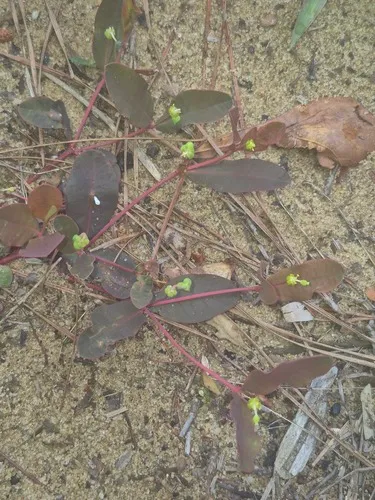
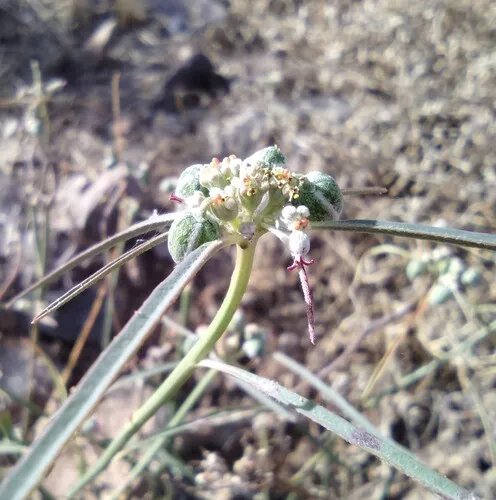
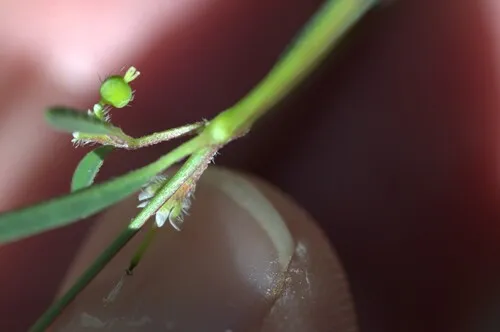
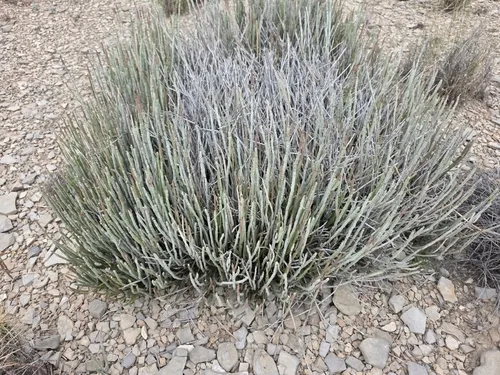
How we know this (1) Methods & honest limits
A recorded categorical fact: each species is tagged C3 (standard), C4 (heat/water-efficient) or CAM (succulent, night-time CO₂ uptake) — or a facultative combination. We only show a trait card for the noteworthy C4/CAM cases; C3 is the unremarkable majority, kept in the data but not surfaced as a card.
Sources for this entry (21) Open & cited
Cite this page Open data, please attribute
PlantKey’s data is open under CC BY-SA 4.0 — free to reuse and adapt, with attribution and the same licence. Photos keep their own per-image licence + credit (see Sources above).
Loading…
BibTeX
Loading…