
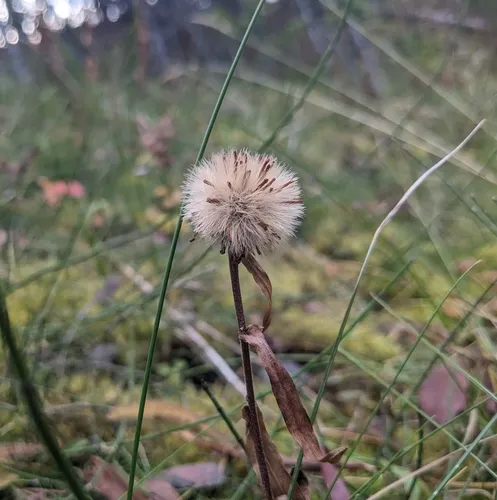
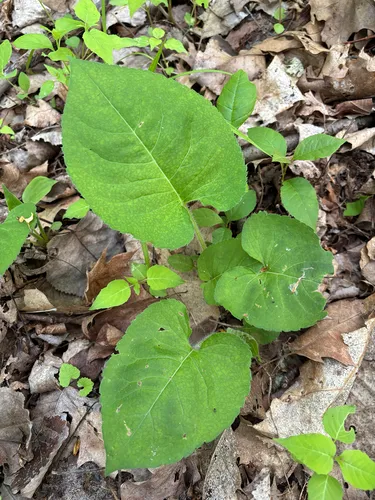
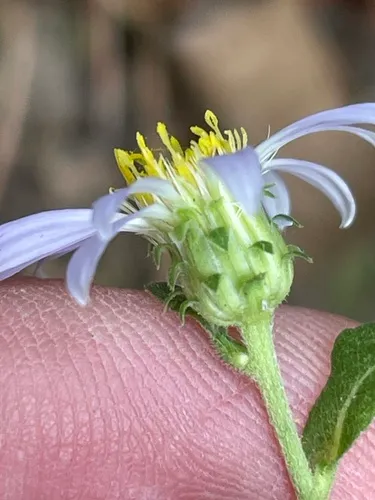
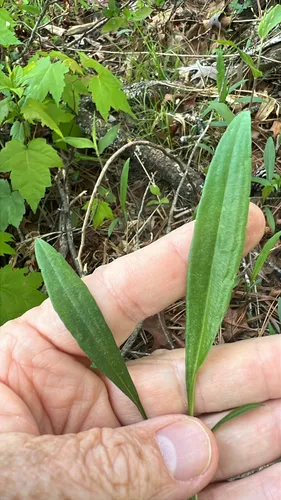
Alexander's Rock Aster Eurybia avita
Alexander's Rock Aster is a perennial wildflower native to the lower 48 states. A host for pollen-specialist native bees.
More about this plant
Eurybia avita, commonly called Alexander's rock aster, is a rare North American plant species, a herbaceous perennial in the family Asteraceae that was formerly considered part of the genus Aster. It is native to the southeastern United States. It is of conservation concern as it is found in less than 50 sites, typically only in sandy soils near granite flatrocks, and it is most likely already extirpated in North Carolina. Its habitat is threatened by development and the recreational use of the area where it grows. It is very similar to both E. surculosa and E. paludosa and more research needs to be done to determine the exact relationship between the three species. Wikipedia →
Growing & care
USDA PLANTS · TRY- Hardiness
- ≥ zone 9 derived from its U.S. range
- Lifespan
- Perennial
Wildlife & pollinators
How pollinator value is scored →✦ Bees specialist-bee host
Specialist native bees depend on it.
Some native bees are pollen specialists (oligolectic) — they raise young only on pollen from particular plant genera. Eurybia is a recorded specialist-bee host, so losing it can mean losing the bee that relies on it.
Related plants
More Eurybia →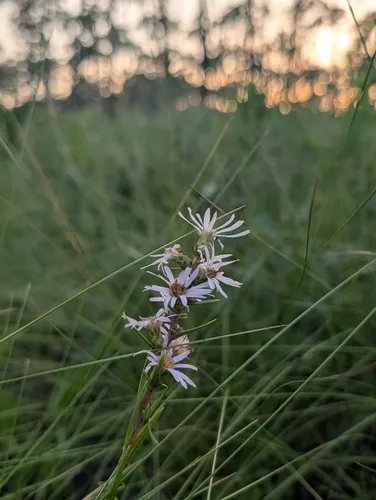
Sources for this entry (11) Open & cited
Cite this page Open data, please attribute
PlantKey’s data is open under CC BY-SA 4.0 — free to reuse and adapt, with attribution and the same licence. Photos keep their own per-image licence + credit (see Sources above).
Loading…
BibTeX
Loading…