
Jones' Aster Eurybia jonesiae
Jones' Aster is a perennial wildflower native to the lower 48 states. A host for pollen-specialist native bees.
More about this plant
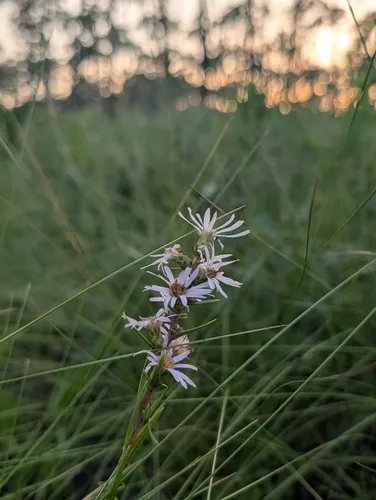
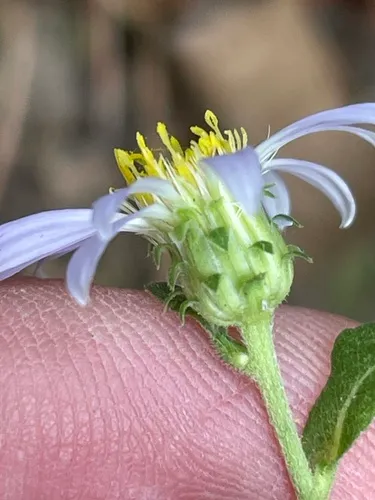
Eurybia jonesiae, commonly known as Jones's aster or Almut's wood aster, is a North American species of herbaceous perennial native to the Southeastern United States, primarily in the state of Georgia with a few populations in eastern Alabama. It is found mostly in the Piedmont Region in rich oak-hickory-pine forest. Within these rich woods, it has an affinity for moist soils with habitats that include ravines, rocky ridges, and wooded slopes in the vicinity of rivers and streams. Due to its restricted range it is considered threatened by the Nature Conservancy. It has often been misidentified as Eurybia spectabilis and was declared a separate species quite recently in 1988. The flowers emerge in the late summer and persist into the fall bearing cream-coloured ray florets that become purple and yellow disc florets. Wikipedia →
Growing & care
USDA PLANTS · TRY- Hardiness
- ≥ zone 9 derived from its U.S. range
- Lifespan
- Perennial
Wildlife & pollinators
How pollinator value is scored →✦ Bees specialist-bee host
Specialist native bees depend on it.
Some native bees are pollen specialists (oligolectic) — they raise young only on pollen from particular plant genera. Eurybia is a recorded specialist-bee host, so losing it can mean losing the bee that relies on it.
Related plants
More Eurybia →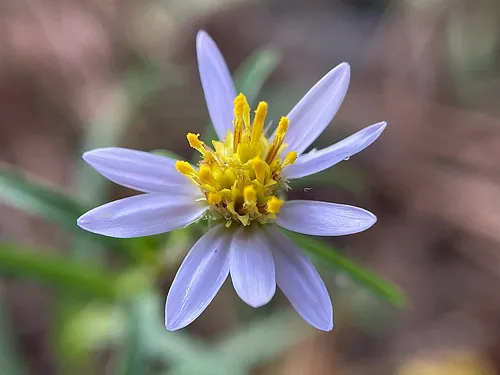
Sources for this entry (11) Open & cited
Cite this page Open data, please attribute
PlantKey’s data is open under CC BY-SA 4.0 — free to reuse and adapt, with attribution and the same licence. Photos keep their own per-image licence + credit (see Sources above).
Loading…
BibTeX
Loading…