
Bouquet Aster Eurybia mirabilis
Bouquet Aster is a perennial wildflower native to the lower 48 states. A host for pollen-specialist native bees.
More about this plant
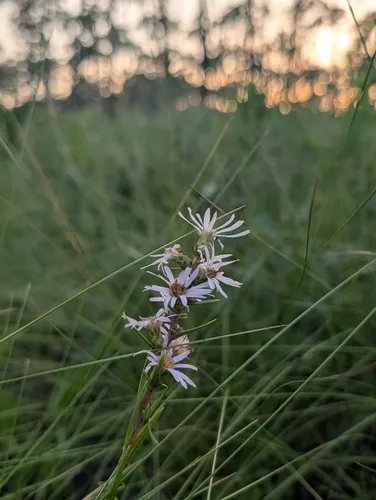
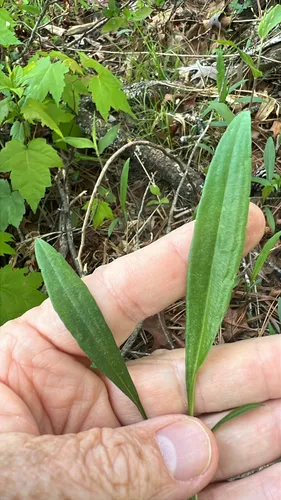
Eurybia mirabilis, commonly known as the bouquet aster or dwarf aster, is an herbaceous perennial in the family Asteraceae. It is endemic to the lower Piedmont of North Carolina and South Carolina in the southeastern United States. Within this small range it is found only infrequently, making it of conservation concern. The species is now largely confined to inaccessible bluffs due to the conversion of other habitats to farmland. It typically grows in deciduous or mixed deciduous woods, as well as on slopes or alluvial plains. Basic to neutral soils are usually preferred. Its flower heads emerge in the late summer to early fall and show white to lavender rays with pale yellow centres sometimes tinged with purple. Wikipedia →
Growing & care
USDA PLANTS · TRY- Hardiness
- ≥ zone 9 derived from its U.S. range
- Lifespan
- Perennial
- Flower colour
- White AI AI image-analysis of community-science photos (~87% expert agreement) — not a botanical record
Wildlife & pollinators
How pollinator value is scored →✦ Bees specialist-bee host
Specialist native bees depend on it.
Some native bees are pollen specialists (oligolectic) — they raise young only on pollen from particular plant genera. Eurybia is a recorded specialist-bee host, so losing it can mean losing the bee that relies on it.
Related plants
More Eurybia →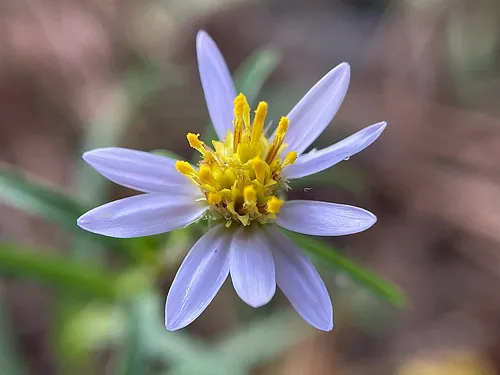
How we know this (1) Methods & honest limits
McKenzie et al. assigned each species a flower colour with a GPT-4V vision model over iNaturalist photos. We use the confident tier plus a separately-labelled lower-confidence top-up (mostly inconspicuous green/brown flowers), and render it as a small tint — never as an asserted fact, and kept out of the written synopsis.
Honest limits: AI image inference (~87% expert agreement on the confident tier); a decorative, confidence-tiered indicator, not a measured trait.
Sources for this entry (13) Open & cited
Cite this page Open data, please attribute
PlantKey’s data is open under CC BY-SA 4.0 — free to reuse and adapt, with attribution and the same licence. Photos keep their own per-image licence + credit (see Sources above).
Loading…
BibTeX
Loading…