
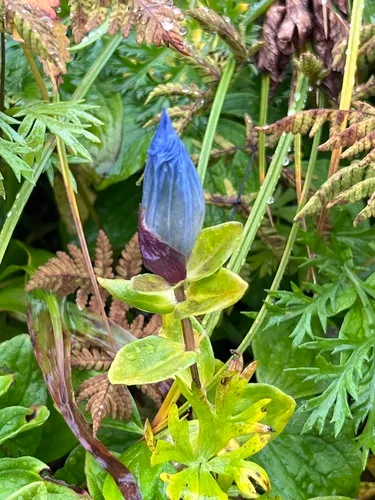
Crested Gentian Gentiana septemfida
Crested Gentian is an introduced perennial herb, found in the lower 48 states.
More about this plant
Gentiana septemfida, the crested gentian or summer gentian, is a species of flowering plant in the family Gentianaceae, native to the Caucasus and Turkey. It is a low-growing herbaceous perennial growing to 15–20 cm (6–8 in) tall by 30 cm (12 in) wide, bearing up to eight bright blue trumpet-shaped blooms in summer, with striped interiors. It requires a rich, moist soil and full sun. Wikipedia →
Growing & care
USDA PLANTS · TRY- Hardiness
- ≥ zone 6 derived from its U.S. range
- Lifespan
- Perennial
- Foliage
- Broadleaf
Wildlife & pollinators
How pollinator value is scored →❧ Caterpillar hosts ~1 caterpillar species
Gentiana supports ~1 caterpillar species.
Native butterfly & moth caterpillars are the base of the terrestrial food web — most songbirds rear their young almost entirely on them. As a host for native Lepidoptera this is a modest genus.
Recorded feeding on Gentiana in North America, including:


Related plants
More Gentiana →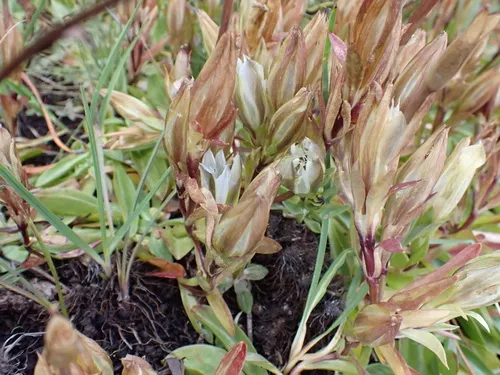
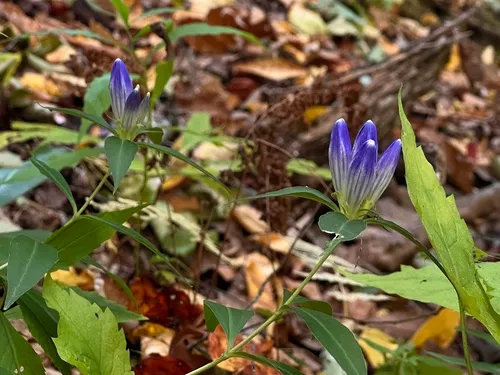
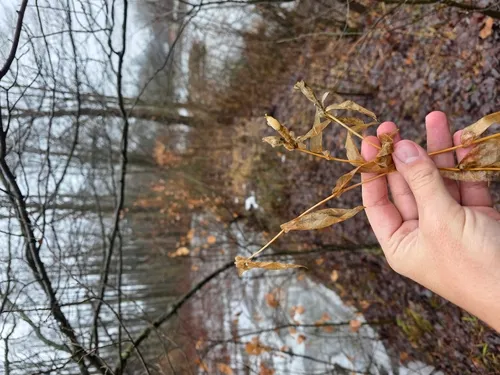
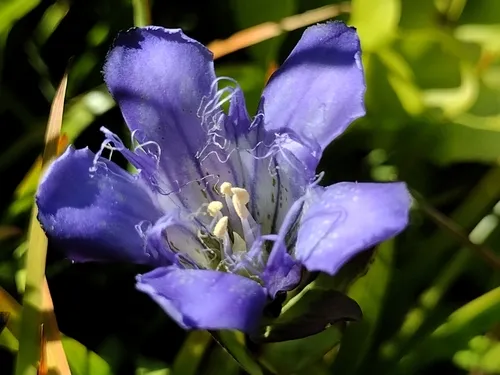
How we know this (2) Methods & honest limits
We read each species’ measured specific leaf area (leaf area per unit dry weight) from the Global Spectrum dataset and band it: thin & fast (high SLA), medium, or thick & tough (low SLA). The global median is about 10 mm²/mg.
Honest limits: A species-mean from pooled measurements — individual plants vary with light and site. A broad strategy signal, not a precise per-plant figure.
We place each species on Grime’s competitor–stress-tolerator–ruderal (C–S–R) triangle using the globally-calibrated “StrateFy” method: leaf size drives the competitor score, dense low-area leaves the stress-tolerator score, and thin high-area leaves the ruderal score. The result is a C/S/R percentage mix and one of 19 strategy classes; we show it in plain words and keep the percentages for the curious.
Honest limits: A species-mean strategy from pooled global leaf measurements — a broad ecological signal, not a precise per-plant or per-site value. Derived, never a measured fact.
Sources for this entry (17) Open & cited
Cite this page Open data, please attribute
PlantKey’s data is open under CC BY-SA 4.0 — free to reuse and adapt, with attribution and the same licence. Photos keep their own per-image licence + credit (see Sources above).
Loading…
BibTeX
Loading…