
Oregon Gumweed (var. stricta) Grindelia stricta var. stricta variety
Oregon Gumweed (var. stricta) is a perennial shrub native to the lower 48 states. A host for pollen-specialist native bees.
More about this plant
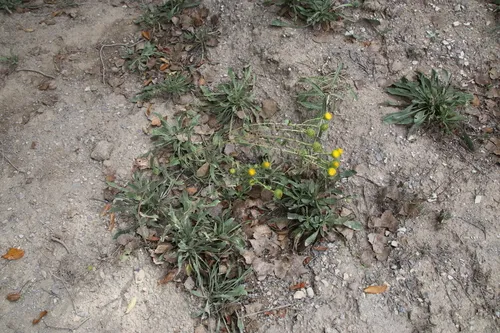
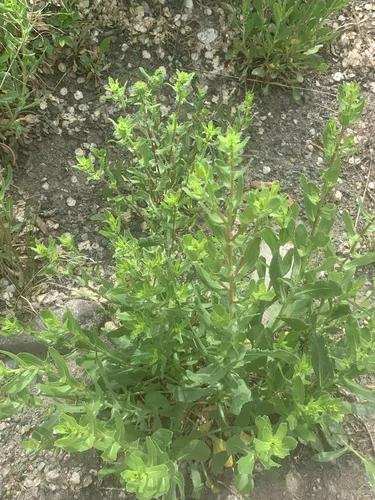
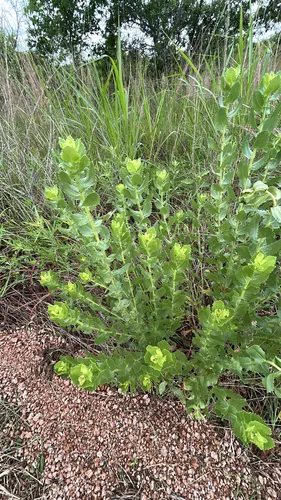
Grindelia stricta is a species of flowering plant in the family Asteraceae known by the common names Oregon gumplant, Oregon gumweed and coastal gumplant. It is native to the west coast of North America from California to Alaska, where it is a resident of coastal plant communities such as those in marshes and beaches. This plant is variable in appearance, taking the form of a weedlike perennial herb forming low clumps to a sprawling subshrub growing erect to heights exceeding one meter. Its foliage and stems are green to rusty red or purplish and the plant may be hairy to hairless. The fleshy leaves are green, often with red edges and veining, and are up to 15 centimeters in length on large plants. The inflorescence holds one or more flower heads each up to 5 centimeters wide. The flower head is a cup of thick erect or recurved green phyllaries. Yellow disc florets fill the center of the flower head and there is a fringe of yellow ray florets around the circumference. The head produces copious amounts of white latex, especially in the early stages of blooming. Wikipedia →
Growing & care
USDA PLANTS · TRY- Hardiness
- ≥ zone 9 derived from its U.S. range
- Lifespan
- Perennial
Wildlife & pollinators
How pollinator value is scored →❧ Caterpillar hosts ~2 caterpillar species
Grindelia supports ~2 caterpillar species.
Native butterfly & moth caterpillars are the base of the terrestrial food web — most songbirds rear their young almost entirely on them. As a host for native Lepidoptera this is a modest genus.
Recorded feeding on Grindelia in North America, including:


+ 8 more species → ↑ show fewer


✦ Bees specialist-bee host
Specialist native bees depend on it.
Some native bees are pollen specialists (oligolectic) — they raise young only on pollen from particular plant genera. Grindelia is a recorded specialist-bee host, so losing it can mean losing the bee that relies on it.
Related plants
More Grindelia →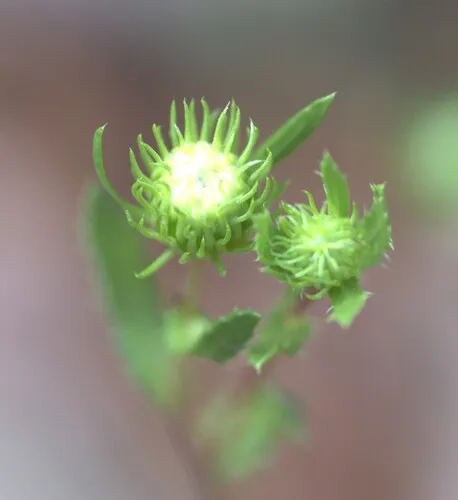
Sources for this entry (11) Open & cited
Cite this page Open data, please attribute
PlantKey’s data is open under CC BY-SA 4.0 — free to reuse and adapt, with attribution and the same licence. Photos keep their own per-image licence + credit (see Sources above).
Loading…
BibTeX
Loading…