
Fork-bracted Rosemallow Hibiscus bifurcatus
Fork-bracted Rosemallow is a perennial wildflower native to the lower 48 states, Puerto Rico, and the U.S. Virgin Islands. A host for pollen-specialist native bees.
More about this plant
Hibiscus bifurcatus, also known as the fork-bracted rose-mallow, is a species of tropical hibiscus native to parts of Central and South America, including Mexico, Peru, and Brazil. The species is typically found in open woodlands, forest margins, and coastal regions, where it benefits from the warm, humid conditions characteristic of these environments. These natural habitats provide the plant with an adequate supply of sunlight, moderate moisture, and well-draining soil, conditions that are crucial for its survival. The plant grows primarily at altitudes ranging from sea level to approximately 1,500 m (4,900 ft). In these Regions, the temperature is relatively stable, with daily high temperatures between 24 and 30 °C and low temperatures rarely dipping below 18 °C (64 °F). The species is adapted to environments that experience distinct wet and dry seasons, though it prefers conditions with consistent moisture availability throughout the year. Wikipedia →
Growing & care
USDA PLANTS · TRY- Hardiness
- ≥ zone 11 derived from its U.S. range
- Lifespan
- Perennial
- Foliage
- Broadleaf
Wildlife & pollinators
How pollinator value is scored →❧ Caterpillar hosts ~20 caterpillar species
Hibiscus supports ~20 caterpillar species.
Native butterfly & moth caterpillars are the base of the terrestrial food web — most songbirds rear their young almost entirely on them. As a host for native Lepidoptera this is a moderate genus.
Recorded feeding on Hibiscus in North America, including:


+ 8 more species → ↑ show fewer


✦ Bees specialist-bee host
Specialist native bees depend on it.
Some native bees are pollen specialists (oligolectic) — they raise young only on pollen from particular plant genera. Hibiscus is a recorded specialist-bee host, so losing it can mean losing the bee that relies on it.
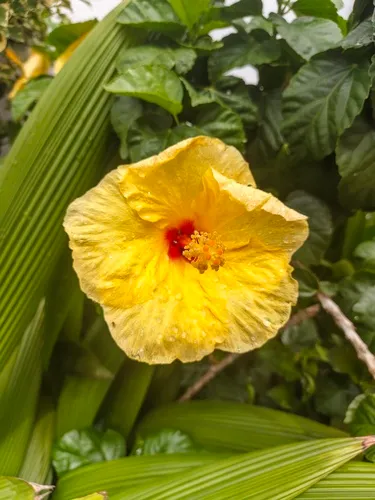
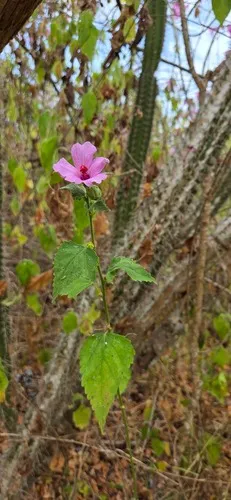
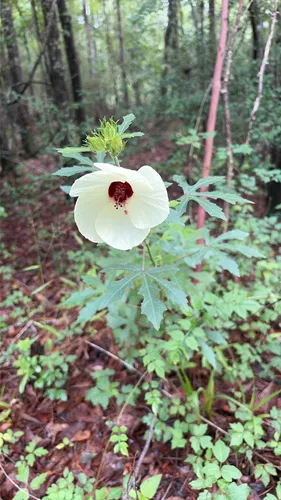
Related plants
More Hibiscus →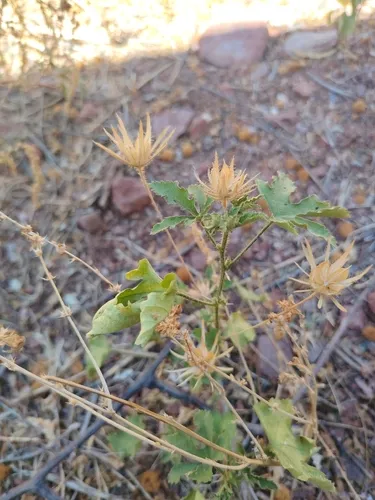
How we know this (1) Methods & honest limits
A recorded categorical fact: each species is tagged C3 (standard), C4 (heat/water-efficient) or CAM (succulent, night-time CO₂ uptake) — or a facultative combination. We only show a trait card for the noteworthy C4/CAM cases; C3 is the unremarkable majority, kept in the data but not surfaced as a card.
Sources for this entry (15) Open & cited
Cite this page Open data, please attribute
PlantKey’s data is open under CC BY-SA 4.0 — free to reuse and adapt, with attribution and the same licence. Photos keep their own per-image licence + credit (see Sources above).
Loading…
BibTeX
Loading…